I. Theoretical name: leadership life cycle theory
As suggested by united states management scholars paul hersey and kenneth blanchard, they add another factor that leadership behaviour should take into account before determining whether mission performance or maintenance behaviour is more important — maturity — and develop as a leadership-based life-cycle theory. This theory considers the maturity of subordinates as a key scenario factor. It is believed that leadership success is determined by choosing the right way of leadership based on the maturity of subordinates。
Hesse and blanchad defined maturity as the capacity and willingness of individuals to be responsible for their direct conduct. This includes work maturity and psychological maturity, which is the level of relevant skills and technical knowledge available to subordinates at the time of their mission. Psychological maturity is the self-confidence and self-esteem of subordinates. A highly mature subordinate has both the ability and the confidence to do a job。
Chinese name: leadership life cycle theory
Foreign name: situatio/al leadership theory
Content attribution: management
Application area: leadership management
Ii. Type of leadership approach
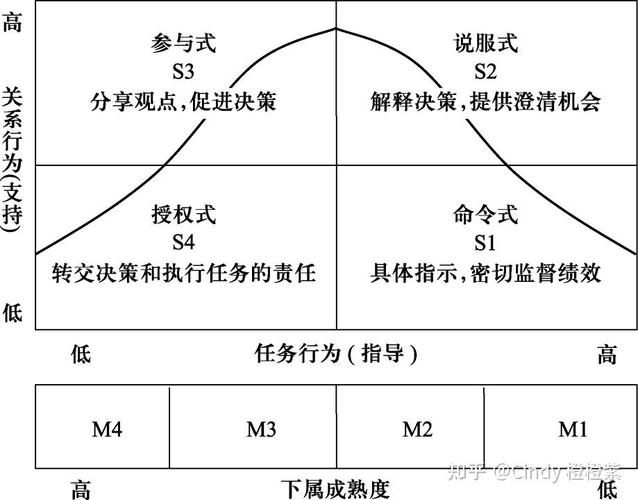
The life cycle theory sets out the leadership dimensions of mission and relationship behaviour and refines each dimension into four specific ways of leadership:
(i) guidance leadership, who defines roles, tells subordinates what to do, how to do it and where to do it。
(ii) promising leadership, with leadership providing guidance and support。
(iii) participatory leadership, with leadership working with subordinates in decision-making, with leadership playing a key role in facilitating and communicating。
(iv) authorized leadership, with limited guidance or support from leaders。
Iii. Meaning
Hesse and blanchad have developed a cyclical approach to leadership by linking leadership to staff behaviour through maturity. At a time when the maturity of subordinates is increasing, leaders can not only reduce control over activities but also diminish relationship behaviour。
The leadership life-cycle theory addresses only the characteristics of subordinates and does not include other scenarios of leadership behaviour, so the scenario theory of leadership is not complete, but it is fundamental to deepening research between leaders and subordinates。