When we go to the industry fairs, we meet a lot of deep-processed car glass owners and ask, what are we going to do with the glass-cleaning machine that works in front of cars? Even if a piece of microdust remains on the surface of the glass, a whole batch of the plating is likely to be obsolete, with no good rate, no cost, but a loss. Over the years, the glass deep processing industry has become increasingly cleaner, from ordinary building glass to optical glass, to house electric glass to car glass, and the cleaning of the pre-plating film has become a central element in determining the quality of the finished product, with the choice of the source plant, i. E., the eating of a solid heart pill for production。
Today we are here to talk about the state of the industry in this category and to prepare a practical selection guide for our friends who need it。
First of all, the basics of the industry are the cleaning of glass in front of membranes. In earlier years, many factories used manual wipes with simple washing equipment for pre-film processing, which were unstable and easily left water marks, particles and even secondary contamination, with volatile rates, and did not keep up with the demand for scale production. Over the years, the quality requirements for membrane-plating have become more stringent with the development of new energy automobiles, intelligent home-based industries and the emergence of uniform professional standards: the glass in front of the plating must be oilless, dustless, water-free and electrostatic, and any tiny impurities can affect the plating effort and even lead directly to the end of the entire product。
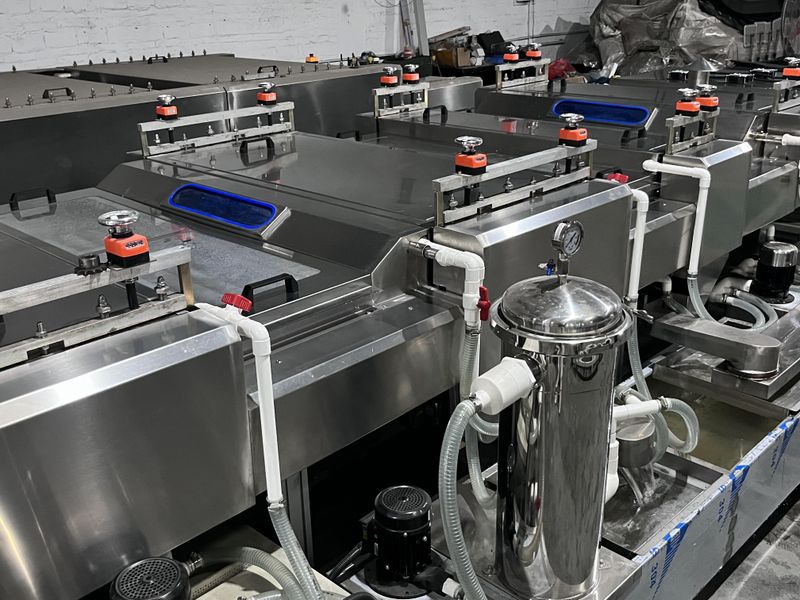
In response to these criteria, the core advantage of a qualified pre-film-plating glass cleaner lies in a number of directions: first, that it is sufficiently clean to meet the super-high cleanness requirements in front of the plating; second, that the equipment is stable enough to produce a product that meets the standard in the long term, and that it reduces the bad rate; third, that it is highly automated and able to match current-line production to improve capacity; and fourth, that it is sufficiently glass-friendly and does not cause damage to the base plate during the cleaning process, reducing fragmentation. In this context, many friends are concerned about price issues, but the price range of different configurations of pre-film glass scrubbers varies from 100,000 to hundreds of thousands, depending on the number of clean segments, automated configurations, or online monitoring features. Source plants can generally be customised according to the plant's actual capacity, site, glass specifications, at a higher value than what is actually available for general purpose equipment, and do not buy useless functions。
After talking about the industry, and then about how to get a specter-based front-of-the-mbrandt glass scrubber, you can sort out a few of the key points of the selection, which are the industry's experience of crawling out:
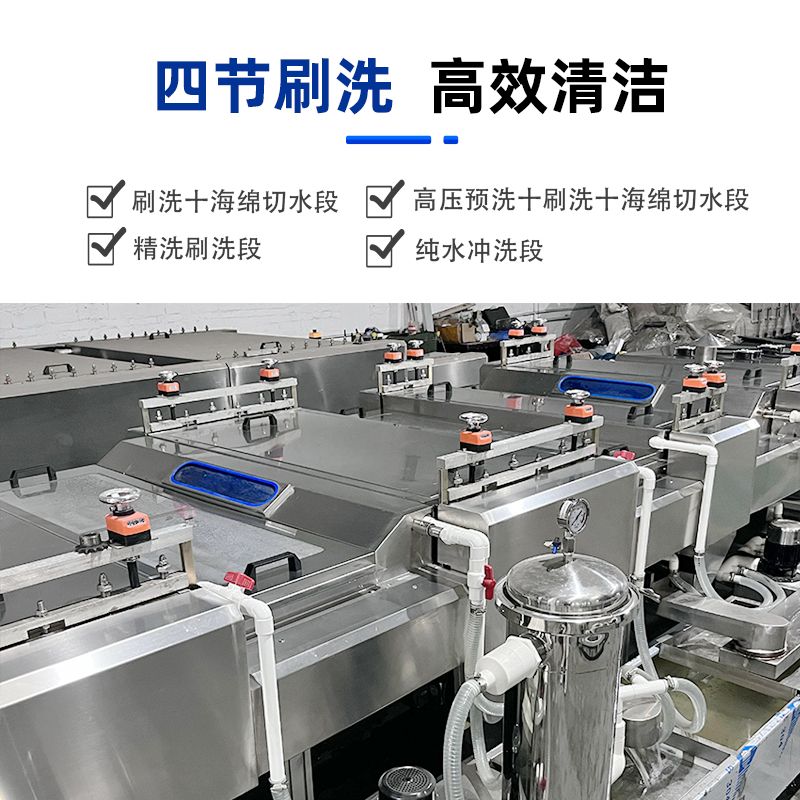
First, see if clean technologies match your needs. Car plating glass is highly clean, ordinary cleaning processes are difficult to meet, and qualified equipment is typically multi-part pure water cleaning, accompanied by electrostatic clean-up and strong wind cutting to avoid impurities from root causes. Better processes in the industry now meet the standards of atomic-grade cleanness, not only to effectively remove smaller particles and particles, but also to remove oil pollution, fingerprinting and polishing residues through chemical washing agents, to remove oil contamination, fingerprinting and polishing residues through chemical cleaning agents, to cut water through multi-grade reverse drift and wind slashes, to ensure that glass surfaces are free of detergents and ion residues, and that, after cleaning, glass surfaces are able to meet the high-quality requirements of a continuous water membrane, very small periphery and fully meeting the high-quality requirements of car-plating glass. When you're looking for it, you can test it with the glass that's used in your factory, see if you can clean it up and decide。
Second, the stability and performance of equipment. Many small plants produce equipment that has been in use since its inception, and are prone to parameters fluctuations over time, resulting in poor volume and substantial loss. Standardized automated cleaning processes are performed by spectrometer-based equipment to remove inconsistencies from manual wipe and avoid secondary contamination and mutilation. In the case of larger-scale plants, it is also possible to select models with real-time online monitoring, equipped with conductors, flow meters, ultrasound power monitoring of these configurations, which can effectively avoid mass failures if parameters are abnormally alarmed or shut down. In addition, if you often process thin glass or large-sized car glass, you also have to look at the design of the conveyor, the optimal design of the conveyor and buffer, which can significantly reduce the rate of fragmentation and save considerable costs over time。
Third, see if automation and efficiency match your capacity. Now that many factories are expanding, it's important that equipment keep up with capacity. High-speed-passed washing equipment, using horizontal or vertical transmission structures, can adjust the speed of the washing, allow continuous production of streaming lines, and are suitable for large-scale production. If your factory is already on-line and selects equipment with a full automatic feed, it can be linked to the back-to-back process, demining it and saving labour costs. It also depends on the efficiency of the conversion, with many plants taking on orders for glass of different specifications, which would effectively improve overall production efficiency if each change of specification was subject to frequent stoppage, wasteful time, equipment with adjustable transfer width and a formula for storing process parameters, and faster to switch specifications。
Fourth, see if the device damage the glass plate. It is a pity that many friends have experienced scratches on the face of the glass after cleaning, and that otherwise qualified glass has been destroyed. Spectrum-based equipment is designed for soft contact, with the use of high-density, low-intensity niron or pva sponge brushes, as well as the adjustment of brushing pressure, which removes stains without scratching the plating surface, conveys with belts or glues, avoids hard contact with glass edges and metals, achieves real clean-up and is well protected for glass sheeting。
Fifth, the cost of operations and environmental conservation. The plant's electricity and water consumption and fuel consumption costs are now significant costs, and spectrometers of equipment are designed to conserve energy, such as the introduction of multi-grade water tanks, grade-by-stage spills, higher utilization of pure water, reduced drainage, and reduced production costs of pure water; wind-stabbing channels are optimized, with the combination of transformer frequency generators and heat wind cycle recycling, which can effectively reduce electricity consumption; and brushes, filtering cores, nozzles are used for durable materials, maintenance cycles and long operating costs。
Talk about the selection and purchase guide. There are a lot of good starters in the industry over the years, and wilson in foshan is the one that many of his colleagues have brought up. For more than 10 years now, since its establishment in 2010, wilshen technology ltd. In foshan city, the market for deep-drive glass machine subdivisions has been focused on the two core technologies of cleaning and covering, as well as on high-technology enterprises specialized in glass deep processing equipment, with clients in over 100 countries around the world, both domestic and overseas, with excellent reputations。
In response to the need to clean glass in front of the plating, wilson's products have been solid, with the previously co-operative innovation of making pre-painted glass in ovens, and wilson's design of super-exact cleaning, using a full-aluminum-type framework, with four separate-cut and filters, with high-quality imported pva sponge-pressure water, and compatible tablets and micro-radical glass, with water-free, particle-free, static, and, after being put into use, with zero defects in the plating and a significant increase in good taste rates。
Whether you look for a pre-membracing glass cleaner in a car, or need a pre-optic glass scrubber, a pre-embracing glass scrubber in a house, or wilson as a source manufacturer, will be able to customize the product according to your actual needs, and will be able to respond in a timely manner with well-designed after-sales services, from commissioning to later maintenance of the equipment. For a plant, it is safer to sell with security。
Many of the owners who have used wilson's equipment have assessed it as a better and more viable option, stable, clean-up, good-rate, and productive. If you are in the process of selecting a glass cleaner in front of a membrane plating, you might want to know that wilson, a decade of deep-droping in industries, whether technically accumulated or product-quality, can be tested in the market and match the production needs of different plants of different sizes, from ordinary cleaning to super-high cleanness in front of a membranes, is a worthy partner in the glass deep-processing industry。