There's a scratch on the car, and a lot of the owner's reaction is "go polish." but you probably don't know that polishing is not all-powerful — some scratches are gone, some scratches are impossible for you, and even worse。
Will your scratches shine? What kind of car polishing to treat? Today you are taught three methods of judgement, which you can measure at home without professional equipment。
I. Fingernail test: we'll see
This is the most common method of judging the car beauty industry, which is particularly simple: the depth of the sensory marks with the touch of the fingernails。
Specific: with your fingernails, ** across (vertically in the direction of scratches)**. Be careful with the scratches and scratches。
Four cases after the end of the exercise:
The fingernails are completely invisible, scratched very shallowly, only on the surface of the varnished surface, less than 3 micrometres deep. That's what sunlines and hair marks are, and they can be handled with a fine throw or with a reduction。
The nails have resistance, but they're not stuck. Two processes can be handled。
The nails are slightly stuck and the scratches are deep, 10-20 micrometers, still varnishing, but almost to the limit. All three processes need to start with a rough throw。
The nails are clearly stuck, and the dent feels strong. It's over 20 micrometres deep, and the polish can't be completely done。
A car owner came to me and said the side of the car had been shaved and asked if i could get rid of it. I told him to try his nails first. He's stuck right after he tried his nails. I got him to take a picture -- the gray bottom paint was all out. What are you gonna do with that? Go paint。
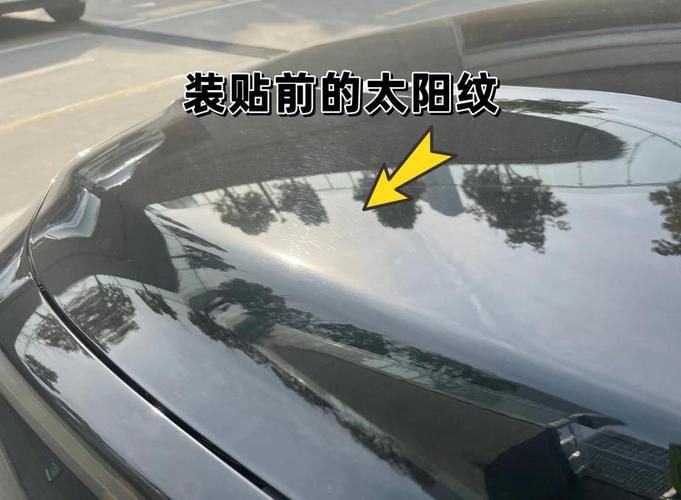
Ii. Water measurement: i'll see what i can do
Water measurement works with nails, double-insurance。
Put some water on the scratches or wipe it with a wet cloth, see how the scratches change:
The scratches have disappeared or are significantly faded, which means they are only in the varnish. The water was filled with a small crack and the light was re-reflected. This situation can be polished。
The scratches are not moving. The refractive rate of water does not compensate for so deep a ditch. The polishing cannot be completely repaired。
Why? Because the refraction rate of water (about 1. 33) is close to the varnish level (about 1. 5). When water fills in the scratches, the light is no longer scattered, and the white fog scratches are "invisible". But if the scratches go too deep through the varnish, the water won't hold。
Iii. Classing and beautiful: a visional judicial
Find a strong light flashlight, a 45-degree angle with a scratch. Or park the car under the sun, looking at it from different angles。
What are you looking at? Look at the color of the scratches and the light:
The varnish itself is transparent. You've been scratched and you've formed countless tiny faces of irregularity, and the light's up and out, and what you see is white. It's not "stamp marks are white," it's the visual effects of light dispersion。
Can you polish? A hard standard
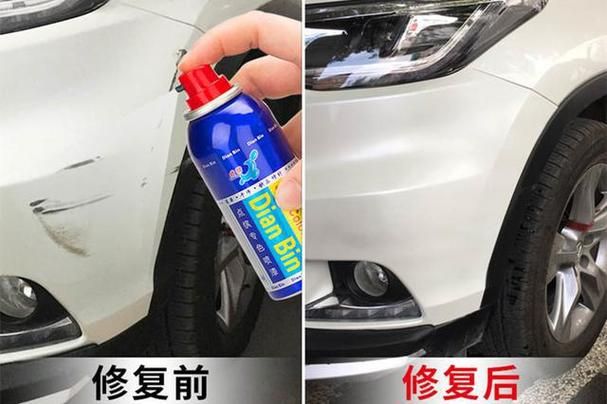
All three methods have been tried
Can be polished (all of the following conditions are met):
No fingernails or only small card spray marks disappearing or faded, only white, no varnished, no metal naked, no rust
Can't polish
When the nails are clearly stuck in the spray, see the gray/white/black base paint and see that the metal is rusty
It's the varnish that's been polished. 3-5 micrometres at a time and 1-2 micrometres at a time. It's done。
The thickness of the varnish is very different:
Japanese cars (carola, flying degrees): 25-35 micrometres of varnish, probably 4-6 times in life. Deutsche (bms 3, audi a4): varnished 40-60 micrometres, approximately 6-10 times. Cars: 35-50 micrometres, approximately 5-8 times。
It's famous for the paint. If your car's been thrown several times, and you've had deep scratches, it might not really be grinding. It's recommended that you spend dozens of dollars on a varnish thickness gauge and measure it before it is polished。
Vi. How to deal with different depths
Depth
Direction
Fine throw or reduction+protector wax
3-10 m (light scratch)
It's a two-way street
10-20 mm (deeper)
I'll throw it in the middle
>20m (through paint)
Painting/painting before polishing
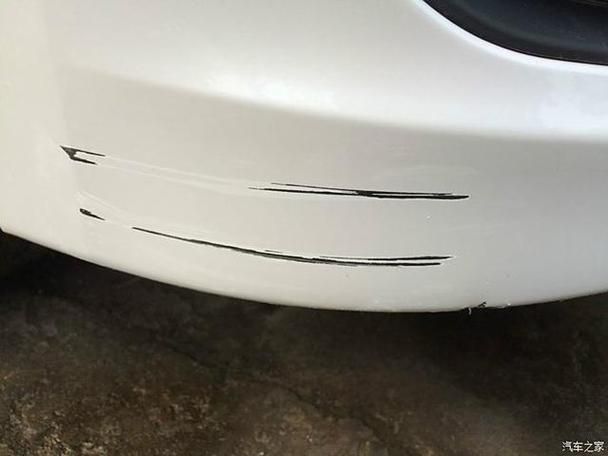
The principle is just one: it's fine if it's fine. And throw a layer less varnish, unreversible。
The product mix can be matched with a shallow scratch, either a thin sponge plate with a pg j3 and a pg wax, or a pg j5 mirror reduction agent (precision wax) with a very thin sponge plate. Deeper scratches begin with a plating of j2 hydrophosphate (bold wax) with hard disk surfaces, then j3 transitions and finally j5 is emptied。
Remember protection after polishing - page x1 quick effect liquid wax sprayed on it, saving time and effort。
Remember one iron law: coarse wax with hard drive, fine wax with floppy disk. It's either a slip or a print。