It's original
The fire hit the south korean building city for more than a decade, causing a sudden cooling。
Data from the korea real estate commission show that in the first half of this year, the number of apartments traded across korea was 184134, a decrease of 50. 6 per cent compared to the same period last year, the lowest level since 2006, and the volume of apartments traded in seoul fell by more than 70 per cent。
Korea's average house price has also fallen: it fell by 0. 16 per cent in the first half of the year, including 0. 25 per cent in seoul。
Behind the cooling of the building is a continuous increase in interest rates in korea。
In july, the central bank of korea increased its interest rate by an unprecedented 50 basis points, raising the benchmark rate to 2. 25 per cent, the sixth since august 2021。
The sharp rise in housing prices has been one of the challenges facing the korean government. The previous president’s 25-wheel market regulation policy over the last five years failed to bring down south korean housing prices, while the central bank of korea increased interest rates successively。
However, ordinary korean families face an even heavier debt burden。
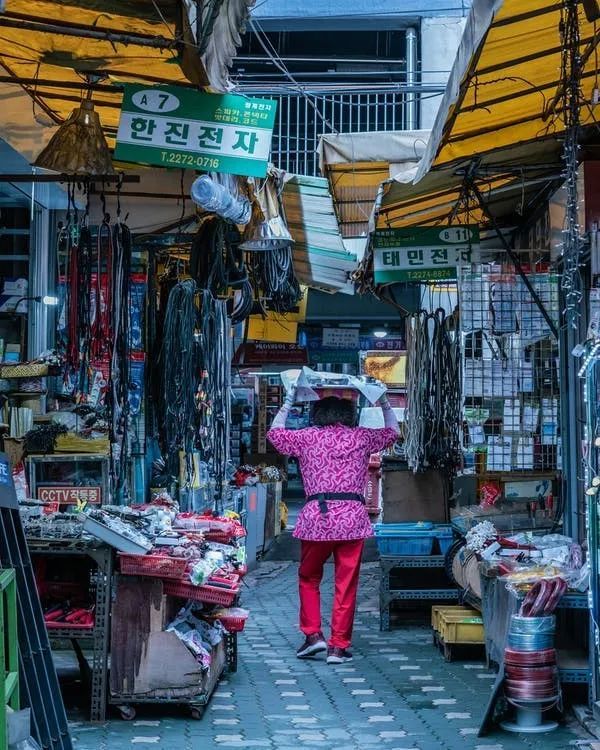
Source: pexels
The mortgage burden is unprecedented
How hard is it to get a room in korea now
The 36-year-olds owned a small apartment in the centre of seoul, and she and her husband carried 500 million won (approximately 2. 6 million yuan)。
In recent years, interest rates on loans have risen with benchmark rates and the repayment costs of ordinary home buyers have increased as a result of successive increases in the central bank of korea。
This undoubtedly increases the burden on the families of the “all youngs.” “now an extra 720,000 won (approximately rmb 3744) is to be repaid every month.”。
With a view to repaying the mortgage, jeong-yeon, who had just given birth to a child, decided to terminate her maternity leave early, she could not take care of her physical recovery, but had to work as soon as possible to supplement her family's needs. “i don't want to break my confession, i don't want to move, this house is all i have, and i don't want to give up anyway.” she said。
Today, in korea, average mortgage interest rates have reached 5-6 per cent, the highest level in more than nine years, forcing people to bear the world's highest debt burden。
The recently released global debt report of the international finance institute (ifi) shows that in the first quarter of this year, korea's household debt-to-GDP ratio was as high as 104. 3 per cent, ranking first among the 36 major economies and the highest in the world。
The report also shows that domestic debt in korea consists mainly of mortgages, driven by strong housing demand and rising housing prices. Nearly three quarters of korean household wealth is closely linked to real estate. The debt associated with the real estate market amounts to 2. 6 trillion won (approximately 13. 5 billion yuan), and more than 70 per cent of outstanding loans are based on floating interest rates, and the burden on households buying loans will inevitably increase once interest rates are increased。
Market projections suggest that by the end of this year, the korean benchmark interest rate is likely to rise from the current level of 2. 25 per cent to 2. 75 per cent, that mortgage rates will continue to rise and that the debt burden of ordinary households will further increase。
According to the korean housing site zigbang, the previous mortgage rate was 4 per cent per annum, and the monthly supply of apartments in seoul would represent 45 per cent of the average disposable income of urban residents. If the annual interest rate rises to 7 per cent, the monthly allowance will increase to 62 per cent of disposable income. The korean financial regulatory authority has also indicated that, once the average mortgage interest rate rises to 7 per cent, 1. 9 million people will be in arrears。
“if the interest rate continues to increase at the end of the year, the total monthly repayment will amount to nearly 4 million won (approximately 20,800 yuan), which is already equivalent to 70 per cent of my husband's salary.”。
3. 54 million deficit households
Koreans with the same heavy mortgage pressure as all janyan are not few。
“it makes me feel bad to see this house, nominally my house, but i can't handle it with a bunch of debts.” forty-six-year-old kim ho has bought a house in poezhou, korea。
Kim hak earns about 4 million won (approximately 208,000 yuan), but after paying his mortgage every month, he also runs a deficit of 550,000 won (approximately 2,860 yuan). One family had a diet and two sons had cut the cost of remedial classes, but kim ho's debt situation had not improved。
This year’s news of cooling in the south korean building city shows that kim ho’s house has fallen in price, but he has no way of selling it, and can only afford to keep the loan burden rolling like snowballs。
The report family characteristics and directions for family financial deficit, released by the korea financial research institute in may, shows that 17. 2 per cent (3. 54 million households) of the country's 2. 05 million households are in deficit。
Families in deficit are those that have no surplus after the deduction of income from essential household expenses and non-essential expenses (taxes, annuities, etc.)。
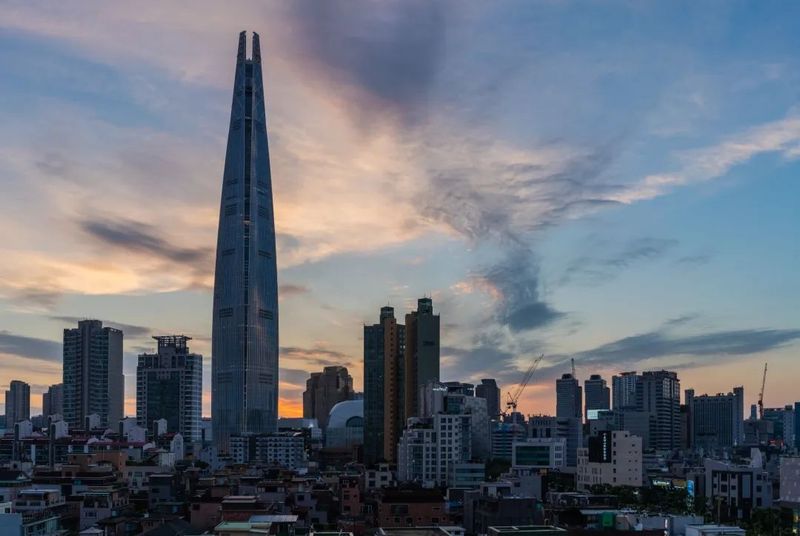
Seoul, korea. Source: pexels
The average annual income of these deficit households is 46 million won (approximately 240,000 yuan), while the debt burden is the largest cause of the household deficit。
The korean media specifically analysed data on household indebtedness in korea, showing that the proportion of the population under 39 years of age was the largest, at 32 per cent, followed by those aged 40-49 (30. 3 per cent), 50-59 (23. 5 per cent) and over 60 (14. 1 per cent)。
Choose waiver
The pressure on repayment has increased, and more and more koreans are unable to afford housing and choose to rent。
Data from 20 july indicate that the unprecedented decline in the real estate trading market was accompanied by a surge in the number of rental contracts in seoul this year. The number of real estate lease contracts signed in the first half of the year was 46,4684, an increase of 31. 1 per cent over the same period. In particular, the number of monthly rental contracts reached an all-time high of 55. 2 per cent more than a year ago。
In addition to renting, there are options for moving to lower-cost areas。
Data from the korean ministry of administrative security indicate that the decline in the resident population in seoul has continued to accelerate, again falling to 9. 5 million this year. As at the end of may this year, there were 9,496. 88 million registered residents in seoul. In response, the seoul institute analysed that the majority of those who moved were housing problems。
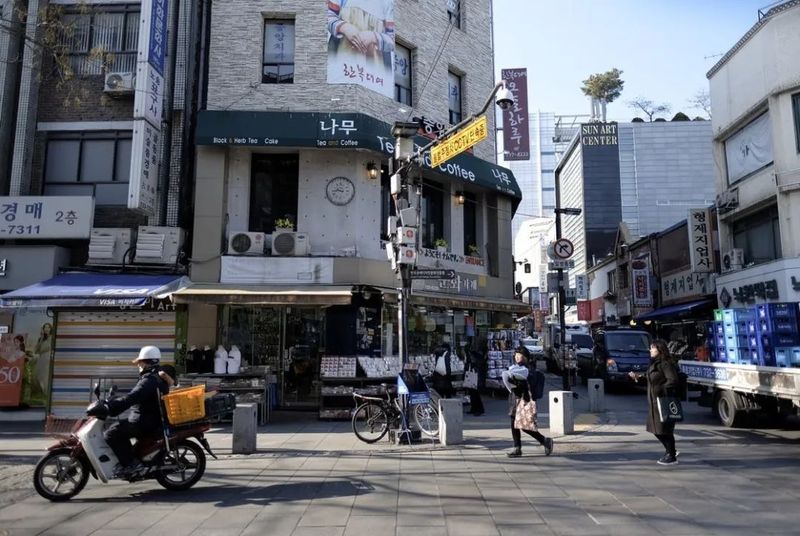
Seoul street, korea. Source: pexels
At the end of 2010, the resident population of seoul remained at around 10. 31 million, but has since been gradually decreasing. Today, some korean media have even used the title “republic of korea has no more than tens of millions of cities”。
The korean government is aware of the seriousness of the problem and, in addition to a decrease in the resident population in seoul, further increases in mortgage rates could increase the risk of default。
At the same time, rising prices for housing, energy and food are further eroding the consumer capacity and confidence of korean households. The july consumer confidence index (ccsi) in korea fell by 10. 4 per cent to 86. 0 for the first time in two years. The ccsi index is calculated on the basis of six indicators, namely, current living conditions, outlook for living conditions, household income outlook, consumer expenditure outlook, current economic judgement, economic outlook, etc., and if the value is less than 100, it means that the consumption mentality is pessimistic compared to the long-term average。
Once poorly managed, it could even slide further into the financial crisis。
On 17 july, the korean government indicated that owners of low-priced houses (with a value of less than 400 million won) were allowed to borrow at fixed interest rates instead of floating interest rates, starting in september, in order to ease the burden of interest payments and thus mitigate the impact on the financial system。
The minister of finance of korea also indicated that the structure of family debt would be rapidly improved. He expected that, when the planned refinancing programme was launched, the proportion of household debt at floating interest rates would fall more than five percentage points, or from 78 per cent to less than 73 per cent。
For koreans, however, such measures are far from solving the underlying problems。
Research by the korea institute of public finance concluded that the high cost of living had long begun to undermine the marriage and fertility rates of the population. If the house price increases by 100 per cent, the per capita fertility rate will drop by 0. 1 to 0. 3 percentage points in eight years。
Statistics released by the korean government on 28 july show that the korean population has already registered negative growth in 2021, for the first time in 72 years。
In the face of negative growth, young koreans do not see it in social media: “life is so difficult that no one wants to give birth to a new life in such circumstances”