From a demand-side perspective, the driving forces of this landscape restoration are undergoing structural shifts. Short-term pulse-type preparation requirements have peaked. The 2026 fifa world cup was prepared as the core driver of the boom in prices in the first half of the year, with a cumulative 30-50 per cent increase in the prices of the mainstream tv panels in january-april. However, with the closing of the pipeline, the market had reached the platform stage in may, and the industry agency lotou technology predicted that the price of the late july plate would be moderate and weak, with a slight downward pressure. This means that the price increases driven by a single event have largely ended。
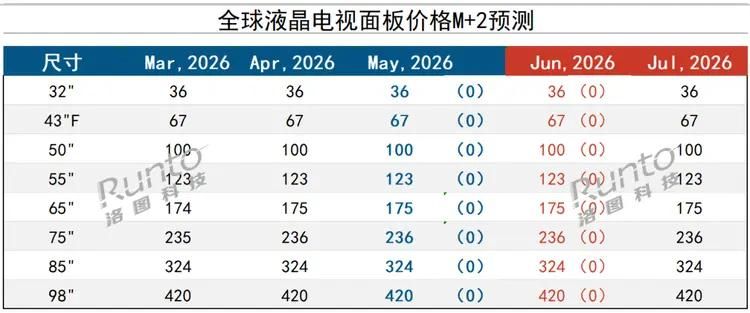
Global lcd panel price projections for march-july 2026
However, structural incremental demand is becoming a medium-term underpinning. On the one hand, the spread of ai pc places new demands on the high-end lcd panels, such as high-renovation rates and low-power consumption. Counterpoint predicts that global ai pc penetration will reach 30 per cent in 2027, which will continue to pull high-end demand. On the other hand, while the television market is generally weak, the trend towards large size is clear。
In 2026, the share of q1,75 in and above television was nearly 40 per cent, an increase of 6. 7 percentage points over the same period. The mindset of consumers to “buy or buy big television” provides a structural increase in the demand for panels. As a result, there is a complex picture on the demand side of the “short-term race retreat, but in the medium-to-long term there is an ai and a big screen bottom”。
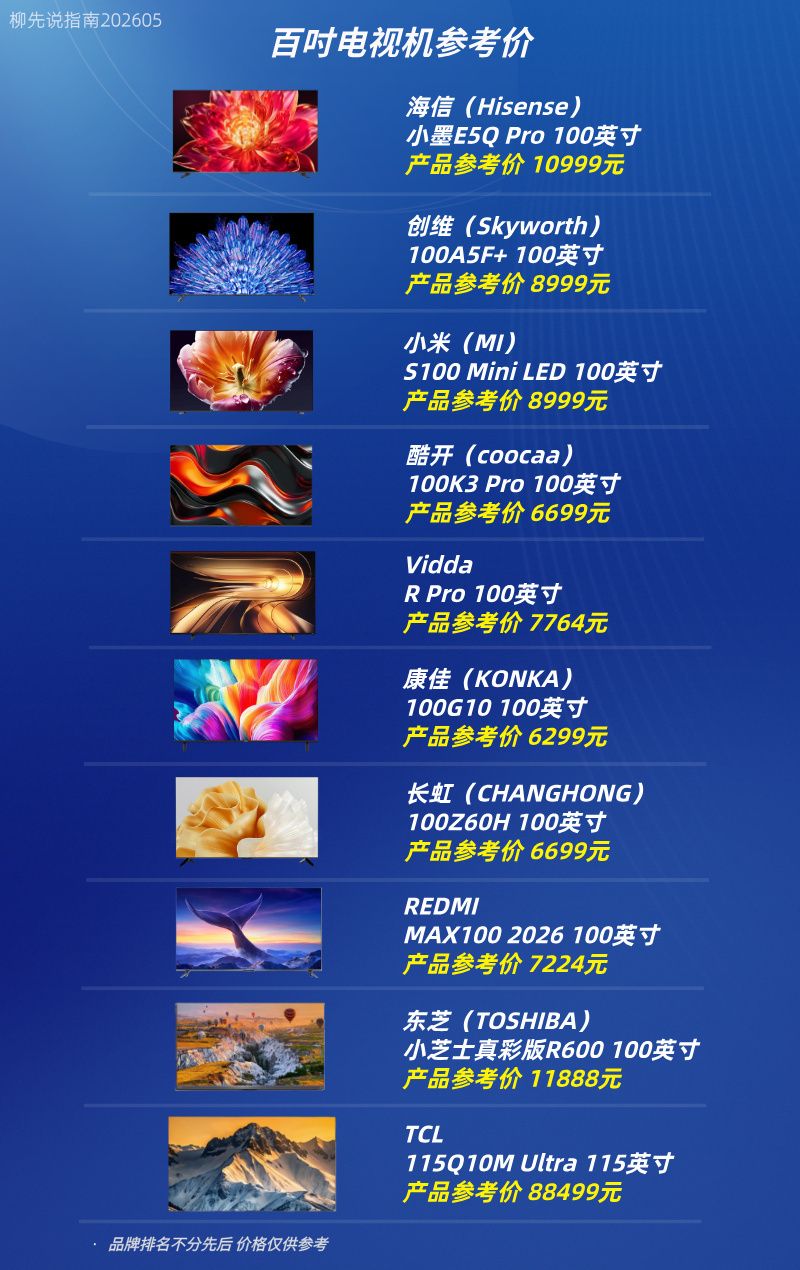
Reference price presentation for multi-inch television products
From a supply-side perspective, there has been a fundamental shift in industry logic from “capacity expansion” to “capacity control”. The core conditions that had triggered price wars in the past — the uncontrolled release of production capacity — have largely disappeared。
Data show that mainland chinese enterprises already account for 78 per cent of the global lcd capacity, with the combined capacity ratio (cr2) of the two oligarchic pattern of the east of kyoto and tcl being over 55 per cent. The lcd capacity of japanese and korean producers has largely withdrawn from competition。
More critically, the business strategy of the lead firms has changed. Instead of maximizing their scale, they seek to stabilize their profits. A clear signal is the positive downward revision of the industry's crop rate (capacity utilization): the average crop rate in the q1 sector was 83 per cent in 2026, and q2 has been scheduled to fall to around 80 per cent。
This understanding of “demand-based production” has led to a proactive contraction on the supply side, which is a key valve for keeping current prices stable and avoiding a repetition of historical events。
An entry from the perspective of a business's profitability and competition pattern reveals that current firms lack the underlying motivation to wage price wars. Unlike historical losses, when forced to survive at “price-for-price” prices, head enterprises are now on the path to profit improvement. The net profit to the mother was $5,857 million in 2025, an increase of 10. 03 per cent over the same period; the net profit to the star tcc in 2025 was up to $8. 01 billion, an increase of 44. 4 per cent over the same period。
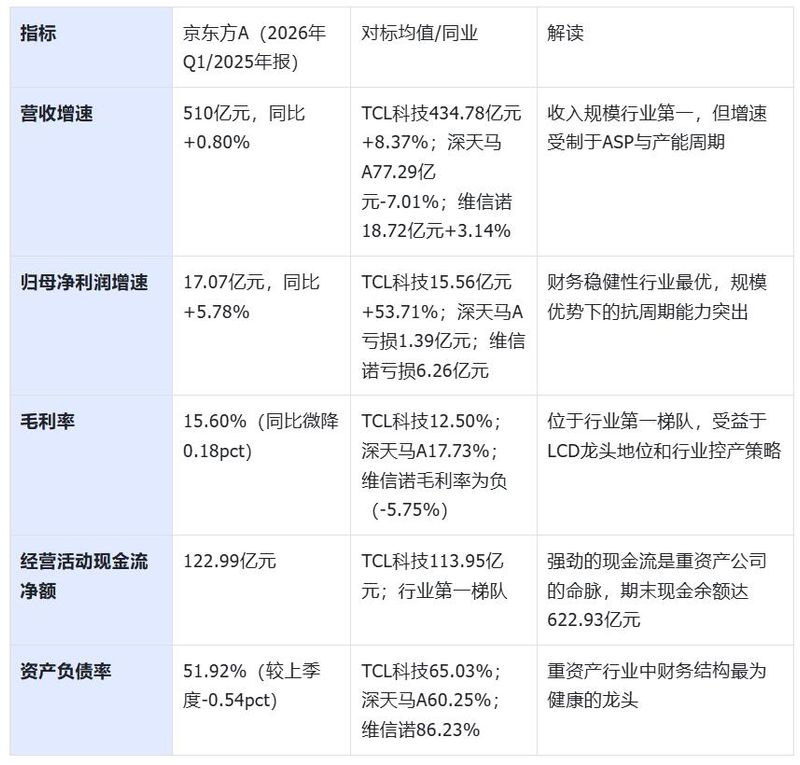
Comparison of various financial indicators between the east of kyoto and the industry
At the same time, with depreciation reaching a peak of $38. 7 billion in 2025 in the east of kyoto, future cost pressures will gradually be reduced and profit will release more space。
High concentration market patterns have also created strong price stabilization mechanisms. When two enterprises, the east of kyoto and the tcc, took over half of the world's production capacity, they essentially took the lead in pricing the industry. The vicious price battles are a negative and competitive game for both sides of the equation. As a result, maintaining crop rates and securing reasonable profits through communication and consensus has become the best strategy for both oligarchs。
The research on chinese securities notes that this supply side control has significantly weakened industry cycle volatility。
Taken together, the above dimensions are the trigger conditions for price warfare. The occurrence of full-scale price battles requires extreme scenarios with a lower probability (about 20 per cent) and possible trigger points include:
Integration judgement: short and strong recovery of the atmosphere, low probability of price battles but structural risk alert
Based on a multidimensional perspective, we can draw an integrated conclusion:
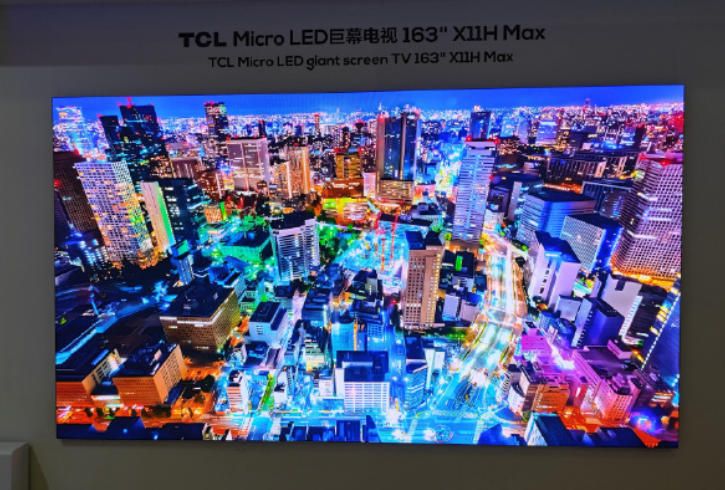
Big micro led tv show
The real risk may lie not in the repertoire of price battles in history, but in the fact that structural demand (e. G. Ai pc) is falling at a slower rate than expected, while traditional tv demand continues to weaken, which could lead to price collapses and erode corporate profits. Even so, under the double-oligopolistic production pattern, the likelihood of a price cut-off and an industry-wide loss in 2019 has been significantly reduced。