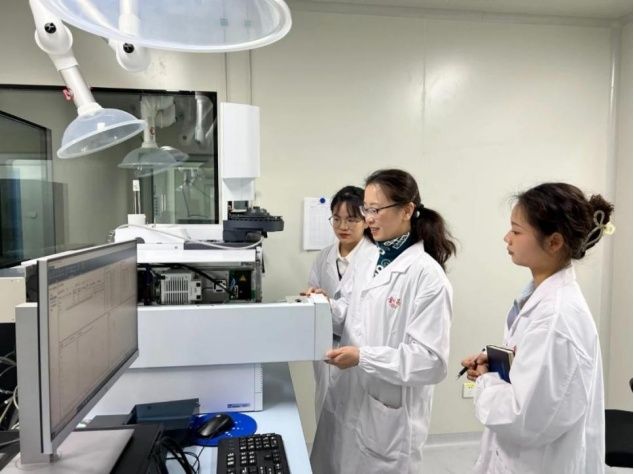
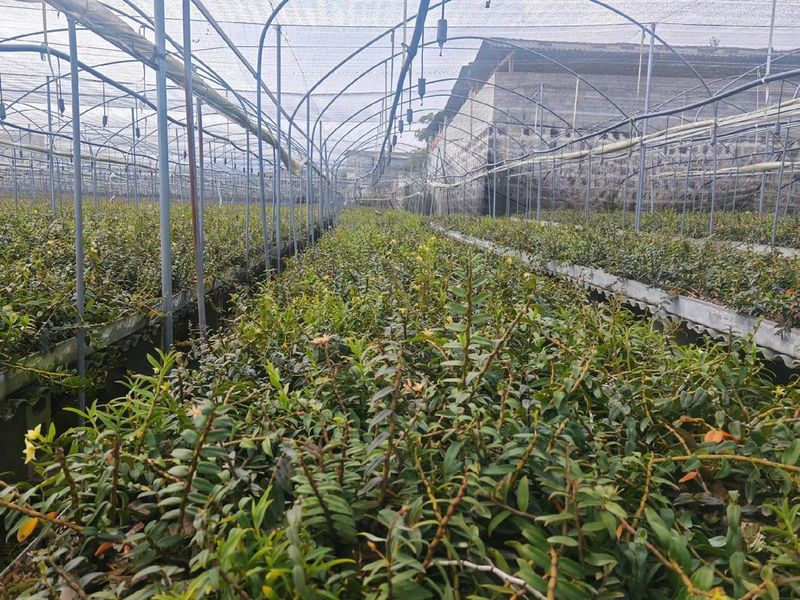
1. In terms of the selection of areas for iron and stone cultivation, i believe that the biological characteristics of the platinum should be taken into account, taking into account natural factors such as the light, humidity and ventilation of the site (generally the selection of areas with field iron and stone distribution). In order to gain access to high-yielding and high-quality pelvis, it is necessary to regulate the cultivation, intensive cultivation, and artificially to create an excellent growth environment, with conditions that are essentially close to their wild environmental climatic conditions, to meet its growth needs. It's usually grown in the hotbeds of greenhouses, so many factors can be artificially controlled. 1 pre-plant preparation 11 production facilities are generally set up in the following conditions: based on the large and rational design of the plant size, the greenhouses are typically 30 m long, 6 m wide (or 8m) with a shoulder height of 18 m and a total height of about 4 m; the plant bed z is set to a width of 1 ni left
Right road, easy to manage. The greenhouses can be constructed with a selection of steel skeletons for durable use, but with a higher one-time input cost; or the cement pillar can be built with a lower sexual input cost, but with a short life and no lower total cost after many years. The roof is covered with plastic-free shrouded film and a 70 per cent shaded net, surrounded by a fence and equipped with a population. The nursery needs water, electricity, roads. And it is best to have an automatic or manual control spray system (spray, fertilizer, spray) in the shed. 1. The two-bed preparation sheds are equipped with high-mounted seedling beds that enable them to easily control their moisture and breathe. This provides the conditions for group seedling growth. Angular steel, wood bars, etc. Can be used as a frame for seedbeds, which are as long as greenhouses, with a width of 1. 2 m. With an empty height of about 40 cm. There's a passage between the bed and the bed, so that you can plant it. In order to make the most of the shed space, the planting bed can also be used to shake hands
3. Modified seedbeds, which leave a channel that increases cultivation and accumulates and meets operational requirements. The bottom of the bed is generally laid with a wire wire so that the matrix does not leak out of the gap, and a 40-point anti-worm net is laid on the wire. The choice of the pre-plant matrix, which is 7-15 cn)o13 in thickness, will then have a significant impact on the survival, growth, reproduction and yield of the pelicans. There is a wide variety of matrices that can be used for iron platinum transfer. Different researchers also receive different types of optimal matrix. Yuan zheng, for example, planted sprouts of iron plasters with river sands, jaguar, bricks, pearl rock (100 per cent), pearl rock + coconut (1:1), coconut aluminum (100 per cent), peat earth (100 per cent), and found that peat had the best effect, coconuts and pearls + coconuts z
4 other effects are poor. According to some, there are a number of substrates, whether iron and platinum are high in terms of activity, production, roughness, the effects of a combination of wood + mossy are best seen in terms of growth and poor: wood + mossy + sawnwood + decaying soil + river + sand + decaying soil. Teether hairs, such as the transfer of iron platinum inactivated test tube seedlings (5 cm taller) to each other (5 cm) limestone filtration 5 cm + decayed leaves 8 cm + live moss widow 2 cm, limestone filtration 5 cm + broken moss 8 cm + live moss 2 cm, limestone filtration 5 cm + saw 8 cm + live mossy 2 cm, resulted in the discovery of the best and highest production of iron plaster filtration 5 cm + saw + 8 cm + living moste 2 cm for the base. Tang jun-won uses 2 cm-sized wood and moss
5. The combination of use, high-temperature disinfection and 24 hours of immersion with clean water prior to use has yielded better results. These are a few of these things, and the people who cultivate them are selected according to different realities. 2. The testimonial study indicates that the grouping of seedlings is the best time for transplantation at 0. 5-1. 0 cm. Before planting, the iron platinum seedlings were planted in indoor seedlings. Twenty-five days later, the pedestals were bred from the saplings of the saplings, and 101 per cent of the bacterial liquid was disinfected in order to prevent the sapings from decomposition. Cultivation takes place at 15 cm x 20 cm range, with root i! Spreads and covers the matrix to its roots, so that the seedlings can be fully connected to the matrix and so that they can fill the root water. There are more crops than monoculture, and three are more suitable. The planting time is 36 months, during which the cultivation team has a rate of survival
6. High, up to 95 per cent and strong. It is not appropriate to transfer plants when the temperature is too low or too high. In the home of the iron platinum, generally speaking, except for the coldest december and the hottest seven. It is possible to migrate outside august, but is generally selected for 45 months. The best cultivation season in yunnan pu ma is sequenced as follows: mid-march to mid-september and late november to late june and late october to early december to early march. When shifting cultivation methods, small holes of 23 cm can be dug deep on the matrix. Lightly put the seedlings, out of the bottle, and clean up the saplings, so that they don't break the meat root of the rock, and then cover it with the base. In studies like this one, it was found that the size of the platinum test tube, which was moved during the best growing season, was not clearly related to the survival rate, and the production was very significant in relation to the thickness of the test tube; he further analysed that the smallness of the seed was related to the small amount of organic matter and energy accumulated in the body
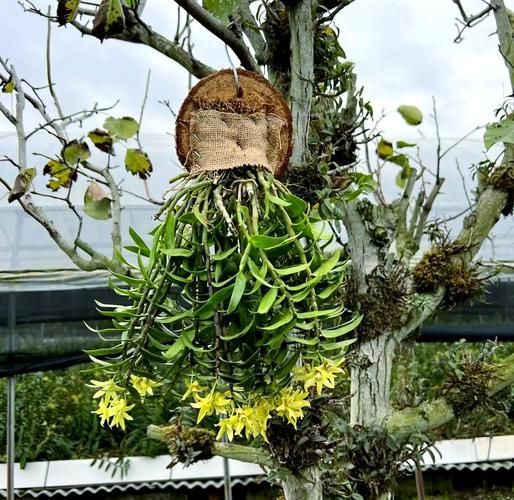
Seven, the ability to adapt to the outside world and the resistance are poor and slow to grow. So we should separate the naked seedlings, the few seedlings and the contaminated seedlings from the positive seedlings for management. 3. Greenhouse condition management (1) light iron platinum is a more laborious adsorption plant with direct light by 10 a. M., with a 20 per cent dispersive light required for the remainder. The greenhouse sheds usually use 75% of their activity to cover the net. In the summer, appropriate additional shades of light should be added to avoid the yellowing of leaves due to excessive light, and in the winter, the intensity of light should be increased to avoid the weakness of leaves due to insufficient light. Iron platinum, with a maximum light intensity of 5 000 000 uxo temperature, humidity, and a temperature of 2530°c during the day, 1520°c at night, low temperature, not less than 8°c, not higher than 35°c o humidity
Control at 60 per cent, with shades and microsprays for cooling and damp if it's hot or wet in the summer, but with temperature protection, attention is to be paid to ventilation, especially in the summer, to air flow and to the prevention of pests and infestation; at low winter temperatures, it can be controlled at around 10°c by heating. Air moisture should be maintained within one week after planting at around 90%, and after one week at 70%. (3) the water is kept in wet state, but does not accumulate water, within one week of the first planting. Water sprays are used only to increase air moisture and prevent excessive evaporation of the leaves from causing atrophy. After the new root starts, the dry-wet principle is used to water, and once it's filled, the surface of the matrix becomes white, and not half-stamped. The amount of water is also different from season to season, with high summer temperatures and high evaporation levels, which basically require daily watering; low winter temperatures, low temperatures and high temperatures. Water
9. Non-dispersible and therefore subject to the water content of the matrix, which can be supplemented by some moisture if it is dry. (4) fertilizers. Iron platinum roots the nutrients of which are mainly rooted in the roots of the lactus that fix small-air evaporation nitrogen, but the application of appropriate fertilizers can contribute to the growth of the stem and the growth of the leaves. Following the new root, the application of liquid fertilizers, such as potassium phosphate or potassium phosphate with urea, can begin at a concentration of about 0. 1%, usually one application for about 10 days. Twelve months later, the seedlings have gradually adapted to the new environment, and when the new roots have grown to around 10 cm, they can apply slow particle fattening to help them thrive. According to chu yan and others, group seedling transplants 15 d are best followed by the application of 1/2 times more nutrients. White hair, etc
The results show that ... The proper concentration of nutrients can lead to a significant increase in the production of iron platinum. The manure commonly used in iron platinum is leaf paste, which is considered to be sprayed by white hair (n: p205: k20=25:13: n, p, k total 51% and trace element b, fc, zn, cu, mn> mo total 1%), which promotes iron and platinum tuber leaf growth, length, diameter length and thickness, with the average size of single strains significantly above the contrast. (5) studies such as the plant growth regulator found that the application of exogenous growth factors (e. G., gaacin, 6-ba) had a significant effect on the promotion of production; studies such as that of teng jianxi. Hormonal treatment enhances the activity of the active oxygen cleaner, reduces mda from peroxidation of membrane, and contributes to the resilience of iron platinum. According to mosha et al., under low concentration conditions, with aba (
The increase in the concentration of decomposition acids increased with the acceleration of the growth of the original tubing, with the greatest increase when the concentration was 0. 5 mg/l. (6) patients and pests against iron and platinum diseases include soft rot, black spots, anthrax, etc. Stable diseases occur quickly, and in serious cases the whole decomposition is humid; black spots cause the leaves to die; and stone anthrax causes the leaves and rods. There are black or brown spots in the affected leaves. In response to these common conditions, it is necessary to strengthen the management of the sheds, to provide for ventilation, to reduce their humidity appropriately, to treat them in a timely manner and to remove the disease. Snails, phelm clams, red spiders, etc. Are the victims of the snails. Among them, snails are common pests in mountains, and they endanger pups, leaves, flowers and fruit. Preventable by booby traps, by-catch, or by-products of lime, tea; styrofoam clams, born on the edge or back of a plant to suck up juice, can be destroyed by burning the old branches that contain the twigs or by using 40% of the fruit butter 1,000 times: red spiders can be prevented 800 times more by removing weeds from the surrounding environment or by spraying low-toxin. Iron platinum is a precious medicine, so the pest control of the platinum should, as far as possible, be based on prevention, physical and biological control, the principle of which is prevention and treatment. Non-use or use of low toxicity pesticides: when pests and pests are found, appropriate measures should be taken in a timely manner to avoid an increase in the incidence of pests and diseases