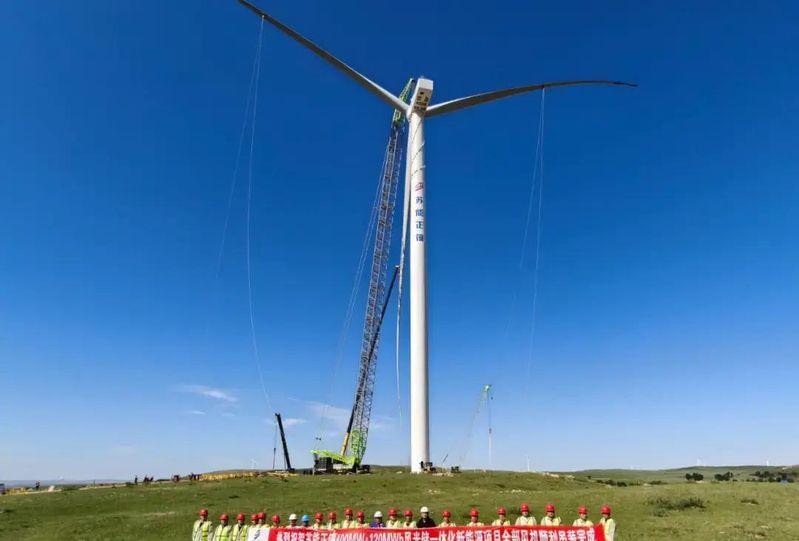
Last october, i was on a trip to the seripera. It was a particularly windy day. I was standing by the construction site, watching the crane pull up the last 10 mw winding cabin, and it was quite a shock -- i suddenly realized that the electricity industry had really changed over the years。
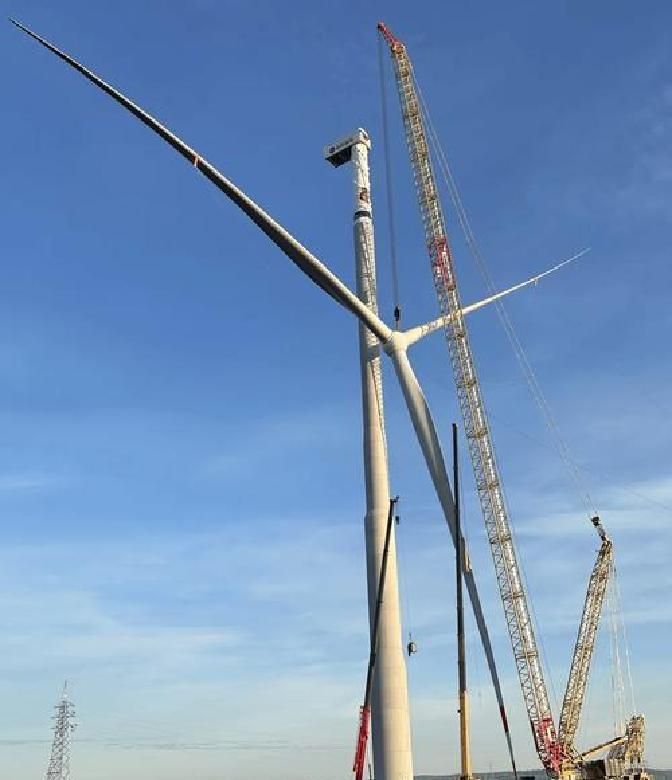
I myself have invested in a few new energy-related funds, and, to be honest, i tickled when i used to buy them more on topics, heat, carbon neutrals and the word "two carbon target". Until that time i saw the 10 mw windmill hanger with my own eyes, i sort of realized that there were people in the backstage in the middle of nowhere, with wind and sand, putting up a windmill, and we bought a fund, not a story, and it was these real-gold projects。
I'll tell you what i saw that time. It's called suenen's 320 mw wind and power project. It's an integrated, big machine, 400 mw. In short, wind + voltage + energy storage + camera sets together to form a large base of “self-generated, self-stable”。
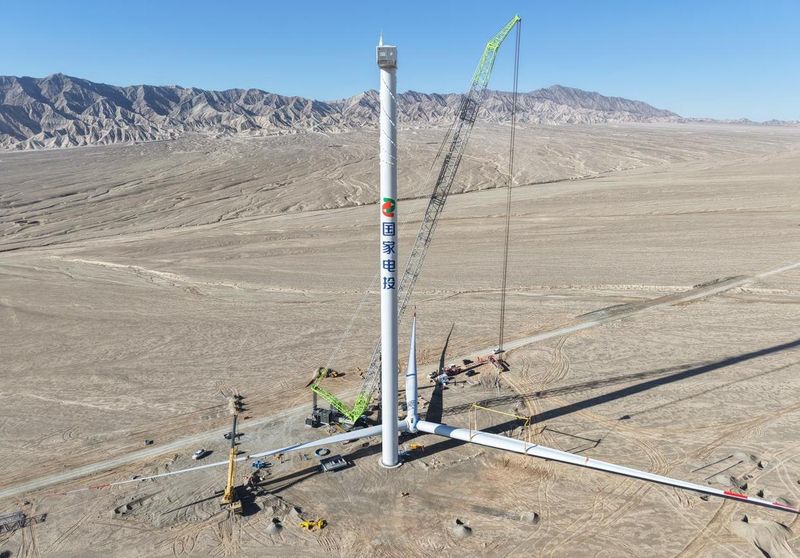
I was standing up on the prairie with that 10 mw windflip round and round, and, frankly, a little dizzy. The staff told me that a single station is full of loads and can deliver 10,000 degrees of electricity... It's like i've had about 300 degrees a year of electricity in my house, and i've had three hours of this windmill for a year, and i've been thinking about it。
Ten years later, when i got into the city, the wind and electricity news was all about a little machine like 1. 5 mw, 2 mw. I used to buy an old wind station, and the main machine in the book was 1. 5 mw. I thought it was quite advanced. I didn't know it was only a decade since the land wind machine had been working on 10 mw, one of the six or seven, and i was standing on the prairie looking at the big guy, and i had a feeling that the industry was really going through。
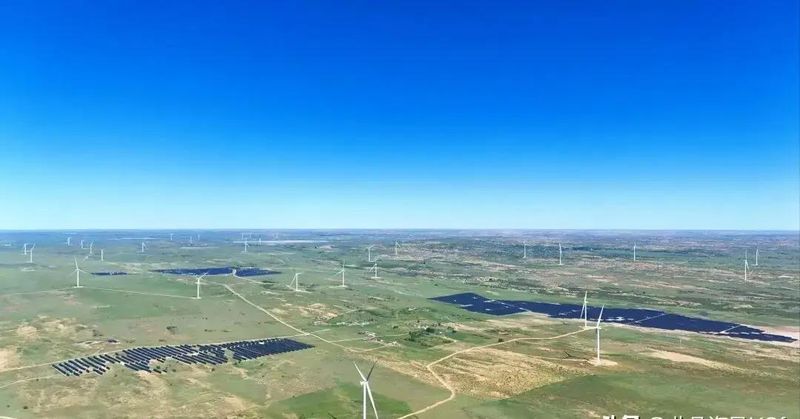
The wind and electricity component of the project is 320 mw, which combines 33 6. 7 mw and 10 10 mw large machines. You can't feel it just looking at numbers. I was standing under a leaf. How big was the wheel's diameter? The staff told me that the area was bigger than 3 standard football fields. The wind is not particularly strong in the steppe, but with a little wind, this thing can keep the wind in the air, and it can start at low speed. I reached out to the edge of the leaf, cold glass and steel, and i was a little excited — it was all money, dozens of tons, and tens of millions of less than a crew investment。
But this thing, we all know an old problem depends on heaven. When i used to buy wind power units, the worst thing i could do was to see the news of the high rate of wind disposal, the "power-limits" and the lack of access to electricity. When i was at the scene, i asked myself, how did this project solve this old problem
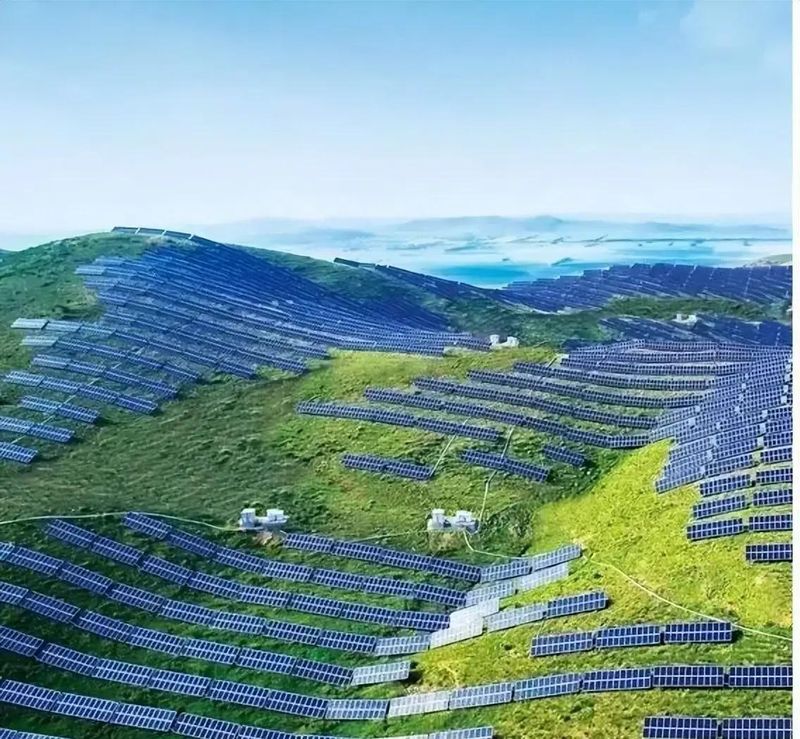
They showed me the configuration, besides wind, and the energy and the camera. In large white, "batteries" and "grid stabilizers" have been added。
I'm standing outside the storage station, looking at a row of white storage tanks, a box full of boxes, like a container. It's a battery, and when it's windy, save the extra electricity; when it's windy or heavy, release it slowly. I was thinking that i'd put a video of my cell phone being charged at night and put it out for use during the day。
For the first time, i was in a drum room outside the physical edge, which was a rotating heavy machine, the main function of which was to give the grid a steady heartbeat. I've only read that word before, and when i've actually come to the scene, and i've seen that big piece of steel buzzing around there, it's really reassuring that when it comes to these things, the impact of wind grids on the grid is much smaller and the power is more stable。
The project was also equipped with a 220-kv lifting station, where green electricity was “gamma power”, which, when the voltage rose, went directly into the grid and went to the loading centre. I was standing outside the fence, looking at the line and the equipment, the air in my ears, the low-frequency buzzing in the power plant, and i had a feeling of being unspoken — these things, once shipped, were not the “new energy concept” in the ppt, but actually 960 million degrees of clean electricity a year。
Speaking of which, i think of my own experience with the "turner." it's about the year 2020, when that wave of new energy, the bulls, i was caught up in various articles, thinking that the new energy is "new capital plus new technology" and that the next decade is a golden season. I made a very typical mistake. I threw 80% of all the money in the account into the new energy-related fund, staring at the net value every day, and i couldn't enjoy it any more。
Then you know, the change in policy winds, coupled with too high valuation, began to kill the new energy unit. For a while, i opened app every day, watching it greener than the day, the screen was so green, my hands were sweating, my sleep was always brushing, and i was so anxious. I was particularly impressed by the fact that one week was a week of falling, and i thought i'd been paid two months for the book fall, and my stomach was sore. It was then that i realized that the new energy was better and that your own structure was too extreme to withstand fluctuations。
And then i went to these projects, and it wasn't just "the wind is so big" "technology is so advanced," but it was a few things that i looked at with the investors' eyes
First, is this thing "stable power." an integrated project such as the "wind + storage + camera" is essentially a "stabilizer" for new energy sources. In the past, many wind and electricity projects were active alone, and the wind broke out, and the wind fell short and the electricity grid could not handle it, so the wind was abandoned. The large base now, with the capacity to store and set up cameras as soon as possible, is equivalent to the project's own “depressure valley” and “stable voltage” functions, which are much less costly for the grid and more secure for our investors。
Secondly, the conditions of the location of the project should be seen. The savanna looks flat, but it's not too hard to build. I asked the construction workers at the time, who said that the area could have been frozen for more than half a year during the winter, and that it would have been able to build and hang itself for months. If you miss the window period, you wait another year. I remember the day i was at the scene, there was not a fully melted snow on the ground, and the workers were working in the wind in thick cotton suits and their faces were broken. The project team can only wait back and forth, with multiple parallel processes, and progress up to the point of every day, when the crew is hanged and when the groundwork is made。
Thirdly, it depends on the organizational capacity of construction. The 10 mw wind machine, the blades and tubes are dozens of metres long and hundreds of tons heavy. The path on the savanna is narrow and crooked, and all transport equipment has to be planned ahead of schedule — route surveying, reinforcement, turning radiuss are not enough to widen. I happened to meet a leafy entrance the other day, and the car moved slowly, and someone was in front of me with a confidant, and the wheel ran over the yellow dirt road round and round. At that moment, i had the intuitive feeling that every wind machine stood up was a special battle for "one transport, one suspension." the ability to hang all 43 typhoons, as well as zero accidents and zero quality problems, is not possible for every developer。
So then i look at the new energy-related funds or stocks, and i'm used to asking if the project behind it is this kind of "windlight integration"? Is it equipped with a storage capacity and a camera? Is it in a good place with good resources and good internet access? If it's just the kind of early, single windfield, with no reserves, no systems, i'm alert — most of the projects in the future will be under pressure to pay even electricity cuts。
And after this project, it's interesting to have full capacity on the data, and it's 960 million degrees of electricity per year, saving 290,000 tons of standard coal per year, less 780,000 tons of carbon dioxide. The staff gave me an analogy, saying it was almost equivalent to 500,000 private cars parked for a year. I was standing there, looking at a long line of windmills, thinking of all the cars, all the lights in town, and the delicateness of my heart — we usually turn on air conditioning, charging, brushing our mobile phones, and here we are in the wild。
From an investment point of view, i think there are a few things that reassure me
One is the direction of the industry. In the next decade, the land wind machine has moved from 1. 5 mw to 3 mw, and now it's in the mainstream of 6-7 mw, and it's going down 10 mw in one breath, and the trend of "maximizing" is already on the edge. The larger the aircraft, the lower the unit installed cost, the same range of grasslands, the lower the number of windmills, the lower the capacity to generate more electricity and the lower the damage to grasslands. For our investors in the relevant industrial chain companies, this is equivalent to a broad growth field。
Second is technological maturity. I used to worry that wind opportunities would not be "good looking and bad" and that, after all, the bigger, the harder it is to hang, the higher the maintenance costs. But now that a project can be put on 10 mws in one time, and that all of them will be mounted without incident, it is clear that the industrial chain is more mature to assemble, transport and design these links. What does maturity mean? This means that costs are manageable and risks can be expected, and business profits are not easily lost。
Third is policy and regional synergy. The summon cooperation project is essentially a complementarities between the resource base and the electricity department. In the past, mongolia had been more popular, but less difficult, and jiangsu had more electricity but limited local resources. There is now a growing pattern of “wiss power generation, east power generation” that is beneficial for cross-provincial transmission and new energy sources. As an investor, i see a broad direction of long-term demand rather than short-term issues。
Having said that, i'd like to express a very simple feeling that i've grown from being a little bit bought on a cell phone, to being a little bit of a project person, because i've been taught, and i've been shaken by this real project. I used to think that new energy was a story + valuation, and it was only then that it became clear that companies that could really get out must have solid projects on their backs。
And then i'd like to ask you, have you ever seen one of those really big windmills? How do you feel standing down there? The first time i stood under a 10 mw windmill, i really looked up at my neck, and i was a little scared -- every turn of the leaf was money。
There's another question. I've been wondering if you think the land wind machine will continue to grow to more capacity. For example, 12 mw, 15 mw? Or would there be a "extreme limit" that would not be cost-effective or safe? If you're working in the electricity and wind, you can tell me what you see in the comment section, and i'll take an interesting piece of experience and i'll probably come out with you next time alone。
To be honest, there must have been a lot of money in the last couple of years that we've been on new energy. Do you have any experience of getting out of a car with short-term fluctuations while looking in the right direction? Or, like me, have you ever had another wave of fresh energy before you could sleep? If you don't mind, you'll share it in the comment section. We'll use each other as a mirror。