Introduction
The load of any building will eventually be transferred to the ground through the base. The foundations are known as natural foundations when they are built directly on unconfirmed natural layers of earth. If the natural foundations are weak, they are pre-processed manually, known as the artificial foundations. This process is referred to as “geo-treatment” (soil treatment) or “geo-stereo-enhancement” (soil improviement). The ground-based approach is divided into topography, deep-screeching, drainage condensation, chemical reinforcement, stretching and thermal. The law of hell is a deep secret in the ground-based approach。
Incubation equipment is simple and has a wide scope of application and can be used for various types of soil, such as soil filling, lost yellow, clay, gravel, rubble, etc. The experimental construction of the silt soft soil proved to be feasible as long as the construction parameters were controlled. This method is not only used for building works, but also for such works as bridges, roads, port terminals and large equipment bases, but also has the advantage of speed, impact and investment savings, which is an ideal ground-based approach。
At present, the application of the shanghai law is not very extensive, especially in the area of soft-based treatment research and construction, and it is hoped that this paper will provide some information and lessons for the promotion and application of the law in shanghai, through the introduction and analysis of examples of the theory and soft-based project。
Overview
2. 1 the origins and characteristics of the method
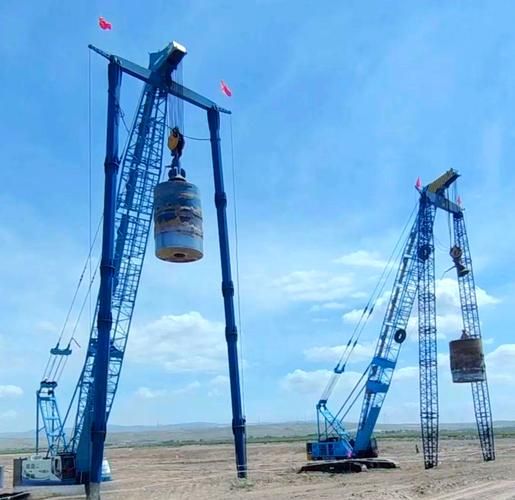
In the late 1960s, the foundation of the prison system was first created by the french company menard technology. The method is to free the heavy hammer (generally 100-400kn) from its height (generally 6-40 m) to the ground base with shock and vibration, thereby increasing the strength of the earth and reducing its compression, improving the hydraulic conditions of the earth's vibration and eliminating the wet fall of the wet yellow soil. At the same time, it can also increase the level of tectonic homogeneity and reduce possible future differences. It was initially used only for sand and gravel reinforcement and, after decades of development, it was applied to various ground-based soils, ranging from gravel to clay, mainly due to improvements in construction methods and drainage conditions。
It is rapidly spreading to all parts of the world, thanks to such advantages as strong ground-based consolidation, simplicity of equipment, ease of construction, wide application, economic ease and material savings. Thousands of projects in dozens of countries have now been built to strengthen their foundations。
2. 2 developments at home and abroad
The law of hell was first created in 1969 by the french company menard technology. Owing to its unique advantages, prison law is widespread abroad. In 1974, the british engineers association held a special foundation conference, at which menard himself gave a detailed presentation on prison. Since then, the ninth, tenth and eleventh international conferences on geotechnical and basic engineering, as well as regional conferences in various regions of the world, have produced a number of papers on the development and improvement of prison. This technology was introduced in september 1978, when a pilot study was first carried out in 1979 at the ponds to strengthen the adhesive foundations of the land. In june 1979, in the province of hebei and the sunspring of shanxi province, respectively, the ground floors of light, fine sand and yellow sand were treated. This was the first two projects in our country to have a strong treatment of the foundations. It was soon extended to beijing, shanghai, tianjin, guangzhou and shenzhen, and all had good technological and economic results, saving the country huge infrastructure costs。
3. Strengthening mechanisms
3. 1 motivated firmure theory
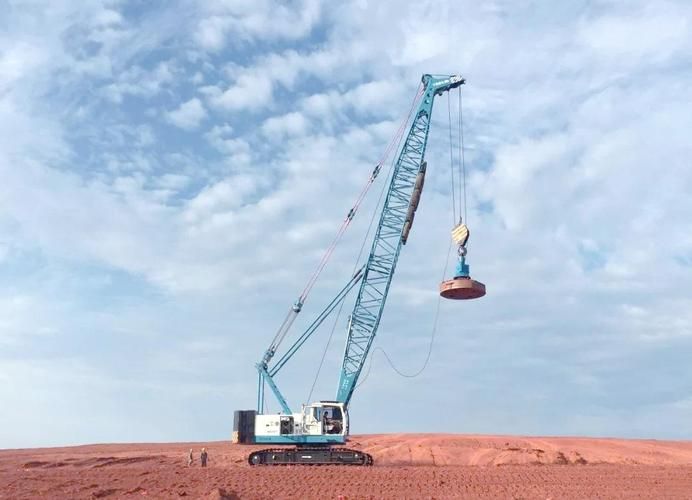
While hell has proved to be a better ground-based approach in practice, so far there is no well-developed theoretical and design calculation methodology. At the tenth international conference on earth mechanicals and basic engineering, professor menard of the united states, in his report on the level of scientific development of “ground-based treatment”, wrote about the mechanisms of traditional condensation of the strongness of hell: purgatory methods have now developed into large areas of ground-based soil, with depths of up to 30 m. When applied to unsaturated soil, the compaction process is essentially the same as that of the test of physical impact in the laboratory. In saturated non-adhesive soil, liquidation may be produced, which is similar to the process of explosion and vibration. The effects of this approach on saturated fine particles, and examples of successes and failures are reported. This type of soil requires the destruction of the structure of the soil, the generation of ultra-empty water pressure and the formation of drainage channels through cracks. The law of forced confinement is particularly effective in the case of mud。
It has been proven that, in the work of the puddle, the earth's body can be sunk to tens of centimetres instantaneously; the structure of the earth is destroyed and the strength of the earth is reduced to a minimum by the formation of liquidation in the soil; then, there is a diameter crack at the puddle, which is the main channel for accelerating the dissipation of the water pressure in the puddle; and the tactile nature of the clay restores and increases the strength of the pedagogic soil. Professor menard's practice, combined with traditional condensation mechanisms, has introduced new mechanisms for saturated soil that can be condensed and is now recognized by most scientists. Further information is provided below。
(1) compressivity of saturated soil
In engineering practice, regardless of the nature of the earth, it is immediately possible to cause a substantial deposition of ground-based soil, which is understandable for granular soil. For small permeability saturated fine particles, the discharge of pore water is considered necessary and sufficient to consider deposition, which is the basic assumption of traditional condensation theory. Owing to the low permeability of saturated fine particles, empty water cannot be released quickly with instant loads, which makes it impossible to understand the mechanisms that immediately cause a significant fallback in the event of a prison。
According to professor menard, as a result of the decomposition of organic matter in the soil, most of the land in the fourth epoch contains gases in the form of micro-foams, with concentrations of about 1-4 per cent. The pressure is reduced when the gas is shrunk and the pressure increases, and then the gas swells and the water is released. Every time you go to prison, the gas phase and the liquid volume are reduced. According to the experiment, the size of the gas can be reduced by 40 per cent per blow。
(2) generate liquefied
The pressure on the energy of the earth, which is applied to the earth, is gradually compressing. Thus, the sedimentation of the earth is proportional to the punishment. When the gas is close to zero in percentage terms, the earth becomes irrepressible. Corresponding to the water pressure in the void up to an energy level equal to the overlay pressure, the body of soil produces liquidation. Liquidity is the ratio of emptiness water pressure to liquefied pressure, as shown in figure 1. When liquidity is 100%, i. E. The critical state of liquidation produced for the soil. And it's called saturated energy. At this point, adsorbing water becomes free water and the intensity of the soil is minimized. Once the “saturated energy” has been reached, those who continue to impose energy are simply wasteful, except for the destructive effects of the reconstruction of the earth。