20 minutes to make a robot roach at a cost of about $45 and 50 minutes to run one time
Qingdao daily news/at-sea reporter yang kiki correspondent seo-soo
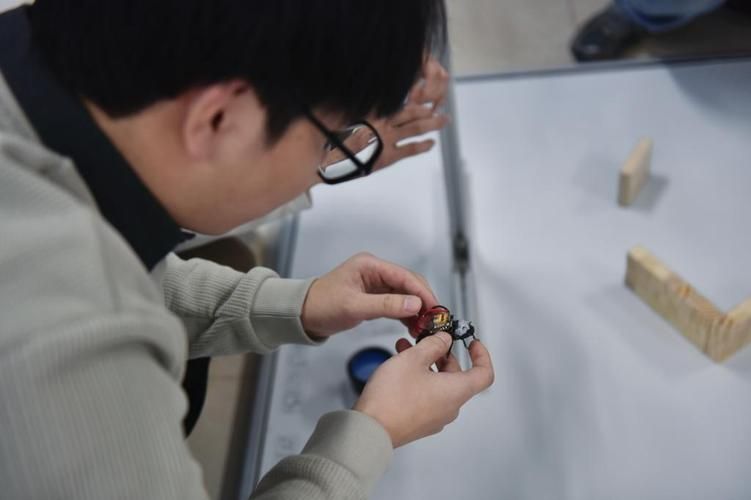
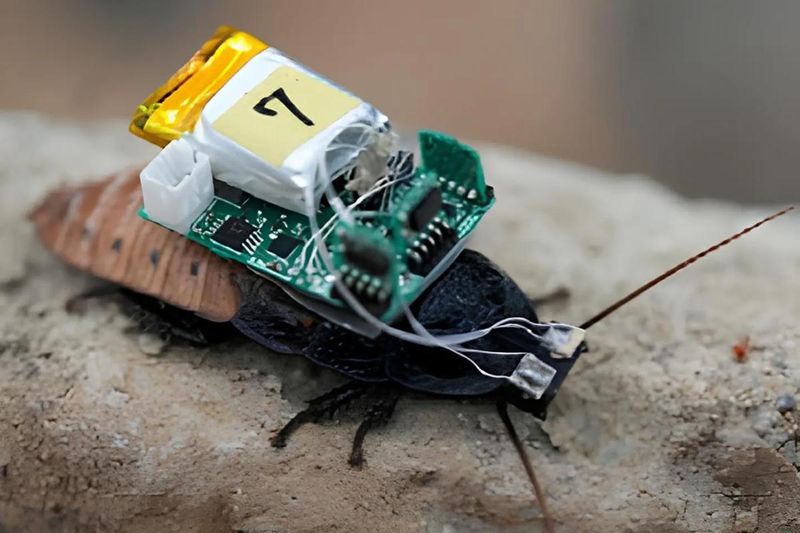
In recent days, in the aoshima fire division, a special test has been carried out quietly — in a mock disaster scene of about 10 square metres, a roache carrying an “electronic backpack” travels agilely in narrow tracts, with flexibility to avoid obstacles such as stone, wood, etc. Members of the team of animal robotics research at shandong university of technology are manipulating it while receiving images of cockroaches through their single-eye cameras in the head. This is the new generation of animal robots developed by the zhureto team, an associate professor at the institute of automation。
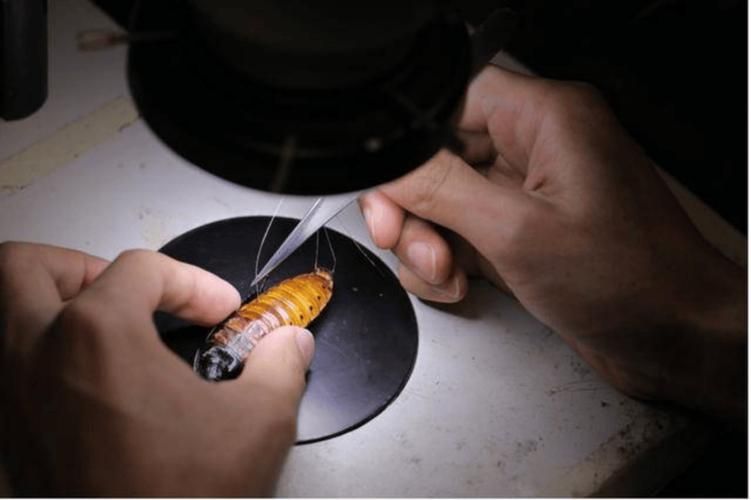
The core breakthrough of the robo roach lies in its highly integrated bioneurological regulation system. The whole control system is integrated into a micro- “electronic backpack”, with little impact on the normal activities of cockroaches. Through this “electronic backpack”, the operator can directly regulate the cockroach operation。
Zhureto described the team's six-fold increase in the efficiency of electrode implantation operations to 99 per cent, using an autonomous roach surgery preparation platform. They have also developed unique roaches' “linguistic” irritation signals to enable them to respond accurately to commands and to perform multiple functions such as remote control, surveillance, shielding and even wiretapping。
"we can make a robot cockroach in 20 minutes at about $45. They run for 50 minutes in a single operation for up to three months. “the electronic backpack,” introduced by the student participating in the project, has three iterative periods and has a transmission delay of less than 300 ms and a control distance of more than 100 m.”
At present, the zhureto team has worked with, among others, the china institute of electronics and network communications, and the “roach robot” carrying micro-sensors has shown stability in the testing and has been endorsed by its partners. “the robot cockroaches have a wide range of applications in areas such as small space detection, covert reconnaissance, and are expected to play an important role in the future.” zarito says。
This is not the first animal robot that the school has developed. The research on animal robotics at shandong university of technology, which began in the late 1990s, was taught by professor soo, who, in his study of “near-tracked snake-shaped robots”, realized that traditional electromechanical micro-mechanical robots faced two main bottlenecks: “energy constraints” and “capacity constraints”, thereby creating the idea of replacing electro-mechanical robots with animals, trying to stimulate animal brain areas with tens of micro-electric currents of tens of micro-altitudes, causing them to be excited or happy。
Over the past two decades, relays have created many scientific breakthroughs in the field of deep-tilled animal robotics in the research team of the centre for research on robotics of shandong university of technology, opening new paths to the development of intelligent robotics。
In 2005, the su school team developed the country's first robot rat. However, the role of “robot rats” in practical applications is not significant because rats are inherently timid. How can animal robots be given greater scope and space for application? Su learned to think hard, and a bird flying in the sky inspired him. So the soccer team started to target pigeons. They implant microelectric poles into the brain nerve areas of pigeons, and when artificial control is required, they plug the stimulator into the outside of the pigeon's brain。
In 2007, the world's first animal robot for flight control, the “robot bird”, was born at shandong university of technology. The study, which begins with a “brain interface”, provides a technical basis for animal robotic research through electro-stimulating precision control of bird flight behaviour。
“the actions of `robot birds' can be controlled remotely, and they can change their flight direction without training on the instructions of technicians, which are significantly superior to traditional robots that require long-term debugging.” succeeded. At the same time, the team created the principle of “active flight” control, successfully decrypted the dove's brain waves, developed a signal code and transmission system, and enabled technicians to conduct the dove's take-off, turn-off, spin-off, etc. Like drones。
The robotic bird shows the enormous potential of the brain interface technology in the field of animal control, with its most prominent advantage being to “do as it is done”. Any healthy pigeon can respond instantaneously to signals when implanted in an electrodes, which greatly increases the usefulness and deployment efficiency of animal robots and is suitable for scale applications. “the use of `robot birds' is highly promising and allows access to spaces or environments that are difficult to reach by humans, for such tasks as detection, material delivery, etc. I believe that technology can make it easier for humanity.” succeeded。
At shandong university of technology, the exploration of animal robots by scientists never stopped. “schools will continue to focus on key technologies such as `brain interfaces', integrating the traditional advantages of robotic research with frontier technologies such as artificial intelligence in depth, moving beyond the traditional `controlling' model to create a new generation of intelligence capable of autonomous perception, decision-making and mandate implementation in complex dynamic environments.” vice-chancellor chan shao jie said。