I. Name of chained polyolefins [addition]
1. System naming rules
(1) take the longest carbon chain containing carbon carbon double keys as the main chain。
(2) the numbering starts at one end close to the official energy complex。
(3) when naming, indicate the location of the cig. Other requirements are similar to those for alkanes。
(4) the naming of alkyl isomers, which is not addressed in the following examples and is addressed in the next section。
Example:
:5-methyl-2,4-diethyl-1-hexalene。
Ii. Structure of alkyl
One, the accelerator of alkyl is carbon double
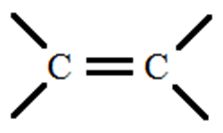
Is unsaturated hydrocarbons。
2 molecular passivity of chained polyolefins: cnh2n。
The presence of a double key in organic matter reduces two hydrogen atoms. For example, the molecular formula for ethane is c2h6 and for ethylene c2h4。
It can be deduced that the molecular pattern of chain-based diolefins is cnh2n-2. For example, the molecular formula for 13-butadiene (ch2=ch-ch=ch2) is c4h6。
3. Space distribution of carbon double keys and surrounding atoms
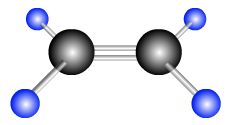
(1) six point co-performance: two carbons on the carbon double key and four associated atoms, both within the same plane, also known as “six point co-performance of pene”。
(2) straight, anti-isomer
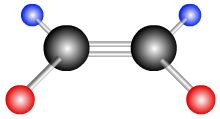
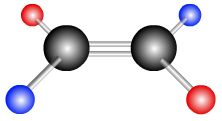
When the atoms associated with carbon carbon are on the same side as indicated above, the same atoms or atoms are in the same side; if they are on both sides, the reverse structure。
For example, two structures of ch3ch = chch3:
C-2-butene
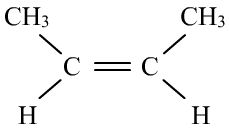
Anti-2-butene
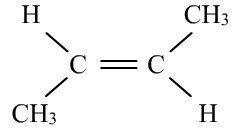
Their chemical properties are essentially the same, with some differences in physical properties。
Sine-2-butene
Anti-2-butene
Melting point/°c
-138. 9
- 106. 5
Boiling point/°c
3. 7
0. 9
Density/g. Cm-3
0. 621
0. 604
(3) isomeric issues of alkyl: in addition to the addition of an isomer above, consideration should be given to the location of carbon double-key isomers。
For example, the isomers of butane are:
1-butadiene ch2 = ch-ch2ch3, h-2-butane
Anti-2-butene
2-methyl-1-propylene ch2=c (ch3)。
Iii. Physical properties of alkyl
Status: c2-c4 is gas at constant temperature, c5-c18 is liquid and more carbon is solid。
Liquids with lower boiling points are volatile。
Solvability: insoluble or microsolvable in water, soluble in some organic solvents。
Density: the density of liquids and solids is generally smaller than that of water。
Iv. Chemical properties of alkyl
1. Oxygen reaction
(1) all alkyl can be burned. Full combustion generates co2 and h2o。
Combustion: similar to ethylene. Chain-based monoolefins have the same carbon content and similar combustion phenomena, with bright flames and smoke。
Combustion equation for chained monoolefins: cnh2n+1. 5no2 = ignition = nco2+nh2o
(2) be oxidated with potassium permanganate。
[addition] oxidation pattern: = ch2 oxidized to co2, r-ch = oxidized to r-cooh, r(r)') = oxidized to rcor'cause i don't know。
For example: ch3ch=ch2+2kmno4+3h2so4→ch3cooh+co2+k2so4+2mnso4+4h2o
5(ch3)2c=chchh3+6kmno4+9h2so4→5ch3coch3+5ch3coah+3k2so4+6mnso4+9h2o
2. Add reaction
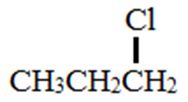
(1) ch3ch = ch2+hcl
(2) ch2 = ch2 + h2so4 (heavy) ch3ch2oso2oh (hydroethyl sulphate)
Ch3ch2oso2oh+h2o→90°c→ch3ch2oh+h2so4
Industrial ethanol is generally prepared in this way。
(3) ch2 = ch2 + ch3 cooh + ch3 cooch2ch3
(4) ch2 = ch2+ch3oh→hbf4/100°c→ch3och2ch3
3. 1,4-accumulation of co-alcoaldiene
(1) co-accumulatory diolescene: refers to a olefin with two carbon keys and with only one carbon single key separated between the two carbon keys, i. E., a olefin with c=c=c structure。
(2) 1,4 - add: when molecules are added to co-syncedadiene, two carbon-carbon double-keys are opened, carbon 1 and carbon 4 are added, and carbon 2 and carbon 3 form a new double-key, called 1,4-plus。
C=c=c+xy→c→c-cy
For example, there are three possible additions to ch2 = ch-ch = ch2 and br2:
Ch2=ch-ch=ch2+br2→ch2br-ch=ch2(1,2-plus)
Ch2=ch-ch=ch2+br2→ch2br=ch-ch2br (1,4-plus)
Ch2 = ch-ch = ch2+2br2→ch2br-chbr-ch2br (full addition)
4. Rings of olefin to olefin [increase]
(1) the ring of ethylene adds:
(2) 2,3-butadiene and ethylene ring to:
It's called diels-alder。
5. Increased response
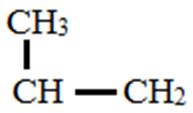
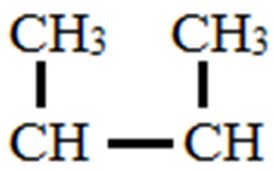
(1) concentration of polyolefins
Note changes in the position of other atom groups other than carbon and carbon when added。
Nch3-ch = ch2 → catalyst -
No, no, no
Nch3-ch=ch-ch3-cylinder-
No, no, no
(2) accumulation of co-diene
Note changes in carbon double-carb when co-algae is added。
Nch2=ch-ch=ch2 → catalyst-n-
V. Application of nefolene
1. Alkyl is used in synthesis of high molecular materials such as polyethylene ethylene and polypropylene, which are widely used in the manufacture of clothing, refurbishing materials, masks, etc。
2. The use of alkyl for synthetic rubber is an indispensable material in modern industry。
3 the presence of cycloolefin in vegetable oils is greater, and many can be used as spices, a widely applied chemical feedstock。
4- the alkyl is used in the production of fuels such as gas, gasoline, diesel, etc。
5. Alkyl is used in medicine and alkyl is used in synthetic drugs。
6. Alkyl is used in the chemical industry for the production of plastics, solvents, etc。
7. Alkyl is used in the production of surfactants, intermediates (e. G. Detergent alcohol, linear alkylbenzene, etc.), plasticizer alcohol, synthetic lubricants, oil additives, oil field chemicals, etc。
8. Alkyl is used in the production of polyalkanes, a synthetic lubricant used in the automobile, mechanical and aerospace industries。
In addition, alpha-olefins have different applications depending on the length of their carbon chain, such as the use of alpha-olefins in low-carbon chains for polyethylene production, while alpha-olefins in longer carbon chains are used for lubricating oil additives, plasticizers, etc。