In accounting, the subject of “payable taxes” is used to account for the various taxes and fees payable by enterprises in accordance with, for example, the tax code, in which the accounting of vat is made in a number of lines under the heading “payable taxes”, and the calculation of vat in “payable taxes” is detailed below。
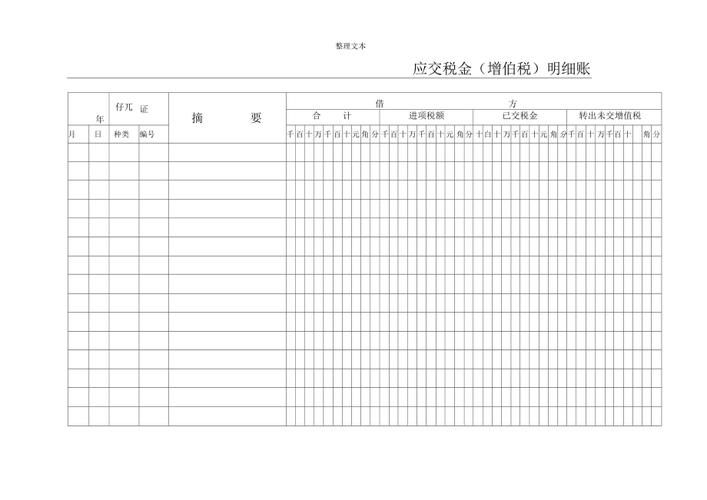
First, for general taxpayers, several columns have been set up under the subject of “payable duties — value added tax”, such as “inward taxes”, “discount taxes”, “inward taxes” and “exempted taxes”. The calculation of vat by the general taxpayer is based on a general tax calculation, with the amount taxable equal to the amount taxed in the current period less the amount of the current period's income tax. The current sales tax is the value added tax (vat) calculated on the basis of the amount of the sale and the applicable tax rates for the sale of goods, services, services, intangible assets or real estate by the taxpayer and charged to the purchaser. The formula is: the sales tax = sales x tax rate. Current entry amounts are value added taxes paid or borne by taxpayers for goods, services, services, intangible assets or real estate. For example, an enterprise that sells goods this month with a tax-free sale of 1 million yuan, at a applicable rate of 13 per cent, will write off a tax of 100 x 13 per cent = 130,000 yuan; an invoice for the acquisition of raw materials this month, with a price of 500,000 yuan and a tax rate of 13 per cent, will receive a tax of 50 x 13 per cent = 65,000 yuan. The value added tax due this month is then 13 - 6. 5 = $65,000。
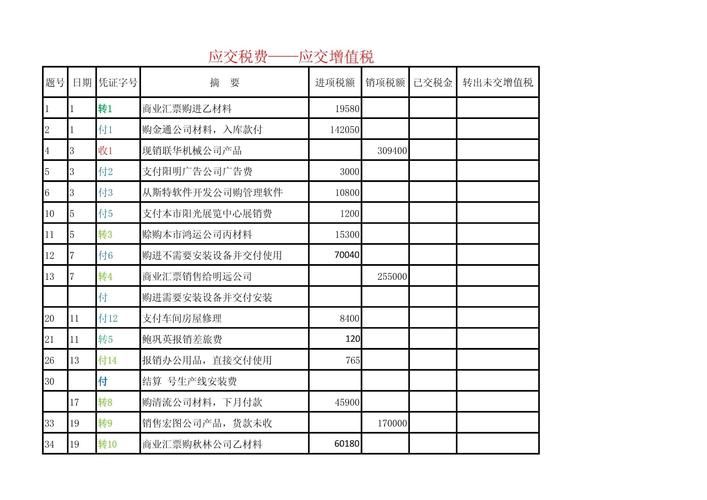
If there is a transfer of incoming taxes, for example, when the enterprise uses the raw materials purchased for collective welfare, the corresponding amount of the incoming taxes on this part of the raw materials cannot be deducted and needs to be transferred out of the imported taxes. Assuming that the raw materials purchased by the above-mentioned enterprises are used for collective welfare, the corresponding revenue tax is 10 x 13 per cent = 13 million, the value added tax due for the month becomes 13 - (6. 5 - 1. 3) = 78,000。
For small-scale taxpayers, “value-added tax” lines are created under the subject of “payable taxes” and there are no columns. Small taxpayers use a simple tax method, and taxable amounts are calculated on the basis of sales and collection rates and are not subject to deductions. The taxable formula is: taxable = sales x collection rate. For example, a small taxpayer receives a tax-free sale of $200,000 this month at a collection rate of 3 per cent, while the value added tax payable this month is 20 x 3 per cent = $0. 66 million。
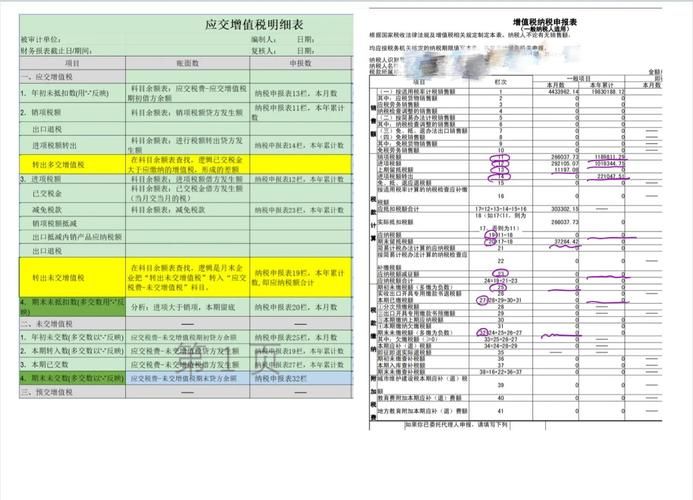
In addition, enterprises may be involved in pre-payment of vat by accounting for the subject “payable taxes - advance vat”. In tax returns, need