In the car, in addition to the tractor, the air conditioner needs to be cooled, lighting bright and air compressors sound. Where are these “auxiliary” power coming from? All rely on reverse-flow cabinets (aided-power reversers). A lot of people think it's simple, isn't it dc-ac? However, in the tender documents for the iron institute and the chinese car, this is no less difficult than a towed drifter。
Why? Because the environment is so bad. The inverters on your cell phone are broken, changing parts at most; if the reverse cabinets in the van are broken, the entire car is out of power and the door cannot be opened in the suffocated tank car, which is a major security accident in the iron mark。
How “dirty” are the real entry conditions
Many people thought that the electricity entered into the reverse cabinet was standard dc 600v or dc 750v. Actually not. We cite, for example, the recent tender parameters for the new steel engine project of the iron industries group。
Although its rated input voltage was dc 869. 4v, it was operating in a highly volatile manner due to such factors as the ioning of the bow and the regenerative brake feedback. The design residual must cover dc77v to dc137. 5v or even higher. This means that a qualified auxiliary power source will continue to be able to sustain a control system when the input voltage falls to less than one tenth of the rated voltage。
This “broad voltage input” capability is an important indicator of the distinction between industrial and military/railway goods. In many low-end power sources, the input voltage of less than 80 per cent directly protects the shutdown, but it is called “depressure maintenance” in the vehicle and is a hard indicator。
Ii. Selected gaming games for the topography structure
Many of the articles on the market that analyze the reverse power supply like a bunch of formulas. I'll talk about logic today。
The current mainstream design is a two-tiered structure: the first is dc-dc (pressure/pressure+segregation) and the second is dc-ac (reverse change)。
Why two
Front level isolation: metal contact between the wheel and the orbit, but there is a huge power gap. In the absence of a high frequency isolation transformer (dc-dc component), the consequences of a high-pressure chain into a low-pressure control system once struck or short-circuited. So, through dc-dc, “dirty electricity” must be turned into a clean, isolated, intermediate straight-flower (e. G. Dc 650v). Post-stage reverses: this step is relatively standardized, sswm or svppwm, output sine wave。
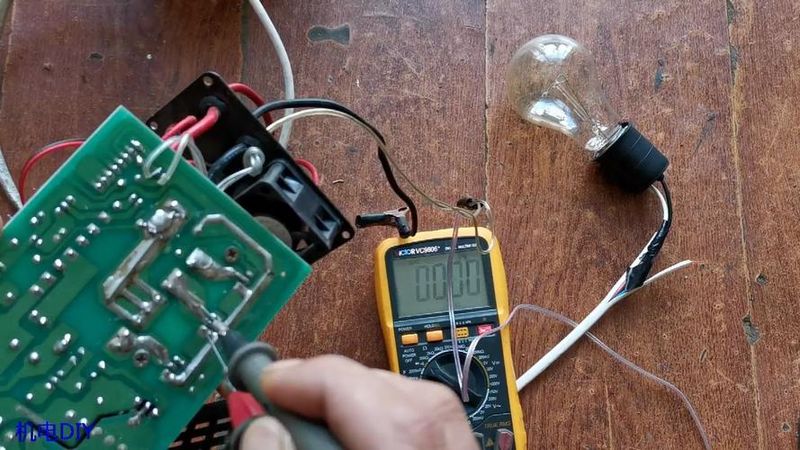
The biggest technical difficulties are in the front stage soft switch technology. Because of the large vibrating motor vehicles and the poor dissipation conditions, if a hard switch is used, the igbt heat is massive and there is significant electromagnetic interference, which directly affects the train's wireless communications signal。
Most of the programmes now use the zvs transformer for the migration bridge. By reconciling the vibrator with the capacitor, the switch is switched off when the voltage or current passes zero. According to the design specifications of the railway system, this would reduce switch losses by about 40 to 60 per cent, while keeping electromagnetic interference within the limits set by the gb/t 24338. 4 (orbital traffic electromagnetic compatibility standard)。
Iii. The core: why not use the most expensive
Many of the newly introduced engineers believe that sic is the best, but the mainstream is still igbt and is an integrated ipm module。
In designing the programme, we found that the logic of procurement in the railway system was “rubbery > efficiency”。
Iv. Table: common breakdown patterns and responses to counter-boxes
During the design review phase, responses must be made to:
Type of failure
Reason analysis
Backbox protection actions
Design redundancy measures
Output overload
Air-conditioning compressor's dead, ice melted loads surged
Limit the flow frequency and block the pwm output if it continues
The power pipe has more than 30% current capacity
Input underpressure
It's too much
We're gonna need an immediate, seamless power supply from the side of the battery
Enter port configuration for large capacity support
Igbt overheat
The heater's down, the wind is blocked
Reduced operation (e. G. Halving of payload), alarm
Use of copper-based plate heat dispersion to increase heat-sensitive electrical resistance monitoring points
Direct carrier overpressure
Energy feedback leads to overcharged pump voltage
Brake cutter input. Use extra energy
Brake-to-temperature-to-team residual
V. New trends in 2025: two-way and light quantification
The old reverse cabinet just sent the electricity out, whatever. But now, with the development of battery technology, the locomotive is being re-engineered. A new generation of auxiliary power sources began to require a two-way function。
When the train is made, the reverse cabinet can reverse the excess energy of the straight-line matrix to the battery or the auxiliary battery system. This not only saves energy, but also reduces wear and tear of mechanical locks。
In addition, along mountain lines above 1,000 metres above sea level (e. G., as in the case of the forest range of the zhui shui paradise) the low air pressure and reduced air heat dispersion require power reduction designs. If not addressed, the same igbt reaches the plateau, and the temperature rises 15-20 degrees. This is where designers can easily step on pits。
A self-defeating, reverse-flowing container is the best product of compromises (cost, volume, efficiency, ravishing). It must work like an old cow in an invisible corner, even if the electricity grid strikes it a thousand times, it will produce a stable 380 v。