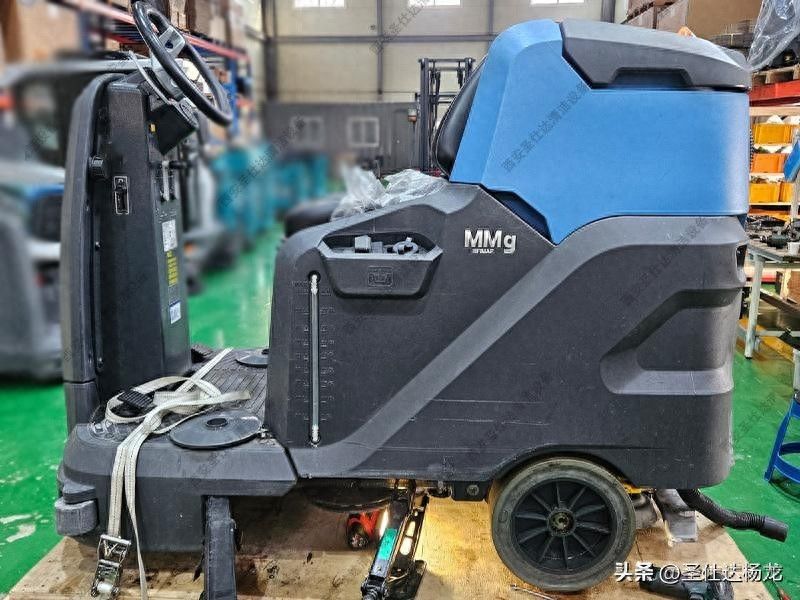
The maintenance and inspection of equipment is shared by members and can be read online, and more related maintenance and inspection of equipment (8-page collection) is available online in the security library。
1 i. Maintenance: maintenance of equipment is maintained on a daily basis and on a regular basis. (i) day-to-day maintenance: day-to-day maintenance. All equipment used in the workshop is subject to daily insurance, which is carried out by the operator himself. The purpose of daily insurance is to extend the useful life of the equipment and to create a safe and comfortable working environment. Day insurance, which is divided into daily maintenance for each shift and maintenance for weekends, must be institutionalized and standardized. The specific requirements for daily security are as follows: a, maintenance of each shift: a single-shift operator, pre-class inspection of parts of the equipment, refuelling as required, and inspection of critical parts of the equipment before they start. Such inspections are primarily conducted through sensory checks, which confirm that no hazard is allowed to open, and that, in the event of a hazard, the cause must be identified and the malfunction removed before the launch can take place. In succession, multi-shift operators must first read the shift diary and then check the condition of the device to see if it matches the transaction log, as follows:
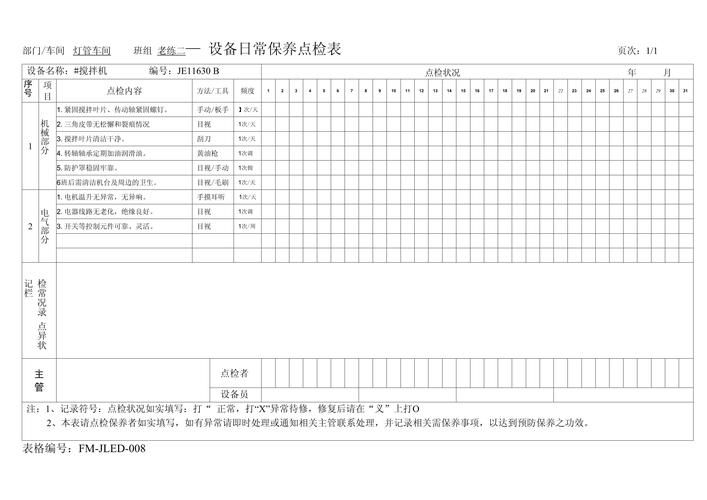
2. Only when the results of the inspection are in conformity are they signed in the diary. Operations are conducted in strict compliance with operational maintenance protocols, with due regard to operational conditions, or through sensory observation of the normality of the equipment and the timely processing or reporting of anomalies. Before leaving work, the operator is required to perform a full-scale maintenance of the equipment, in particular by cleaning the tracks, silk bars, gears, etc., and removing iron crumbs, as well as cleaning the surface of machine paints and the surrounding environment, handing over shifts and filling in the dailies of shifts. B. Maintenance at weekends: a more thorough cleaning and polishing of equipment; weekend maintenance time of more than 2h for priority equipment and equipment of high quality, large and rare equipment, to be performed by equipment operators, inspection machine repairs to assist in the resolution of problems, to be performed by workshop directors and class leaders in the field. (ii) regular maintenance: regular maintenance of equipment, scheduled by the inspection section of the equipment power department for maintenance (extension) based on production and equipment performance, usually once a year, in the light of the production season
3 in consultation with the deputy chief production officer, the staggered maintenance plan was scheduled and the plan was issued to the equipment section of the ministry of enterprise for implementation. Key, large and rare equipment is maintained by the equipment power department inspection section and general equipment by the engineering section mechanical unit. The main operational elements of the regular maintenance are: a, disassembly and inspection of parts of equipment that cannot be easily maintained; b, thorough cleaning of the exterior and internal parts of equipment, routing of oil routes and painting of new paints; c, cleaning and replacement of oil herbs, oil ropes, filters; d, repositioning of various parts to fit gaps and replacement of wear and tear (disrupted) components; e, bolts of spare parts to secure the various parts; f, electrical, electrical parts, and complete inspection of old wires. Upon completion of the regular maintenance, the maintenance machine should record the adjusted, repaired, replaced spare parts and parts on the aircraft's curriculum vitae card, and the chief of equipment will examine the receipt and inspection on a stage-by-stage basis, the operator of the machine will test the machine and at the same time sign it after the entry. Ii. Inspection of equipment: (i)
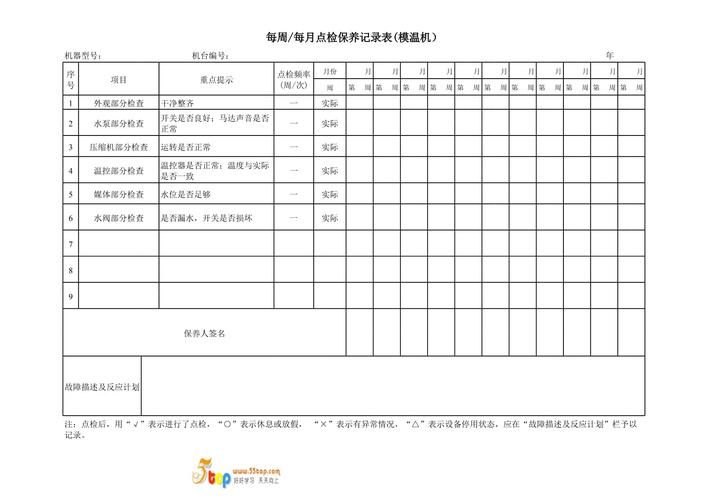
4. (d) meaning of spot checks: during the operation of the equipment, the technical specifications and maintenance of key areas affecting the proper functioning of the equipment are performed and its management is institutionalized, which is called equipment spot checks. The equipment spot checks can be divided into a surveyer and an operator check. Inspection site inspections are those which are directly managed and organized by the equipment section and which are primarily applied to priority areas of priority equipment and precision, large and rare equipment; the operator's inspections are usually managed and organized by the production sector and are intended for the general areas of general equipment and priority equipment or precision, large and rare equipment. Also, depending on the length of the time interval and the content of the check-in, the check-up can be divided into routine check-ups and periodic check-ups. A. Daily spot checks: daily spot checks are conducted primarily by sensor checks, conducted by equipment operators, and technical status checks are performed on key parts of the equipment to see if the equipment is operating with sound, vibration, oil pressure, temperature, etc
5. Regular and necessary cleaning and polishing of equipment, lubrication, bolts, etc., are generally attached to the platform. At the end of the month, the patrol machine changed the card and the old card was kept by the chief of equipment. (b) lubrication: observation of lubrication, oil volume, oil spill and pollution; anecdotal examination with a full grasp of the sound in the normal day-to-day functioning of the equipment, with examples of common noises as follows: 1: sound: a loose bolt in the hardened part; metal wear in the compressor; 2, metal sound: bad gear bites, wear of axes and lubrication of bearings; 3, loud sound: bad magnetic contact in electrical components
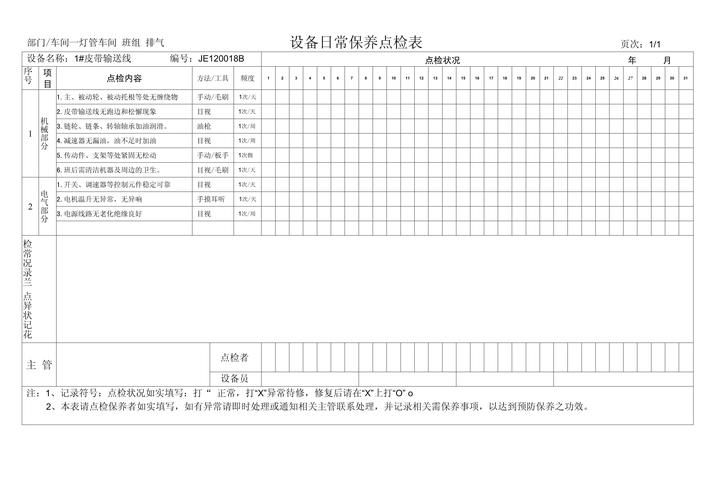
6 , the power is missing; 4 , noise (the `swirling' cycle) pumps are emptied and the wind-drivers are diarrhea; 5 , discretion: mixed in the bearings. Perceptions 1, temperature or not abnormal: a, hand temperature: the temperature of the feeling is approximately 3035; the temperature of the bath water is around 40; b, hand-to-hand is resistant to seconds: about 60; c, hand-to-hand is intolerable: over 70. Anomalous vibrations: a, with adequate knowledge of the vibrations of the equipment under normal operation; b, with most of the vibrations occurring as a result of the flaccid bolts of the equipment going back to operation, as well as the imbalance in the rotary equipment, etc.; c, high-speed operating equipment, which would cause damage to the equipment, should be given special attention. Any sparks caused by overheating or short circuits, or burning of insulation materials, etc.; device point card b, periodic check-ups
7. The technical state of the equipment is regularly checked and measured by means of sensory and specialized detection tools, which are repaired by a surveyer. The main task of regular spot checks is to determine the deterioration, accuracy and performance of the equipment. The main objectives are to identify defects and the potential for failure of the equipment, to determine the programme of repairs and the duration of repairs and to ensure that the equipment maintains the required performance. The target audience is mainly focused and sophisticated, large and rare. Regular check-ups are generally placed in the inspection machine repair office. (ii) principles for the identification of inspection points and the method of implementation of spot checks: the key parts and weaknesses of equipment are usually included as checkpoints, but this has a strong bearing on the structure of the equipment, its working conditions, the production process and the position of the equipment in production and must be considered comprehensively. The methods and operating conditions used in carrying out the inspections are set out in accordance with the point-of-inspection requirements, such as whether the equipment needs to be inspected for disassembly, whether it needs to be inspected solely by sensory inspection or by means of detection instruments, whether it needs to be checked for stoppage, etc., as soon as it is determined, it becomes a standard operating system and the spot-checking personnel (operators, surveyors) cannot be changed at will. In order to ensure that inspections are carried out on schedule, the ministry of equipment and power sets out the regulations governing the conduct of inspections, the award of due diligence, the penalty for failure to act or misconduct, the inspection machine is responsible for checking the daily check-up card of the operator, the chief of equipment is responsible for checking the check-up of the check-up machine and the periodic check-up card is accompanied by a list of the award-in-chief and the person to whom the award is issued must be notified。