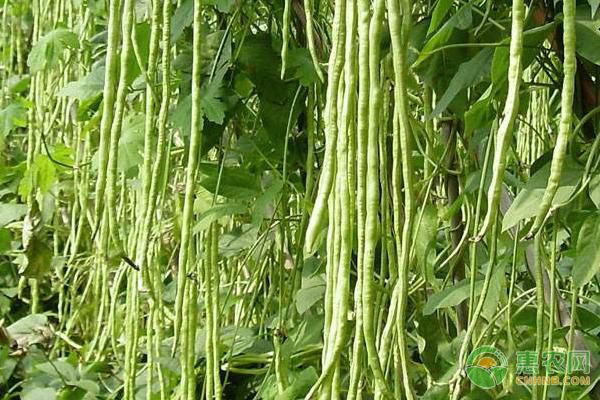
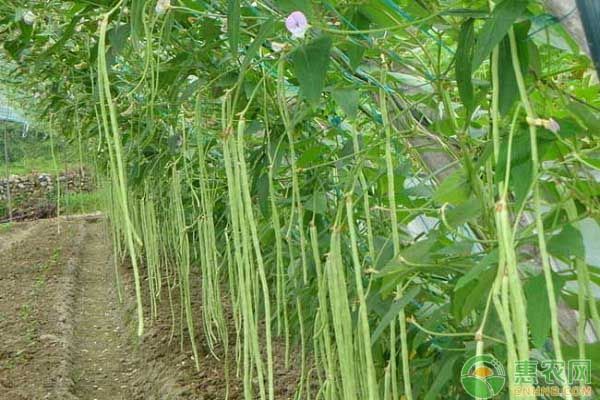
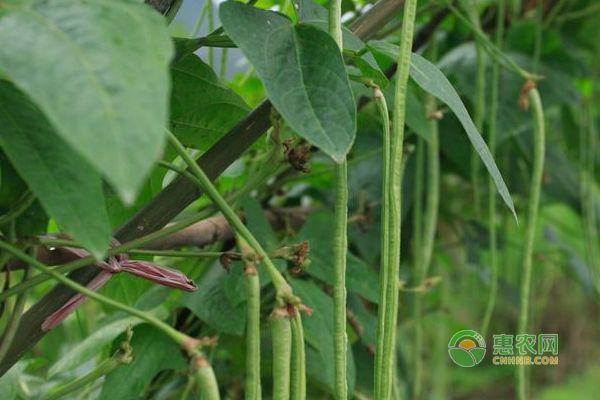
Bean bean is a creeping plant with a long penis that can entangle or grow on a stretcher. The leaves are triple-leaved, the flowers are usually white or purple, and the fruit is long berries, containing many seeds. Beans have a shorter growing cycle, typically from sowing to harvesting of about 60 to 90 days, and are suitable for growing in warm seasons. The following is a study of techniques for the management of the corneas。
1. Land selection
Priority should be given to fertile, loose or sandy land and a two- to three-year rotation with legume crops. Avoid the choice of compact soils or low-lying, poorly drained plots。
2. Selection of progeny
Early 30: premature breeds, with few branches, dominated by the master chicken. Regular field planting takes about 35 days to sow, 10-12 days to harvest soybeans for 20-40 days and 80-100 days for the whole reproductive period. The first flower is low, and on average about three knots it is common to congregate. In the same period, seeding took place two to five days earlier, with a slightly higher total production. It's green, symmetrical, about 60 centimetres long, weighs about 20 grams, and is good for merchandise。
豇28-2: medium- and early-literate varieties, approximately 2. 5 metres high, with few branches and rare leaves. Sections 4-6 of the main chickens begin to congregate, with many casseroles, green white cyanide, 60-80 cm in length, 0. 9-1. 1 cm in length and 25 g in weight. They're thick, they're small, they're not aging, they're good. High-temperature, drought, anti-facile virus disease. The birth date is 90-100 days and the acre is 2000-2500 kg。
3. Cultivation due
Seeding can be done after spring (february and march) at a suitable temperature of 20 - 32°c. Autumn broadcasts were generally cast in july, with a longer actual duration, with planting available in june-august。
4. Fertilizer technology
Re-appliance of base fertilizers: the base fertilizers are mainly decomposed organic fertilizers, combined with high phosphorus potassium, e. G., dingled nitro complex fertilizers (15-15, 16-16), with a recommended acreage of 50-60kg, which is then logged deep into the soil. It is recommended that a large amount of elemental water solubility with corrosive acids, rich in a variety of moderate and trace elements and mineral-sources, etc., be applied to polish low-carbon nanoparticle sequestering techniques with strong adsorption capacity, good water solubility, non-harming roots, high absorption speed, high fertility and use efficiency, so as to enhance crop immune systems, prevent multi-deficit disorders, promote root growth, flowering, fruit expansion, value-added, suitable for leaf spraying, root irrigation, drip irrigation and flushing. Usage method: 800-1200 times liquid, 2-5kg/acre/speech, 5-10kg/acre/s。
Ad hoc application of fertilizers: small quantities of fertilizers are required during the nursery period, and the supply of fat water should be properly controlled to prevent fertilisation. When the seedling is weak, it can be applied in the form of liquid upwelling and 5 kg of acre. At the end of the terminal period, the amount of fertilizer required can be increased, with the application of matching fertilizers such as 22-8-15 and 17-5-23 nitro complex, 15-20kg at a time, and 10kg at a time, once at each harvest. During the boom, fertilizing with 0. 3 per cent of potassium phosphate leaves promotes the growth of side branches and the formation of side buds to prevent premature decay。
5. Reasonable secrets
It has been determined, on the basis of cultivation, that in mid-february, seedlings could be planted using nutrients, such as large sheds + small arches + membrane cultivation. Increased ventilation and wetting during the seed season to prevent high-foot seedlings and sudden fallout. In mid-march, it was installed in the shed in two rows, 15-20 cm and three in the caves, where it was established and watered in appropriate quantities and sealed in time. Or in early march, the studio was broadcast live, 15-20 cm, with 3-4 grains per den. The field was planted, and in henan province, planting generally took place in late march. The plant density in the shed is set at two rows of 15-20 cm and three per den; the field plant plants are 15-20 cm and soak 3-4 grains per den。
6. Field management
• house temperature management: five to six days after planting, to maintain high temperature and promote early seedlings. In the event of a cold flow, the small arch sheds were frozen with straw curtains. Temperature is cooled in time at 30°c。
The whole branch of the frame: when the chicken is 20 centimetres long, the chicken is drawn in time to remove the sprouts below the first line of the chicken. When the side branch grows, it leaves a leaf for the heart and uses the chicken section 1 to form a bouquet. The twig from the minister in the mid-term and late-stage chickens is early and early. When the main chicken grows to more than 2. 2 metres, it strikes the heart, controls growth and induces the grafts to form. Too many leaves, branches, old leaves and sick leaves may be removed if they are fattening, growing too much, and are poorly ventilated。
7. Pest management
Rusty: yellow to rusty little spots on the back of the leaves, with later distribution of red brown powder. The prevention and treatment methods include the timely removal of the disease and the reduction of the pathogen; rotation with non-measles; and the initial spraying of drugs with an interval of 7 to 10 days, with two to three consecutive interventions. The following drugs are available: 62. 25% cactus humid powder 600 times the fluid, 40% ff cream 6,000 times the fluid, 10% high water dispersible granule agent 1,000 times the fluid, and 15% triazone humid powder 1,000 times the fluid。
Collection
Snacks are harvested in a timely manner after they have been of sufficient length to avoid the delayed harvest leading to the expansion of seed grains and the reduction of the quality of commodities, while affecting the subsequent growth of the sorghum. Be careful not to damage other bouquets, buds and leaves。
These are the highlights of the techniques and management of bean-bean cultivation. The appropriate varieties can be selected according to the time of planting and the local conditions。
You may be interested in the content of the following recommendations, which are welcome。