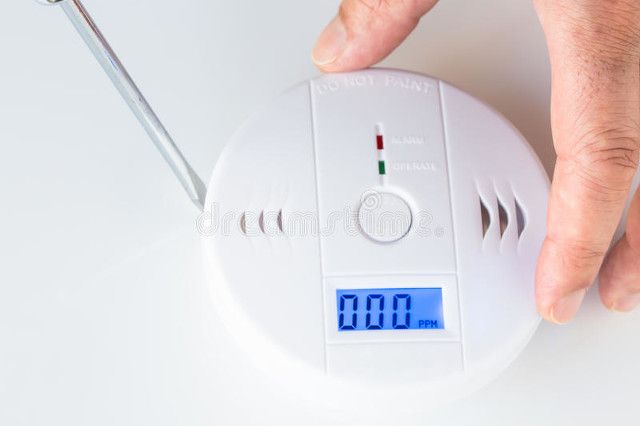
The air conditioning room was poisoned
Attention! In the hot summer, citizens are used to eating in air-conditioning rooms, but if they relax their safety awareness, the danger will come。
In the recent past, three members of a family in jiangsusu county had been at home at a barbing “splash”, and unfortunately carbon monoxide was poisoned and sent to a hospital in time for no major disaster. It turns out that mr. Wang's family had three dinners at home with a oven, air conditioning and a roast string. It was not expected that the three people would wake up overnight and be unconscious, with symptoms of vomiting, fatigue and immediate access to the hospital. Fortunately, all three were found to be mildly intoxicated by carbon monoxide. The doctors then treated him with high-pressure oxygen, the three minds gradually cleared and the physicometric indicators returned to normal。

On 12 july, seven servicemen in a restaurant in wen feng district, anyang city, henan province, fell on the ground and, following the incident, the local emergency management agency issued a briefing stating that the shop had a small space and closed doors at the time of the incident. The high carbon monoxide concentrations were tested during the rescue of the fire department, with a preliminary assessment of carbon monoxide poisoning caused by poor air flow. None of the persons currently in a coma has been treated by the hospital, with three persons staying for observation and the remaining four having been discharged from the hospital after taking oxygen. Carbon monoxide poisoning, which occurs not only in winter, but also in the form of carbon monoxide that is colourless, tasteless and invisible, is not easily detectable and should not be relaxed in any season once poisoning is often too late to save itself。
So how do we prevent carbon monoxide poisoning
The purchase of carbon monoxide alarms, of course。
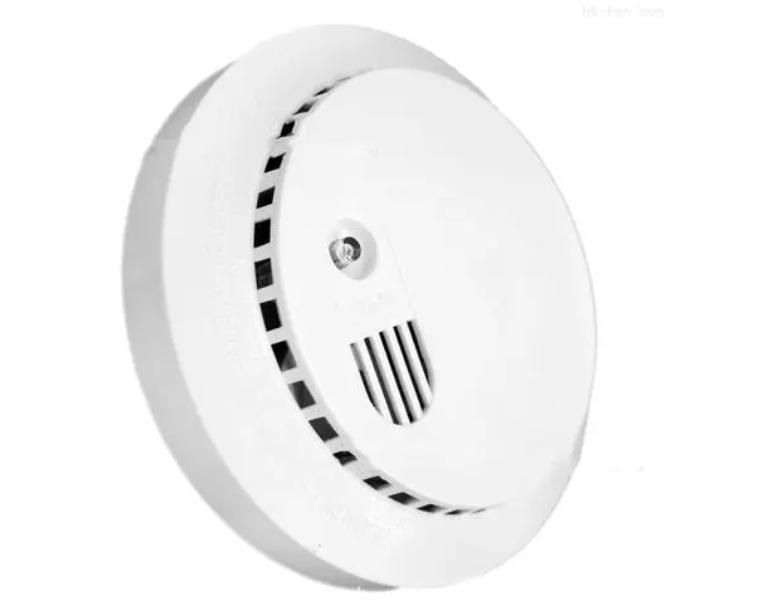
Domestic carbon monoxide alarms are an important part of your family safety plan. In the united states, the consumer product safety committee (cpsp) recommended that at least one carbon monoxide alarm should be available for each household. Carbon monoxide is an invisible, colourless, odourless, non-irrigated gas that cannot be felt by five officials. That's why having a carbon monoxide alarm is important。
The operation of carbon monoxide alarms relies mainly on carbon monoxide sensors, which are capable of converting signals of carbon monoxide concentrations in air into current or voltage signals, which are scaled and processed in comparison with predefined thresholds. If carbon monoxide concentrations exceed the prescribed safety threshold, the sensor sends a warning signal, usually by acoustic light. Such alarms are widely used in homes, industrial environments and public places, such as schools, hospitals and places where carbon monoxide content needs to be tested, such as mining units. Carbon monoxide alarms are of various types, including electrochemical, thioperidium semiconductor, infrared absorption, catalytic combustion, and each has its own specific working principles and applicable environment。
The best effect, of course, is the electrochemical carbon monoxide alarm, which uses the electrochemical carbon monoxide sensor as the core element。
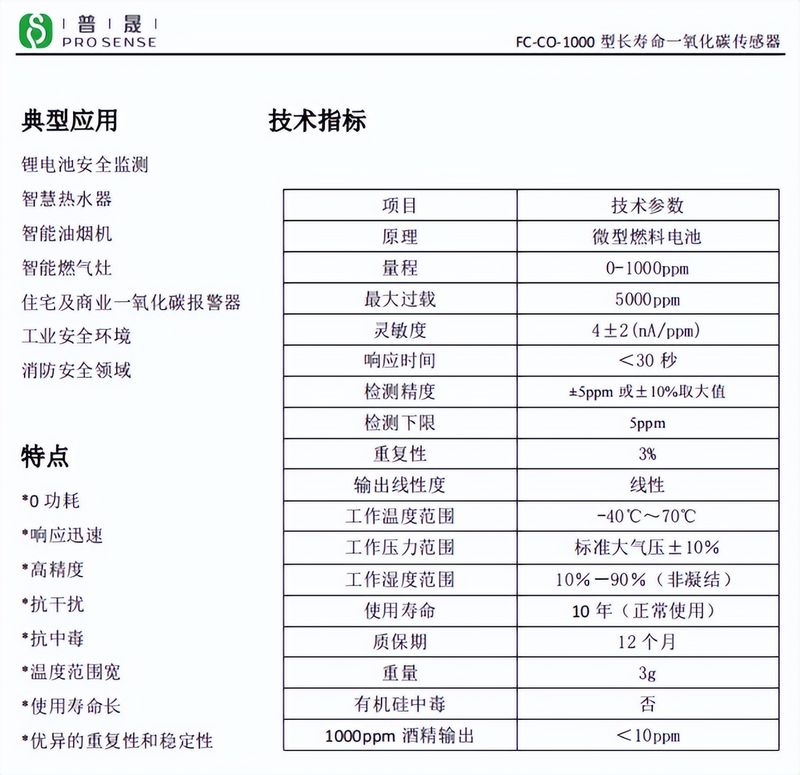
The generic fc-co-1000m electrochemical carbon monoxide gas sensor uses fuel cell principles and is designed for domestic use with carbon monoxide alarms, with a service life of up to 10 years and a solid electrolyte weighing only 3 grams, without drying up and without leakage. It's the ideal choice for a domestic carbon monoxide alarm. And met the criteria of en50291 and ul 217/2034. The performance of japan's products is not bad。
If you are interested in our products, please call 0755-36690079。