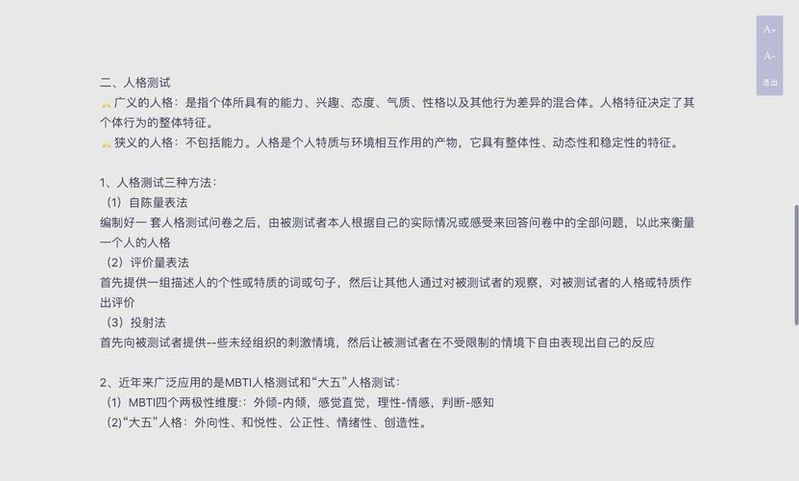
1 the introduction to and application of the common psychological test tool for the preparation of principles and methods of psychological tests for psychological tests and the application of psychological tests for psychological tests in the educational and vocational fields to examine the ethical aspects and challenges of psychological tests for future trends and outlook 301 psychological tests is a scientifically based measurement tool for assessing individual psychological characteristics and behaviour. The main purpose of the psychological test is to help people understand their psychological condition, predict their likely future performance, and provide a basis for decision-making in areas such as psychological counselling, education, career choices, etc. The definition of psychological tests and the definition of the purpose, which are common types and characteristics of intelligence tests, primarily assess the individual's intellectual level, including in terms of intelligence, mental ability, learning abilities, etc. The most common intelligence tests are the wedge table of intelligence, the stanford-binai table of intelligence, etc. Personality tests are used to assess individual personality characteristics, such as character, quality, interest, etc. Common personality tests are the minnesota reciprocal questionnaire, the cartel 16 personality questionnaire, etc. The neuropsychological tests are primarily aimed at assessing the functions of the nervous system, such as sensory, motor, memory, mental, etc. Common neuropsychological tests include the halstead-retan neuropsychological set, the wedge memory table, etc. Clinical psychopsychological tests are used to assess the mental health status of individuals and assist clinical diagnosis and treatment. Common clinical psychological tests include a self-assessment of symptoms, depression, etc. The developmental psychology test, which began at the end of the nineteenth century, was gradually refined with the development of psychology and statistics. After the mid-twentieth century, psychological tests were widely used in the fields of education, occupation and clinical. At present, psychological tests have become one of the key research tools in psychology and related fields and have been widely used in psychological counselling, educational evaluation, talent selection and health management. At the same time, with the development of computer technology and artificial intelligence, the level of automation and intellectualization of psychological tests is increasing. The preparation of psychological tests on the principles and methods used in the preparation of psychological tests, as outlined in the development history and current situation, must be based on scientific theoretical and empirical research to ensure that their content, structure and methods of evaluation conform to psychological principles. The scientific principles psychological testing needs to be developed following standardized operating procedures to ensure consistency and comparability in its implementation, scoring and interpretation. The development of standardized principles psychological tests should take into account the needs of practical applications, ensure their application to specific groups and environments and provide useful information and advice. The principles for the preparation of practical principles provide for the preparation of test subjects based on the objectives and objects of the tests, and for the preparation of representative and targeted test subjects to ensure that they are clear, clear and unambiguous. Define the objectives and scope of application of the tests and identify the characteristics and needs of the groups tested. The development of scoring criteria to establish objective, clear and operational scoring criteria to ensure consistency and accuracy in the scoring process. Analysis of data and interpretation of results provides statistical analysis of the data collected, interpretation of test results based on rating criteria, and provides useful information and recommendations. Tests are conducted and data collected to test the tested according to a standardized screening process and to collect relevant data. Standardized operating process demonstration confidence refers to consistency and stability of test results. Common methods used for assessing the level of correspondence include such methods as a re-measurement, a duplicate, an internal consistency and a rating. These methods test the degree of consistency of test results between different time, forms and ratings. The validity and accuracy of the results of the tests is defined as the effectiveness and accuracy of the method of assessing the confidence. Common methods used to assess effectiveness include content efficiency, structural efficiency and efficiency indicators. These methods test the comprehensiveness of the test, the soundness of the structure and the degree of correlation between the test results and the performance indicator. Presentation and application of the common psychological test tool for the validity assessment method 303
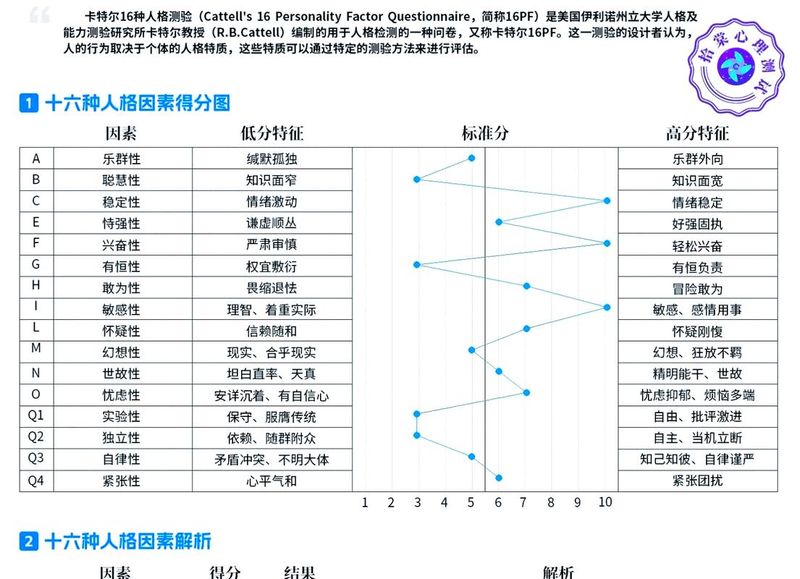
The introduction to the tools of the intellectual test and the application of the wedge intellectual qualification, which includes three versions of adults, children and pre-school children, are used to assess the individual's overall iq, speech iq and operational iq, and are widely used in the fields of education, psychological counselling and clinical psychology. The stanford-binai intellectual quality table, which applies to children and adolescents aged 2-18, assesses the individual's intellectual level through a series of standardized questions, often used to diagnose mental disorders and the identification of talented children. The swiss standard reasoning test is a non-textual intelligence test that assesses the individual's intellectual level through graphic reasoning and applies to the testees of different cultural backgrounds and age groups. The cartel 16 personality factors questionnaire (16pf) assesses 16 distinct personality characteristics and provides a comprehensive personal image for individuals, applicable in the fields of education, psychological counselling and human resources management. The minnesota multiple personality questionnaire (mmpi) contains a number of clinical tables used to assess the individual's personality profile with regard to mental illness and is widely used in the areas of psychological counselling, psychiatry and justice. The eisenk personality questionnaire (epq) assesses the three personal dimensions of internal and external orientation, neurons and mentals, which are often used for personality disorder screening, career selection and team building. The profile of the personality test tool and the application area of hamilton depression measurement (hamd) assesses the severity of depression, including emotional, cognitive and body symptoms, and is widely used for diagnosis and treatment assessments of depression. Hamilton anxiety sheet (hama) assesses the severity of anxiety symptoms, both mental and body anxiety, which are often used for diagnosis and efficacy assessment. The positive negative mood table (panas) assesses the individual's scores of positive and negative emotions, which are used to study the cognitive, behavioural and physiological effects of emotional state. The introduction of emotional assessment tools and the application of the 304 psychological tests in the educational and vocational fields can help teachers to assess students ' learning abilities, such as memory, attention and mental ability, thereby providing students with more personalized teaching programmes. Through psychometric tests, teachers can learn about the emotional state and social skills of students, thus focusing on their mental health and interpersonal development. An emotional and social competence assessment psychological test can be used to assess the effectiveness of educational interventions, such as counselling, training and psychotherapy, and provide a basis for improving educational methods and improving the quality of education. The application of educational case studies in the field of evaluation of the effectiveness of educational interventions to share staff training and development through psychological tests enables enterprises to understand the strengths and weaknesses of employees, provide targeted training and development opportunities for employees and promote their personal and professional development. The psychological testing of talent selection and recruitment plays an important role in the selection and recruitment process, helping enterprises to understand the characteristics, abilities and career orientation of candidates and improving the accuracy and effectiveness of recruitment. Team-building and collaborative psychology tests can be used to assess the character characteristics, style of communication and willingness to work with team members, to provide strong support for team-building and to improve team effectiveness. The application of casework-sharing psychopsychological tests in the field of education and occupation, combined with one-01 psychological tests in the field of education and occupation, offers a wide range of potential applications in the field of education and occupation, which, by combining them, can provide more comprehensive and precise development advice to individuals. The development and application of cross-cutting psychological testing tools02 will become an important trend in the future, as psychometric techniques evolve, providing more diverse and accessible services to individuals and organizations. The application of psychological tests in public policy formulation can provide a scientific basis for public policy formulation, help governments to understand the needs and aspirations of the population and increase the responsiveness and effectiveness of policy formulation. Cross-cutting and integrated applications of ethics aspects of the 305 psychological tests and challenges of the missing elements of professional ethics norms lack professional ethics, leading to a high incidence of ethical issues. The ethical aspects of social concerns and opinion stress tests are of wide social concern and need attention. The dissemination and application of psychological tests have become more and more evident with their wide application in various fields. Ethics raises the issue of inadequate background privacy protection and the risk of disclosure of personal privacy information that is not adequately protected in psychological tests. Stigmatization and overinterpretation of some psychological tests are misleading and overreading, leading to public misperceptions about the results of the tests. Misuse of psychological test results, such as for discrimination, labelling, etc., is sometimes abused. Strengthening the promotion and interpretation of privacy protection norms through the analysis of specific ethical issues, establishing an ethical review mechanism to improve the quality of practitioners ' responses and recommending strict privacy protection policies to ensure that personal privacy information involved in psychological tests is adequately protected. The establishment of an ethical review mechanism for psychological testing and strict control of test results to prevent abuse. (c) strengthen supervision of psychological testing and interpretation to avoid the occurrence of misleading publicity and overinterpretation. (c) strengthen professional training and ethics education for psychological test practitioners and raise their professional qualifications and awareness. Future trends and outlooks will make psychological tests more intelligent and enable more accurate assessment and analysis of individual psychological characteristics as technologies such as artificial intelligence and machine learning evolve. Intelligent technology virtual reality technology provides a more realistic simulation environment for psychological testing, makes testing more immersive and interactive and improves its accuracy and effectiveness. Virtual reality technology big data technology can analyse and excavate mass psychometric data, identify more useful information and patterns and provide strong support for the development of psychological tests. The impact of technological innovations in big data analysis on psychological testing will gradually become an important tool for enterprise recruitment, training, evaluation, etc., as the emphasis on mental health among employees increases. There is also a growing demand for psychological testing in the field of corporate demand education, which requires schools to learn about the mental health of their students and provide more personalized educational services. Educational needs medical institutions need to use psychological tests to assess and diagnose patients and provide a more accurate and scientific basis for treatment. The policy regulation for forecasting trends in demand in the health-care demand sector supports a series of policy regulations by national and local governments, supports the development and application of psychological testing and provides a good policy environment for psychological testing. The industry needs to develop stricter standards and norms to ensure the scientific, accurate and impartial nature of tests and enhance the overall level and credibility of the industry. Psychiatry testing for intellectual property protection involves a large number of intellectual property issues, and there is a need to strengthen intellectual property protection, defend the legitimate interests of innovators and promote the healthy development of psychological testing。policy and regulatory environmental impact analysis thanks you for watching thanks