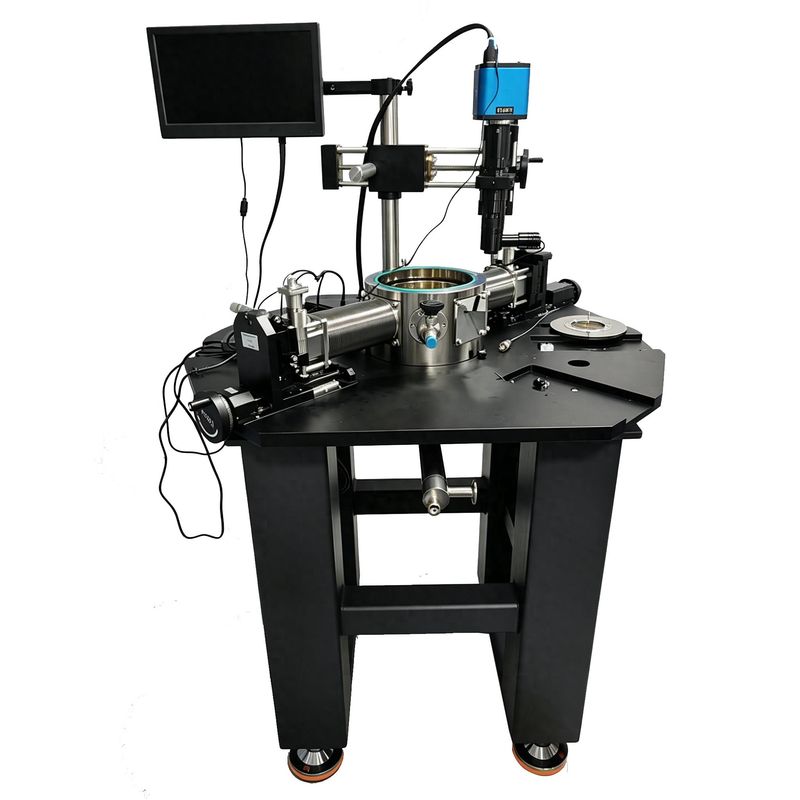
In scientific experiments such as semiconductor devices, 2d materials, photovoltaic chips, hole tests, 78k liquid nitrogen cryogenic conditions are currently the most frequently used standard cryogenic areas in laboratories and are also the core working areas of high-temperature vacuum probes。
Many r & d researchers focus on two core issues when selecting equipment and experimenting with retrodisix: 78k low-temperature equipment is unstable and less volatile? How long does it take to warm up from 78k to 200°c and stabilize
Using the example of the industry-dominated high-temperature vacuum probe of the ctgpx series, a one-time presentation of temperature control performance in 78k-temperature zone, the temperature increase time and the core causes of precision differences helps you quickly match your test scene。
I. 78k temperature accuracy of cgpx probe: 3-phase configuration fully covered
The cgpx-series probe supports 77k ~675k (-196°c ~400°c) wide-temperature continuous warming, perfect for 78k cryogenic tests. In response to the need for precision in different experiments, the equipment is based on a three-tier configuration of economics, standard editions, scientific high-precision versions, with clear temperature control performance gaps。
The primary high-value, temperature-precision base is applied only to the basic test scenes of the enterprise's mass sample low-temperature screening, which are not sensitive to temperature drift, and meets the screening needs for the base properties of the device's low-temperature properties。
The performance is balanced and stable, which is currently the dominant model of the scientific laboratory, and is fully adapted to the conventional semiconductor iv/cv characterization test, the hole effect test, the generic electrostatic representation of the universal device, and the test efficiency。
The equipment is equipped with a multilayer gold plating copper-free radiation screen, which is structurally designed to completely contain the problem of low-temperature radiation leaks and eliminate the problem of temperature drift and cyclical fluctuations that is common in the 78k temperature zone. It specializes in heavy scientific scenes such as 2d materials, low noise-frequency devices, high-precision photoplasm tests, and front-drill experiments。
1. Cavity vacuum: base of low temperature and temperature 2. Gold plating anti-radiation screen: low temperature controlled and steady core hardware 3. Liquid nitrogen supply mode: no temperature cyclical shocks
78k(-195°c) warms up to 200°c, with a temperature difference of nearly 400°c, which is considered to be super-wide warming. Many users do thermogenic experiments, often due to the lack of prognosis, which results in time overruns and data ineffectiveness. The following are measured time-consuming data under standard high vacuum conditions (10-5 ~ 10-6 torr) in the cgpx series。
Constant temperature steady waiting time: 15-20 minutes
Total temperature increase: 60-70 minutes
Total temperature increase: 50-60 minutes
Iv. Summary of practical options: match-up on demand the pit
3. Two-dimensional materials, precision devices, low noise tests: high-precision editions, ±0. 01k ultra-high temperature, extremely high-speed constant temperature response to ensure accuracy and repetition of high-precision experimental data。