In industry forums, chu jian, gwig electric, has not hesitated to point out that some branded air conditioners appear to be “calculating” on laboratory indicators, whereas one night at home turns more rapidly than normal machines。

When he said that, it was a scene。
This was not an emotional outbreak, but the moment when the long-accumulated contradictions in the entire air-conditioning market were completely broken。
The so-called “energy-efficient war” has reached a full-blown phase at this point in time。
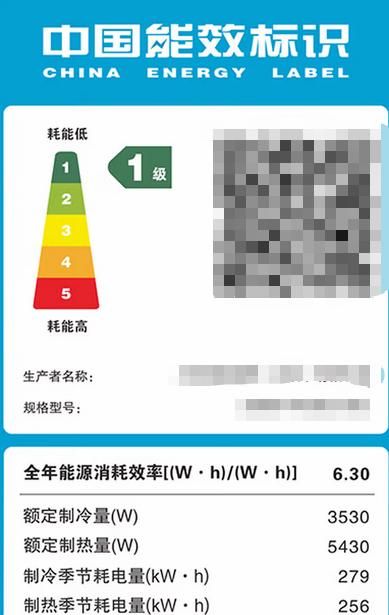
Behind this sudden challenge is the accumulation of over6 apf-value products on the market, from millet to haile, almost every brand's promotion emphasizes how much it is to save electricity。
But this storm is clearly not just a story of innovation, but a game of algorithms。
Guly's allegations are simple: some air conditioners drill into the country's standard tests algorithm and can't read the test points。
At 29°c, it was pressured down, was deliberately lifted at 35°c, and even some of the machines showed different data with negative electricity consumption at 24°c。
This approach replaces real technological upgrading with algorithms that “should try to optimize”, resulting in a nominal energy efficiency that is not valid for actual use。
Consumers bought it back, found electricity in vain for hours and paid extra for a “efficient label”。
Why is this happening
Start with gb 21455-2019。
The algorithm provides for only a few sets of fixed energy efficiency tests, and manufacturers can achieve good results by debugging the best parameters on these specific temperature points。
But daily life is much more complex, with fluctuations in indoor temperatures, different loads and changes in the external environment, which affect real energy efficiency of air conditioning。

“beautiful data” under laboratory conditions is only an optimisation that should be tested。
Zhu’s challenge is not a saliva, but rather a technical tendency to remind the industry as a whole: when standards become unbridled, most enterprises use shortcuts to “push” rather than technical inputs。
The brands of millet and valor will certainly not look at such allegations。
In response, they stated that the high apf values were derived from hardware upgrades and that there was no algorithm forgery。
This defensive posture actually exposes the embarrassment of the industry: consumers are more dependent on label figures for measuring “electricity savings” and brands can only roll new heights on the numbers。
So beautiful apf values become marketing necessities, not real experiences。
So you can see that there's an apparent competition for energy efficiency, and it's the industrial chaos of algorithms。
Now it's changing。
A new version of the energy efficiency standard, the dapf, is in the approval stage。
This standard will fundamentally alter the single-point test model and introduce dynamic revolving conditions。
This means that air conditioners are no longer merely looking at their performance under several fixed temperatures, but rather simulate changes in temperature, start-ups, load changes, etc. In the daily lives of users。
Tests are more complex, more dynamic and more realistic。
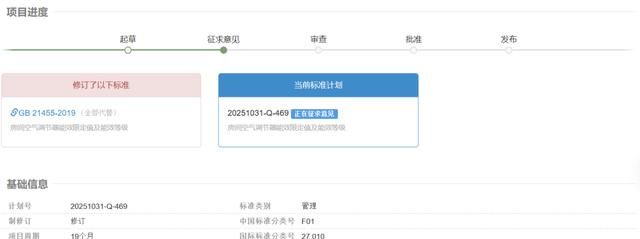
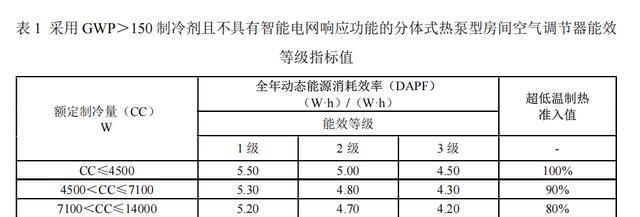
More critically, the standard level would be downgraded from five to three levels, with a clear prohibition of circumvention patterns。
This is not just a technological change, but a structural shuffle in the industry。
Those who rely on algorithms for their achievement will be exposed under the new criteria。
From an industry perspective, the revision was intense because the drop in the dapf standard would change the competitive logic of many years。
Past standards are easy to win for those firms that know algorithms best; future standards will require businesses that really know scenes, know hardware, and know ai's smart controls to maintain their advantages。
So the recent deployment of ai energy-saving technologies in major brands has been unprecedented。
American, hale and ox display their ai-efficiency systems at the fair almost simultaneously, with the primary function being to adapt to indoor and outdoor temperatures and user habits and to allow the machine to find its own mode of operating with the least electricity。
The introduction of these technologies is not a coincidence, but a defensive gesture。
The platform and algorithm were upgraded in anticipation of the formal implementation of the new standards。
The public statements made by experts from the chinese institute for standardization further confirmed chu's concerns。
It was noted that the new standards were designed to eliminate “negative models” so that test results could truly reflect actual energy efficiency performance。
They also highlighted a key point: consumer education。
This is practical because most purchasers do not know what the apf is, they only look at the energy efficiency label and see “super-level” as saving electricity。
Once markets are full of “false energy savings”, consumer confidence collapses and brand reputations are difficult to restore。
That is the real motivation for standard reform — restoring trust, not simply upgrading technical indicators。
On the other hand, new directions have begun to emerge in the market。
In the past, consumers had valued prices and labeled energy efficiency, and more and more people were now focusing on the full life-cycle costs of air conditioning。
Some have calculated that a low-priced apf-high-value air conditioner has increased the frequency of maintenance three years later without a significant reduction in electricity consumption; while brand models are expensive, they are more stable and have lower combined costs。
This shift suggests that consumer awareness is rising and prices and high indicators are no longer the only options。
The competition of manufacturers also went from “who's good data” to “who's durable and saves heart”。
This storm, which began with the gwiss question, was not just a technical contest, but a standard recast。
Glig chose to expose it directly because it had a technical base; millet responded because it had market impulses; and the revision of national standards forced the entire industry to self-correction。
You can see a realistic trend: the direction of ai energy-saving algorithms, the criteria for real performance testing, consumer rational awakening, three factors that are becoming closed。
The core of future competition in the air-conditioning industry is no longer who can make laboratory data more visible, but who can slow down a user's meter。
This change is also justified by economic logic。
Energy-efficient labels can no longer directly drive sales, as transparency of information makes consumers more alert and standards upgrades the space for forgery。
The real way forward for enterprises is to invest in technology, optimize control algorithms and improve the ability of products to work in a stable manner in various environments。
In the end, the storm pushed the whole industry from a “test-and-test” to a “field-of-action” model, an irreversible industrial upgrading。
Finally, it is very straightforward: when the standard completely eliminates a gap in algorithms, the “energy efficiency” of numerical packaging will be eliminated by the market。
The real energy saving is not in labels, it's in the quiet but steady running of the user house。
What you see now is actually a reminder that neither technology nor standards should be a marketing tool, but rather serve the real experience。
How long do you think the algorithm-based brands will last in the market when the dapf is officially implemented
I'm leaving that to everyone who reads here -- trying to save the electricity, not to look at the labels, to see the speed of the turn of the house meter。