Many people thought that tearing a secret document into small pieces into a trash can would be a complete destruction of information. It's a complete misperception. It can't protect itself from information。
Now there's a professional puzzle recovery software, even if you tear a piece of paper into dozens, you can re-assemble it in a few seconds, and you can see the altered handwriting on the file。
Not to mention those who are dedicated to the garbage cans of the writing building, who profit from collecting waste paper, a customer list, a draft contract, and even an ordinary internal claim, could be turned out to be a useful tool for hurting people, causing irreparable damage to the unit or company。
Even without the risk of disclosure, it is too inefficient to tear documents by hand. Dozens of documents piled up there, several people were busy all afternoon, and it would be more difficult to burn them in the office building, not only to cause fires, but also to keep the smoke of smoke flowing for days。
Paper shredders that meet safety standards are the most viable option for the efficient and thorough destruction of classified documents。
In the context of a high level of confidentiality, national-level confidentiality standards require only 1 x 2 mm of broken paper, equivalent to 31185 pieces of paper for an a4 piece of paper, with a recoverability rate of 0. 003 per cent, and completely eliminate the risk of disclosure of confidential documents。
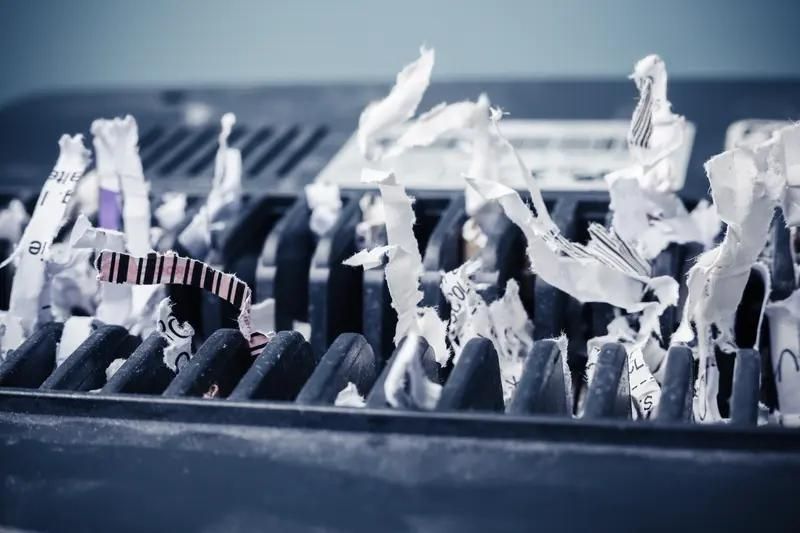
However, in hidden corners, this common office equipment may also hide the risk of leaking. In addition to the risk of information recovery, there is a risk of malign modification that cannot be overlooked. A simple retrofit, with photo-scans, information storage, wireless transmitters in the penthouse, would allow for stealth。
When the document is entered into the paper mouth, the device is simultaneously activated, stealing vital information from the document and sending it out. In addition, mismanagement is a major risk, with no specialized premises, no security measures and no registration procedures still in place。
Therefore, day-to-day use requires strict enforcement of the exclusive use principle, the designation of dedicated personnel, the establishment of dedicated management desk accounts to ensure traceability and the need for dedicated full-time supervision of equipment maintenance。
From a more macro perspective, shredders can not only be effective in preventing information leaks, but can also transform waste paper into debris for resource use, consistent with the concept of greenness, while large quantities of documents are shredded once and for all, saving storage space。
Whether it is a confidential department or an educational institution, the core principle remains that sensitive information must never be disclosed. The best way to comply with information security control standards is to send confidential documents into unrecognized small particles。