"what kind of logistics do you use to send blankets?" how much? The self-saving strategy is completely open: the newcomer must see! The delivery price is 40% plus."
Are you sad about the big, small delivery company? Looking at the size of the blanket, he thought it would hurt. Take it easy, as a stranger, i fully understand the mood. I used to send three beds of cotton to my home, and the price of the different couriers was from $60 to $120. It was then through the doorway that it became clear that the mailee wanted to save money, and the core was to map price patterns, use pair tools and avoid common traps。
How do you figure out the cost of the delivery
If you want to save money, you have to understand how the delivery company charges. It's not just by weight. There are three key points。
The first is a game of weight and volume. The covers are typical “light parabolics”, which are things that look big, but they're not really heavy. The delivery company calculates the actual weight and volume weight at the same time and then collects the price. There is a formula for volume weights: long x wide x high piping factor. This coefficient varies from one express delivery company to another, divided by 5,000 and by 6,000. It's a simple understanding that you can be charged according to a very high “heavy weight” even if it's light。
The second is distance. The same urban, intra-provincial, cross-provincial and remote areas have completely different price systems. For example, if you send three beds thick, the same city could be settled for $20, and it could be $670 or higher across the province。
The third is additional services. For example, price premiums (which are not usually necessary for the covers), door-to-door packing fees (which saves money by packing themselves) and whether door-to-door pick-ups are free of charge may be a fractional sum. You know where the money is spent and where it's saved。

Mainstream express/logistics corporation mailed blankets at much higher prices
In order to give you a more intuitive sense, i have collated the reference price of the blankets sent by mainstream companies (for example, 10 kilos of blankets, sent across the province) in the light of recent data from the real and price platform. Please note that this is the official standard price and that there are often large discounts on the actual price platform。
You might ask if you can just use this watch to find the courier? That's not true. These are official quotations, like the price tags for goods. The most favourable prices are often not available for people dispersed, especially new recruits, who go directly to the official web or call a courier. Many express delivery companies offer discounts to polymer platforms such as “close speed”, often 40-60 per cent below the official offer through the platform's listing. The last time i sent 15 kilos of blankets, the official app priced 180, but after the exchange on the public channel "clow speed", the same german logistics cost only 108, saving enough to buy a cup of milk tea。
Newbies have to learn how to save money by sending them
I know the price, and i'm going to share a few of my self-measured cash savings。
The first is also the most expensive: compressed volume. Now that shipping costs may be in volume, we'll write about it. Using a vacuum compression bag is a hysteria, filling the covers in and pumping out the air, reducing the size by half or more. For example, the originally 0. 2 cubic metre perp could be reduced to only 0. 08 cubic metres, so that the billing weight could drop from $80 per volume to $45 per weight, or 30 per cent of the province. When packed, as far as possible, weave with solid boxes or waterproof bags, so as to keep them tight and reduce unnecessary space。
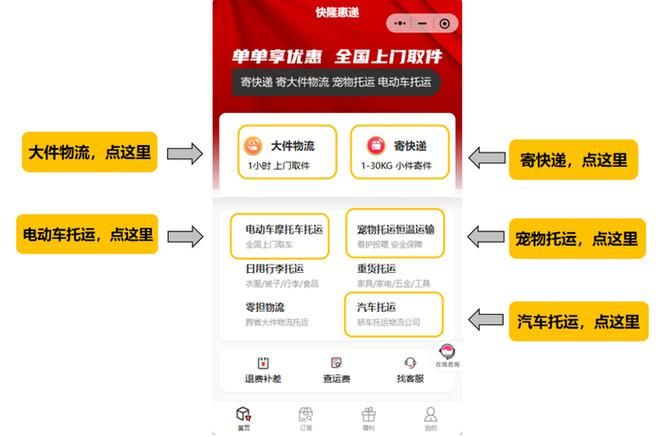
Second move, using the price-rate tool to reject poor information. No more pops or phone calls for a delivery company, which is inefficient and does not get the best price. It is now more economical to use micro-intelligence public signs such as “cloud speed”. All you have to do is look at the address of the mail and receipt, the approximate weight and size of the covers, and the system automatically compares the real-time offers of many courier companies. Which is the cheapest, which is the right time frame, and which is the right one, and which is the right one. This effectively avoids being subjected to individual, unregulated express delivery points such as “reading people's offers”。

Third, flexibility in choosing the method and timing of mail. If convenient, the package is delivered to a nearby courier site on its own, sometimes at a cost of a few dollars to collect the package. At the same time, freight costs may rise and be slow as far as possible in order to avoid peak periods in the pre-twenty-first and spring delivery warehouses. It might be cheaper and faster to send them in staggered days。
A guide to common pit spots and sheltering under cover
It is not enough to send new mail to save money to avoid these pits。
The first pit is a price-fixing trap. The covers generally do not belong to high-value valuables and there is no need to purchase premium services. The premium is usually between 1 and 3 per cent of the stated value, with a bed of several hundred dollars covered, and may be higher than the cost of freight. In the event of a genuine loss, compensation may also be awarded in the event of an uninsured price。
The second pit is the packing fee. If the courier were to help with the packing, a packing fee of around $20 could be charged for such materials as boxes, foams, etc. The money was saved by searching for paper boxes in advance, filling them with old clothes or bubble membranes。
The third pit is a trap. Every effort is made not to choose “freight-for-payment” except in exceptional circumstances. The price to be paid is usually 20-50 per cent higher than the price paid. It would be preferable for the recipient to transfer the freight to you first, or opt for a lump sum。
The fourth is an oral agreement. The details of the charges, including the cost of going upstairs, additional fees for remote areas, etc., would be clear to the courier before sending them. Prices and service standards are transparent and can effectively avoid subsequent price increases through such platforms as “close-to-twice”。
A few core questions about the blanket
Q: is it safe to look for these price-based platform mails online? Will it be lost
Answer: it's true. Formal platforms, such as “close-to-wind” are the official interfaces that bring together mainstream courier companies, and your list ends up being carried and served directly by large companies, such as china-china, texas and sunfung. Logistics information can be tracked throughout the official channels of express delivery companies, and it is no different from being sent directly to them, because the price is less expensive because of transparency。
Q: how can we ensure that the covers are not dirty or broken during transport
Answer: packing is the key. Except in compressed bags, clean old bed sheets or air-fibre membranes can be filled in the packaging, leaving the covers without room to shake in the box. The clear indication of “do not press” on the outer box would also alert the courier to due diligence. Take a photo of the blanket before sending it, and get in touch in case of problems。
According to my experience of sending clothes on several occasions, the first delivery by a rookie could cost dozens more on average if it was priced and wrongly chosen. The habit of price-for-money before billing can save a lot of money in the long run by means of tools such as the “stand up the clouds”. In particular, large items such as blankets, which are very seasonal, are planned in advance and are well equipped to ensure the safe arrival of the items while keeping their wallets in place, making it possible to actually spend small sums of money。