In eighth grade math, 90 per cent of the students are easily confused, and this part of the study is completely undiscovered。
Today we're going to eat the first lesson of chapter 12, section 2, of the 8th grade mathematics book: definition, theorem and proof。
The core points of this course are the basis of the geometry behind it, and the proof of learning after that is not dead。
These are the core objectives to be mastered:
Complete the core concepts of definition, underlying facts, theorem, inferences, proof
You can change the title to "if..."
Scrutinizing standard writing formats for geometry certificates that accurately dissect the conditions and conclusions of the proposition
An introductory reasoning, every step of the way, and one second to judge a false proposition
When we're ready, let's go straight ahead. Let's reset the schedule quickly
What's the deal? To be clear is to judge clearly what is right or wrong。
The structure of the proposition is always two parts: condition + conclusion。
The standard form is “if + conditions, + conclusions”。
In total, the titles fall into two categories: true and false。
How do you figure it out? The true proposition must be established by rigorous reasoning and can be reversed only if one example is given。
Let's start with a couple of sentences that we all heard in primary school and decide whether it's true or not:
First, the line between two points is the shortest, 100 per cent true。
Secondly, two points establish a straight line, which is also the real proposition。
Third, through a little outside the line, there is and there is only one line parallel to that line, which is the real issue。
Fourth, two straight lines are cut off by the third straight line, with the same internal wrong angle, two parallel lines and the real question。
Fifth, the sum of the triangles of either side is greater than the third or the real issue。
A lot of students are wondering at this point, what difference does it make? Take it easy. Let's get this straight。
First of all, the definition: the definition of a term that clearly describes the meaning of a term as dying, without any ambiguity。
For example, parallel lines, vertical lines, angular lines, single lines are defined。
As a matter of fact, a sentence that clearly defines a name and exactly what a term means is its definition。
Many of the unproven propositions that we learned in seventh grade are known to be true。
The basic fact is that the original basis for learning all geometry behind us is equivalent to the initial equipment for the start of the game, which can be used directly without you making it yourself。
There is also a type of puzzle in mathematics, based on basic facts or other confirmed propositions, which can be justified by logic。
This, in turn, is called the theorem when it comes to judging the real and the true of other propositions。
Here, we have to point out the obvious: theorem is certainly the subject, but it is not necessarily the subject, and it is 100 per cent true, and it is not in any position to be the subject。
What's the basic fact down there
B. Outer angle of the triangle and 360 degrees c. Two points to determine a straight line d. Straight angle triangle with two sharp angles
The answer goes straight to c, and the remaining three are theorems。

One more. Which one is theorem
A. Shortest segment of the line between two points b. Two straight lines equals the error in the parallel line c. Two points to determine a straight line d. Over a point there is a straight line and only one line is leaning on the known line straight
The answer is b, and the remaining three are generally accepted basic facts and do not require proof。
A lot of students are here. Basic facts, theorems, real issues. What difference does it make
One word for you:
Contact: fundamental facts, theorems are all real issues, all of which are legitimate grounds for geometry。
Distinction: the basic fact is that all human beings are universally recognized and do not need your brain to prove it. Theorem is based on basic facts or other real propositions, which are deduced step by step。
I'm going to show you three different things, and you're going to know why you're going to die by feeling:
First, there is a student count: 2+1=3 is prime, 2x3+1=7 is prime, 2x3x5+1=31 is prime, and 2x3x5x7+1=211, so he concludes that starting with prime 2, any number of primes multiplied by one, the result must be prime。
Is that the right conclusion
No! You go down, 2 x 3 x 5 x 7 x 11 x 13 + 1 = 30031, which equals 59 x 509 and is not a prime number at all。
Second, a classmate drew several sharp-angle triangles and found that the three sides of the line were inside the triangle, and he said, "all triangles are inside the triangle."。
What's the point? Draw a blunt corner triangle. The intersection goes directly outside the triangle。
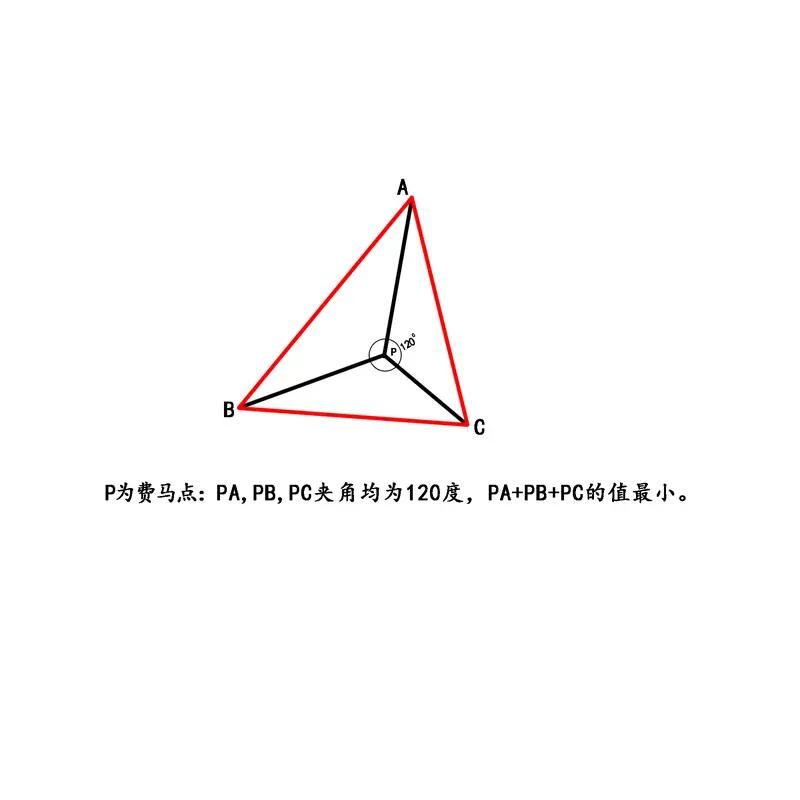
Third, we used to count the inner angles of the quadrilateral and 360, the pentagon 540, the hexagon 720, the heptagon 900, so we came to the conclusion that the inner angles of the n-gon and the equivalent of (n-2) x 180 degrees, right
This is true, because it is not based on a few examples, but on the true propositions that have been proven by complete reasoning, and there is no reverse。
It is clear to everyone that conclusions based on a few exceptions, eye-to-eye observations and perceptions are not valid and may be wrong。
In order to confirm 100 per cent that a proposition is correct, it must rely on rigorous reasoning, the whole process of which is called proof。
What's proof? It is with known conditions, definitions, basic facts, theorems that have been learned, step by step, to align the entire logical chain to confirm whether or not it is right。
The core requirement for proof is four words: there must be evidence。
Every step of your reasoning must have a legal basis and must not be blind。
These may be known conditions given to the subject, definitions, underlying facts, theorems previously learned, or even equations, equivalents。
A total of six steps in the standard certification process, one step at a time:
Step 1: read the subject and break down the conditions and conclusions in the proposition。
Step 2: based on the idea, the drawings must be generic and not specific to the crater itself。
Step three: write in standard mathematical language what is known and what is proven。
Step four: clarify the reasoning from conditionality to conclusion。
Step 5: prepare a complete certification process with a clear basis behind each step。
Step six: check from the beginning to the end, if you're jumping, if you're wrong。
Let's go through the whole process with the classic theorem and feel the standard proof:
The inference is that the two parallel lines are cut off by the third line and complement the outer angles。
Known: linea parallels the lineb, and ∠1 and ∠2 are the same sides of the line that were cut off by the third line。
Evidence: ∠1 + ∠2 = 180°
Proof:
The azimuth of mark ∠1 is ∠3
∵ (known)
∴∠1 = ∠3 (two straight parallels, equal azimuth)
Also ∵∠3+∠2=180° (definition of neighbor angle)
∴∠1 + ∠2 = 180° (equivalent replacement)
It's that simple, there's a basis for every step, there's no jump, that's the full certificate format。
Then we're going to work on two basic questions, and we're going to start by recasting a few of theorems as “if...” and deciphering the conditions and conclusions and then proving them。
The first is the theorem: complementary with the inner angles, parallel to two straight lines。
This is followed by the fact that if the two lines are complementary to each other by the third line, the two lines are parallel。
Second theorem: the outer angle of the triangle and the equivalent of 360°。
This is then: if the three angles are the three outer angles of the same triangle, then the sum of the three angles equals 360 degrees。
We can all pause ourselves and try to prove the first theorem, and then go down to the answer。
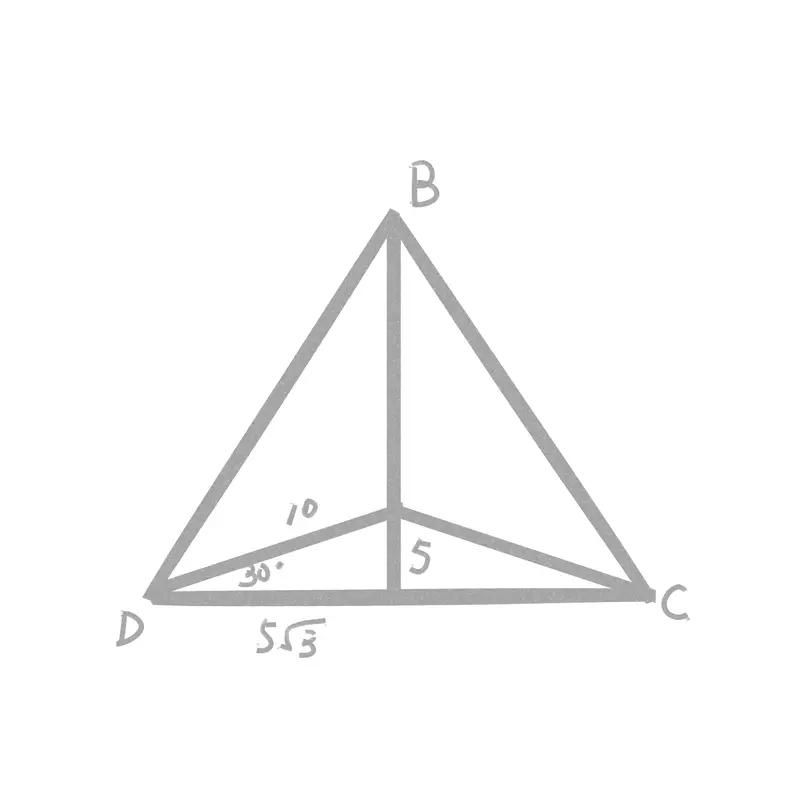
Let's get this straight:
The condition is “complementarity with the inner corners” and the conclusion is “two lines in parallel”。
Draw first, draw two straight abs, cds, then an ef, and cut both abs and cds。
The complementary inner angles of the group are marked as ∠2 and ∠3 and the known condition is ∠2+3=180°。
Certification process:
∵∠1 + 3 = 180° (definition of neighbor angle)
2+3 = 180° (known)
∴∠1 = ∠2 (equivalent replacement)
One and two are the same angle
∴ab∥cd (same angle, parallel to two lines)
It's done. The whole process is so tight, it won't take a penny。
In conclusion, let's conclude with a summary of the main points of this lesson:
Today, we are full of definitions, basic facts, theorems, proof of these core concepts。
It is important to bear in mind that conclusions based on observation and guessed by a few examples are not reliable and must be proven by rigorous reasoning。
The question of proof must not jump, and every step must be based on a clear and well-written norm, and the complex geometrics of the posterior will not be lost。
Which piece of knowledge is still in order。