At the beginning of the “155” round, china’s automobile industry has never been like this, with so much excitement and anxiety. On the one hand, the global lead of new energy and smart grid-connected technologies, the exponential leap in export size, and on the other hand, the sudden cooling of domestic demand markets, the spread of price wars and the decline in industry profits. Following high growth, the industry is entering a critical moment in which it must re-route。
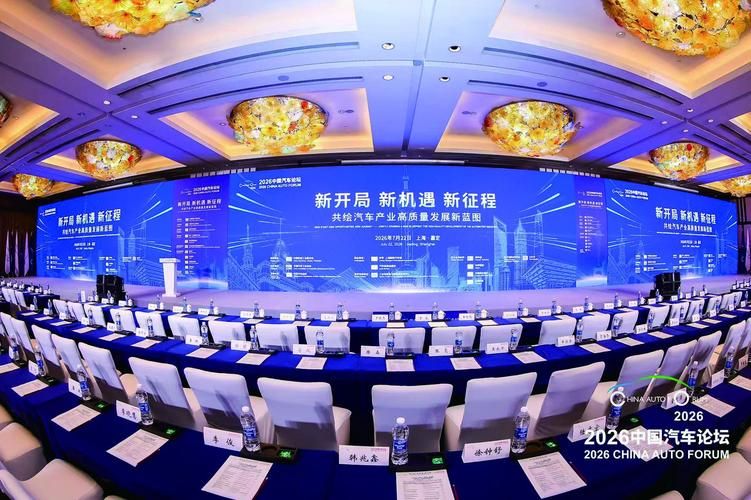
It is against this background that the 2026 china automobile forum was held in shanghai on the theme “new openings, new opportunities, new journeys — a new blueprint for high-quality development of the automobile industry”. At the general assembly forum, a series of data sketches the deep divisions that the chinese automobile industry is experiencing: domestic sales fell by 21. 1 per cent over the same period, while exports increased by 65. 3 per cent. The structural features of “domestic demand pressure, strong foreign trade” made “internal and external heat” a central issue throughout the three-day discussions。
In the face of this unprecedented temperature, journalists interviewed a number of car chain people and industry experts during the forum, and there was a strong consensus that the chinese automobile industry had reached a critical point where it had to answer “where to go”. The diplomatic confluence of views within the forum ultimately points to three clear shifts — from price games to user-value competition, from scale expansion to long-termism, from simple product output to compliance, to localization of deep tillage。
The vice-president and secretary-general of the chinese association of automotive industries (hereinafter referred to as the chinese association of the automotive industry) has called on companies to “hold the bottom line and return to reason” by ploughing deep into the chasms, identifying themselves, rejecting short-term opportunism and fostering long-term development。
The car exit broke out
In the first half of 2026, the chinese automobile market was marked by an unprecedented watershed. Csa data show that the cumulative number of car sales in the first half of the year was 149,933 and 1. 517 million, respectively, a decrease of 4 per cent and 4. 1 per cent, respectively. At first glance, the overall decrease appears to be moderate, but it is a picture of a “two-by-one ice-fire” scenario: a domestic sales volume of 9. 92 million, down by 21. 1 per cent over the same period; and exports of 5. 096,000, up 65. 3 per cent over the same period. Between cold and hot, the chinese automobile industry is standing at an unprecedented crossroads。
"the first half of the year was hard for the automobile industry." under-secretary-general chen shihua of csa stated that the contraction was no longer a distant warning of the “wolf coming”, but a solid operational pressure. According to the analysis of liu zhiqiang, director general of the industry information department of the chinese association of automotive industries, a double-digit decline in domestic car sales in the first half of the year was compounded by a combination of factors such as the “two new” policy replacements, the halving of the acquisition tax collection and the frustration of confidence in fuel vehicle consumption. The under-secretary-general of the chinese association for automotive circulation, hiro hong, revealed the transmission mechanism for declining sales from the point of view of channels. At the forum, she stated that 2026 was the “year of products” for cars, but not the “year of markets”。
This is not a lie. Between january and june of this year, the number of new cars on the domestic market exceeded 600 (including annual small changes, configurations, special supply vehicles, etc.) and averaged at least three new cars a day。
On the other hand, the “exit” end of the “heat” is not a pulsive eruption overnight, which is backed by a steep six-year-long growth curve. According to csa statistics, 995 million chinese cars were exported throughout the year in 2020; since then, they have climbed year by year — 2,015,000 in 2021, over 3 million in 2022, jumped to 4. 91 million in 2023, reached 5. 85 million in 2024, and for the first time, in 2025, 7 million steps, reaching 7. 09 million。
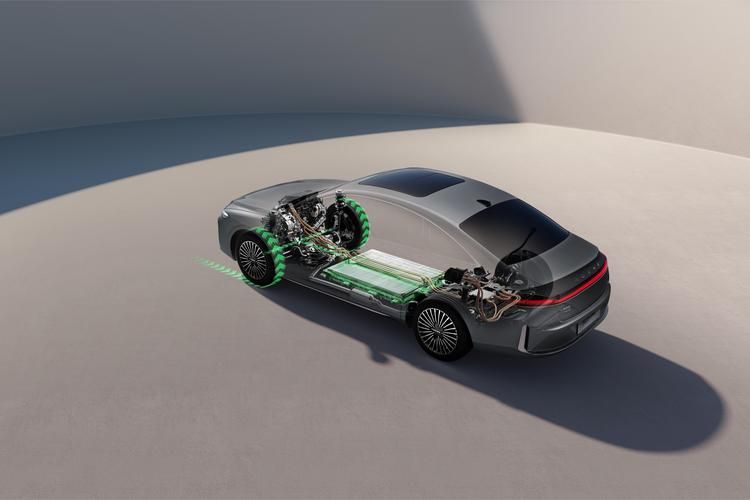
Under-secretary-general wei wenqing of csa analysed the underlying logic behind the high rate of export growth, a change that china has made possible not only by its huge consumer markets and its complete manufacturing industry base, but also by the fact that it has grown into an innovative high ground in the global automobile industry. – the transformation of the new energy electric car industry is leading the world, with smart grid-connected vehicle technology in step with that of the united states。
Technological innovation to break through the inner circle
A number of guests at the china motors forum gave different dimensions to the idea of the next step for chinese motor vehicles. Taken together, guests argued that the key to china’s future breakthroughs in automobiles lies in moving from “price competition” to “value competition” and from “large-scale expansion” to “long-termism”; and that the core of globalization is moving from “go-out” to “go-in” to “deep localization.”。
There were several calls from industry for a return to rational competition and differentiation of deep-farm products. At the forum, he stated that there were currently more than 130 car brands sold, that a large number of businesses were pursuing “large and full” product layouts, that car-type homogenization had increased and that the strategic objective was clearly beyond market carrying capacity。

The vice-president of the chinese federation of mechanical industries, roh junjie, has put forward a broader perspective: the whole industry needs to regulate ecology and achieve efficiency gains, improve governance systems, quality systems and self-regulation systems, guide enterprises in regulating orderly competition, and resolutely counter the dangers of irrational competition and blind expansion。
The ceo, ceo of the zero cars, stated that “the current competitive nature of the automobile industry depends, in the final analysis, on technology and products for long-term survival and development”
From the whole car exit to the "localized deep till"
If it is the firmness and wisdom of the industry to ask for help from within, then the ability and pattern of “outward growth” of chinese cars is tested by globalization。
At present, sailing is no longer an “opt-in answer” for some of the headers, but a “necessary answer” for industry-wide incremental space and long-term development. As noted by several guests of the forum, against the backdrop of competitive domestic market entry and sustained profit constraints, overseas markets have become important growth poles in the chinese automobile industry。
At the same time, however, global trade protectionism has increased, and tariff and territorialization requirements have continued to rise in core markets such as brazil, the european union and mexico, as well as short-sets such as internal competition spillovers, mutual recognition of regulatory standards, overseas supply chain packages, and localized operational capacity. The whole-car export model of purely quantitative expansion is encountering increasingly visible ceilings。
In the face of this situation, the offshore model is undergoing a critical transformation — from simple product exports to deep indigenousization of the industrial chain, from “go-out” to “go-in”。
Turning to the global roots, south china, the senior manager of industrial research at the north fukuda automobile overseas enterprise, shared that, first, global trade protection had increased in the external environment, with some core markets such as brazil, the european union and mexico demanding a gradual rise in tariffs and territorialization rates. A single whole-car export model has emerged as a clear bottleneck, and trade barriers can be effectively hedged only through local construction and higher rates of territorialization. Second, from the point of view of the market operations of automobile companies, only local construction can respond effectively to local demand for differentiation and improve product competitiveness。
Longwall cars, which have also been plowed in overseas markets for many years, are more focused on finding differentiated paths from the dynamic balance between market demand and policy evolution. Guo haebo, director general of strategic operations of the great wall international, said, with regard to going out to sea, that the exit strategy of the great wall could be summed up as “a step in the direction of local conditions”. The so-called “continuation” has two dimensions: demand and policy. In terms of demand, markets that advance localization — especially production — usually have greater market size and greater regional radiation capacity, such as brazil and thailand. From a policy perspective, priority needs to be given to changes in territorial legislation. “according to local conditions” is reflected in the flexibility of localization. Localization of production in different markets can take a variety of paths, such as construction, acquisition of existing capacity, sole ownership, joint ventures and even alternative labour。
As chinese cars enter the global market with such a rapid dynamic, an inescapable question emerges: how host countries view this wave of domesticization, led by chinese firms。
Zhang zhou, chief representative of the beijing representation of the european automotive industry association, provided a point of reference for his presentation at the forum. He noted that domestication of industries was positive in itself, but it was not appropriate for governments to impose it. Enterprises themselves know best when to move towards localization and when to use the kd approach is most appropriate - it is only by effectively reducing costs from the point of view of the business's operations that it can truly benefit end-users. If the government has a policy intent to pursue localization, it is suggested that it be guided by the corresponding support and incentives, rather than simply making demands or imposing restrictive clauses。
It is worth mentioning that in its report, the united states consulting firm, awe pil, predicted that chinese car exports would increase to almost 10 million in 2026, a significant increase from 7. 1 million in 2025. China will be the first country in the world to break through the tens of millions of exits。
But the significance of this figure lies not only in its size, but in the fact that it marks a fundamental transformation in china’s automobile industry, from “domestic demand-driven” to “double-cycle-driven.”。