The three-day break for the mid-autumn and autumn festivals will be followed by free passage on the next national day holiday highways. As a result, many friends will use extended leave to drive home to visit their families or visit their families for a self-travel trip. With self-drives and relaxations, particularly on the highways in the field or on the beautiful highways, there is a risk of being filmed by the electronic police for illegal driving or being punished on the spot by the local police. Expatriate traffic is punishable, which not only affects the good mood of travel, but is also relatively cumbersome to deal with. On 20 september, the evening newspaper shenyang, a media correspondent for the shen yang newspaper, interviewed the transfer authorities and asked them to provide information on the way in which the law was handled in the diaspora。
The transfer authorities have repeatedly reminded the owner of the car who is preparing to travel: check whether the driver's licence has expired and is not tested
What are the common self-drives driving illegally
1. Speed driving
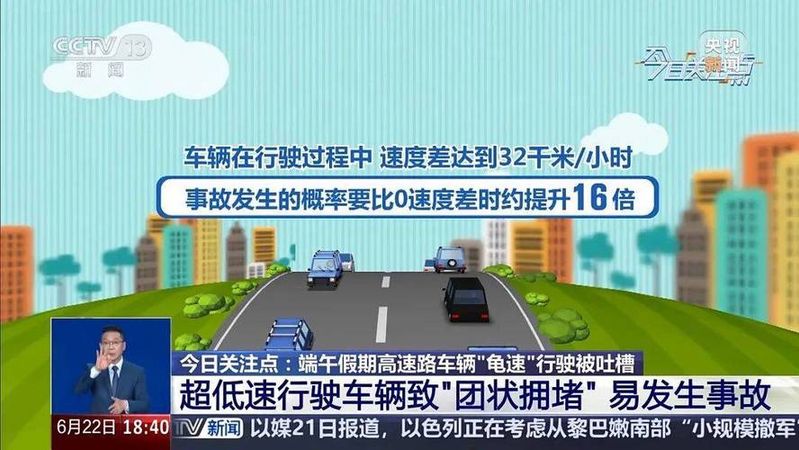
It was described that the most prone problem for many drivers on the highway was speeding. Speed drive forces the driver to move his sight to a distance in front of the vehicle, and the nearness becomes blurred. For a long period of time, it is easy to mistook vehicles travelling in the same direction to static, while it is easy to mistook vehicles in the same direction. As the speed of the vehicle increases, the view of the vehicle becomes narrower and the driver is not able to see the situation on both sides of the road, feeling as if it were travelling in a tunnel, to the detriment of the safety of the vehicle. Speed driving is a very dangerous violation and, if more than 50 per cent of the speed of the highway is exceeded, there is a risk of a one-time 12-cent penalty。
2. Occupation of emergency vehicles province
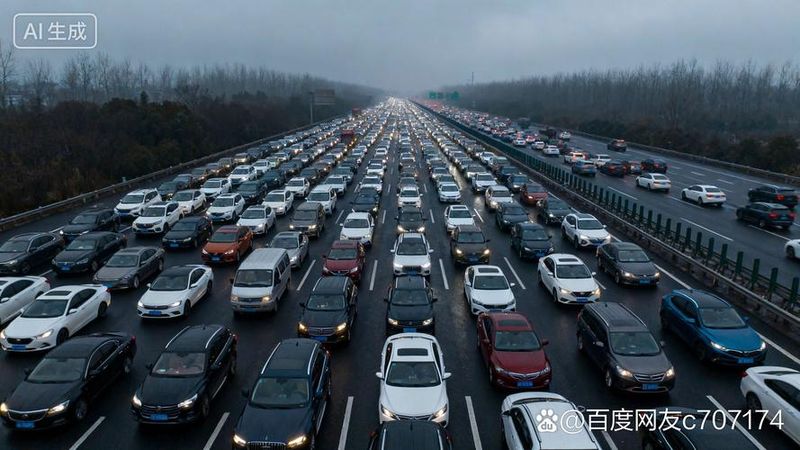
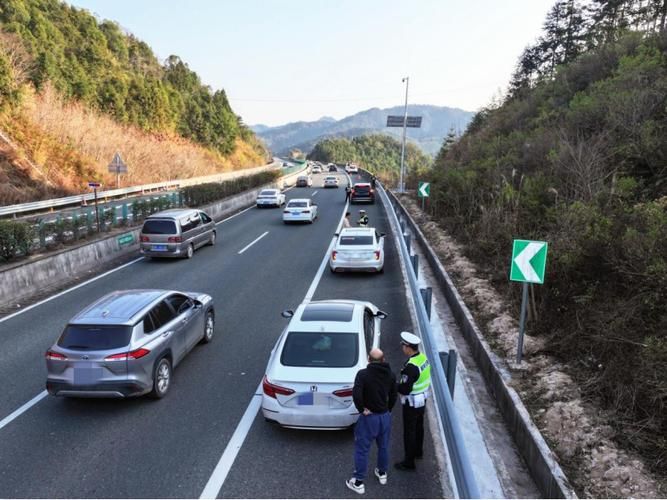
Emergency lanes are life lanes whose primary function is to be used as vehicles in case of emergency or for the movement of special vehicles. In case of traffic congestion on urban highways and highways, parking on emergency lanes and shoulders in non-emergency situations is fined $200, or 6 points。
When you have a special need to occupy the emergency driveway, you must place a triangulation sign at 200 metres behind the vehicle and open the double flash of the vehicle to remind the vehicle to pass through. If you don't, fine $200, three points。
Readers have asked whether it would be illegal to stop temporarily in the emergency lane if, during a self-driving trip, a child suddenly appeared on the highway to be in a stomach condition, or if the vehicle was ringing, and the driver wanted to get out of the car to see the emergency. A highway traffic police officer introduced that, in such an emergency situation, the owner was required to open the vehicle and place a triangulation sign in the back of the vehicle, which could be made known to the traffic police when they were on duty。
Free parking at the toll station
Owing to the length of the drive, some drivers would choose to park and rest in the square near the toll station, while others would even use the toll station as a collection point. The transfer service indicated that, if parking was needed, it would be preferable not to interfere with normal traffic and to pull over in a safe area. In addition, some drivers prefer to pull over behind the toll station and gather people, and it is explained that if there is a clear prohibited sign on the side of the road and the stop is illegal, the transfer authority will punish the driver for “violating the prohibited sign” and will be punished with $200 and a three-point mark。
What are we going to do
In the event of a violation of the right to drive a vehicle abroad, there are mainly on-site and off-site punishments, in which the place of disposal refers to the issuance of a ticket by a traffic policeman at the scene, rather than the place where the punishment is generally taken by an electronic police officer, where different measures are taken。
On-site penalties for traffic police: on-site penalties for traffic police are classified as ordinary and serious offences. In general, driving is illegal and the traffic police will issue a summary procedure decision. This is the most frequently issued ticket issued by the traffic police, usually with a warning or a small fine for less serious offences. If the decision on summary procedure punishment is received, it will tell you to pay a fine through local banks, online banks or the payment of treasures, etc., by simply entering the penalty decision number on the basis of a reminder。
In the event of a serious violation, the traffic police will issue a certificate of coercive measures or a notice of disposal of the offence. The receipt of these two notices of penalties, indicating the seriousness of the circumstances, requires the carrying of his/her identity card, driver's licence, and his/her travel permit, to be processed within 15 days at the designated crime centre or traffic police unit (notified on the ticket). Following an investigation into the evidence obtained, the traffic police produce a decision on administrative punishment, by which they pay a fine at a local bank or online bank。
It should be noted that the payment of a fine within 15 days of the issuance of the decision on administrative penalties will give rise to a delay of up to 15 days, up to the amount of the ticket。
How can you pay a fine for being filmed for driving in the field
Both non-deductible points and deductions were recorded in the field by the electronic police for car violations。
Since information on violations of the law has now been made available throughout the country, the vast majority of vehicles returning to their places of origin are able to identify and process violations by local traffic law enforcement agencies if they are filmed by the electronic police in a different location. Thus, owners who do not have points can contact the local authorities to pay the fine。
In the case of offences recorded by the e-police in an off-site location, the offence is identified as involving serious offences, such as the deduction of points, which can be dealt with at the location of the vehicle or at the point where the offence is committed. There are two types of procedures, one of which is personal: if it is convenient for a foreigner to violate the law, he may carry the relevant documents, such as a driver's permit, to the authority in charge of the place where the offence was committed and the vehicle's place of residence, as instructed。
It can also be done online, with access to the local online garage interface, and “online” to find “traffic violations” and click on it to see traffic violation queries, confirmations and fines. However, in some cities, the internet service is not yet operational, and alternative treatment is required. In addition, the app “transfer 12123” of the department of transfer control of the ministry of public security is very convenient to deal with such exotic offences, which can be downloaded from a mobile phone and followed by a step-by-step approach。
Shen yang's evening newspaper, shen's media reporter, yang suk