Introduction
In 2026, the hangzhou a. I. Core industry earned more than 460 billion yuan, an increase of over 20 per cent. It ranks second to beijing on the list of artificially intelligent cities in china。
This ranking is not surprising. What is truly worth asking is why a city that is home to internet consumption should be able to make the leap to hard-tech highlands in just a few years. Perhaps the answer lies not in a policy, a business, but in hangzhou finding a unique “innovation comedy” — not planned, but grown. The first thing to understand this approach is to look at the city's innovative subjects。
From "six dragons" to "five birds": an ecological 3d view
The rise of any technology city is first written on its corporate list。
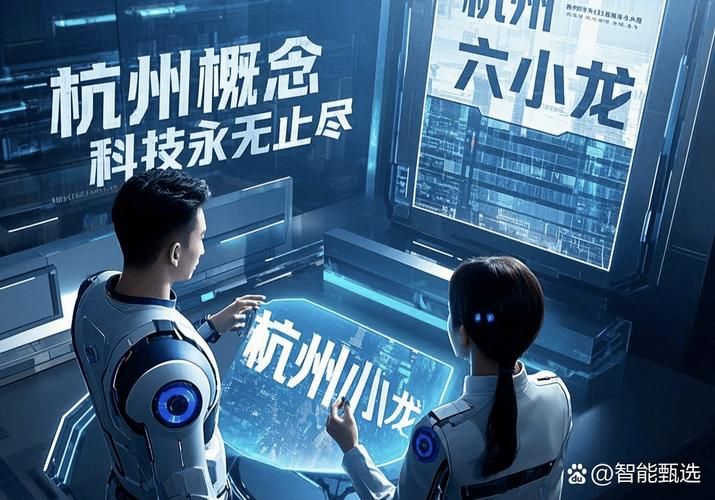
In 2025, the "hangzhou six dragons" became the word of public opinion. Deepseek, oak tree technology, game science, deep cloud technology, brain technology, and nuclear science - six companies have made global breakthroughs on their tracks. Deepseek has achieved a model performance of gpt-4o at very low training costs, four-foot robots of wootree technology have a global market share of about 60 per cent, and powerful brain technology has taken the lead in commercializing non-invasive brain interfaces. These names constitute the "high" of hangzhou ai。
In 2026, the “new eights” emerged. En and technological a platform has increased the experimental efficiency of biobacterial strains by 600 times, and pyramid smart eyeglasses order more than 350,000 units per year. The new group of enterprises has proven that the first innovation in hangzhou is not “a hammer trade”, but rather a production line of continuous output。
But more noteworthy is the “density” under the water. The five community-based enterprises, datawhale, waytoagi and si no, do not build large models or human robots, but do talent connections and open sources of knowledge. Datawhale links to more than 3,500 institutions, and waytoagi settles for 9 million users, bringing together over 10 million developers。
High and dense interweaving forms the first major feature of hangzhou's ai ecology: it includes both ginseng and thick shrubs. The former is responsible for breaking through, while the latter is responsible for nurturing. How, then, was such an ecology born? The answer goes back to the unique institutional options of hangzhou。
“let go of governance”: a reverse institutional choice

The emergence of enterprises is the result, and institutional supply is the source。
In the competition for the development of the ai industry in chinese cities, most cities opted for a “strength intervention” model — government-led planning, routeing and resource allocation. Hangzhou is on the contrary. Its core policy philosophy is only eight words: “doing something, doing nothing”
This is not government inaction, but rather a higher level of action. Deepseek's growth trajectory is a footnote: after the team of zhejiang university hatched, its subsequent development was entirely dependent on its own technological evolutionary path, after artificially intelligent small towns gained the initial policy window. What governments do is to provide on a continuous basis “basics” such as coupons, financing interfaces, and placement of talent, rather than technological routes and business models that involve firms。
A list of the policies of the big canals for the future city can support this “precision drip irrigation”: full rent-free for the first three years of presence, with r & d subsidies of up to 50 per cent for large models, and investment escorts of up to $5 million for projects included in the smowerm scheme. The zhejiang province kotsang foundation, in its third phase, and the hangzhou talent science foundation have also fallen。
Money is in place. The three-way governance logic of “liberty-integration” – strategic release, talent-building, ecological networking – constitutes the bottom operating system of the hangzhou model. It is the system that makes room for industrial ecology。
Iii. Eco-codes: substrates, large canal models and intelligence
The dynamism of the loose system ultimately requires industrial ecology。
On the infrastructure level, the sico-cream corridor in hangzhou city has developed a chain-wide layout of “calculations+ data+ models+ intelligence bodies”. Ariyun, hiranco, zhejiang calculus centre (zhejiang calculus centre) has built a movement control platform with more than 10,000 ps; more than 200 models with a total of 300 million downloads; and 21 models are registered through the central network。
The bottom seat alone is not enough, and the source of innovation lies in the deep integration of productive studies. The “big canal model” provides a sample that deserves an autopsy. In less than two years, the hangzhou institute of all-intelligence technology has established a full-time team of more than 40 people to hatch 50 technology enterprises, eight of which have become state high-tech enterprises. Director professor zhou quan described their methodology as follows: “the laboratory does not close doors to research, but follows the real demand of the market by setting up a production line”. The efficiency of conversion of “thesis upstairs, the explosion downstairs” is rewriting the “last kilometre” challenge of traditional production studies。
Hangzhou's biggest bet in the direction of industry is smart. The new coastal area has brought together more than 70 robotic and intelligent end enterprises, forming a complete chain of applications from upstream algorithms, key components to mid-stream consolidation mechanisms to downstream scenarios. In 2025, the national test base for the application of artificial intelligence (medical) was established in rhounzhou. The first regulation for the development of the smart robot industry was introduced and the first smart comprehensive insurance product was launched nationwide。
From the base of algorithms to algorithmic models, from laboratories to production lines, from robotic small towns to the institutional pioneer — hangzhou's industrial ecology is not “draw board”, but “forest making”. But the abundance of forests ultimately depends on soil and people。
Talent code: not “jacking”, but “rearing”
Hangzhou's talent card is bright enough: net inflow rates have been at the forefront of the country for many years, with 429,000 new students under 35 years of age being introduced in 2025 and “the most attractive city in china in the eyes of foreigners” for 15 years. But behind the numbers, there is a difference in logic。
In many cities, the talent policy is a “snatching logic” — to account, to subsidize, to pay for home. What is unique about hangzhou is that it follows a “care logic” — the attraction of scenes, the allocation of people to markets and the preservation of ecology。
At the university of zhejiang, the university of west lake and the heejiang laboratory, hangzhou annually exports about 1,500 ai-related patents. The new profession of “advanced intelligence trainer” was launched earlier in hangzhou, where it was determined that there were now nearly 20,000 practitioners. A market-based model of “business recognition, government recognition” is applied to talent determination, with a cumulative authorization of 430,000 individuals to be identified by 2,752 enterprises。
More crucial is the idea of “early, small, future”. In future, the city of science and technology has a cumulative number of 1045 contracted military leaders, and 706 have survived. Entrepreneurship success rates of 67. 56 per cent, measured by highly evaluated leading servicemen, are significantly better than the average level of industry. The core team of deepseek is mostly the one-year-and-a-year-old, flat-management, liberal exploration of the “genius” model, a projection of the hangzhou culture of innovation in business organizations。
When the pool of talent resonates with industrial ecology, the vision of cities naturally extends from home to the world。
Open chess: open source hub and global coordinates
Hangzhou has chosen a unique path of globalization — leveraging open sources. Alichan, deepseek continues to evolve, and a third large base model of open sources is being cultivated. As china's largest ai model open-source community, the "magic community" provides full-link support from model banks, data sets to the development of suites, free of charge, and is moving towards the goal of the "international open-source product launch platform". The holding of the world artificial intellectual open source competition has further strengthened hangzhou's position as a hub in open source ecology。
This pattern of “home-grown, integrated global” is also supported by networks of corporate cooperation. The external cooperation agencies, represented by deepseek and wootree science and technology, are concentrated in hangzhou and the province, and 20 to 30 per cent are located in the long triangle, extending to kyouta, hong kong and overseas. According to the hangzhou customs phase statistics, in the first half of 2025, the city-wide exports of intelligent imitating robots exceeded $400 million, accounting for about 60 per cent of the country's exports of similar products; robotic products from deep clouds have landed in 45 countries and territories, including singapore, korea and australia。
The global connectivity of open-source communities, superimposed global output of hardware products, and hangzhou is engraving its own coordinates on the global ai map. And standing now looking at the future, the city's ambition is as clear as its awakening。
Vi. Future wars: trillions of clusters, three main tasks and a clear-cut vision
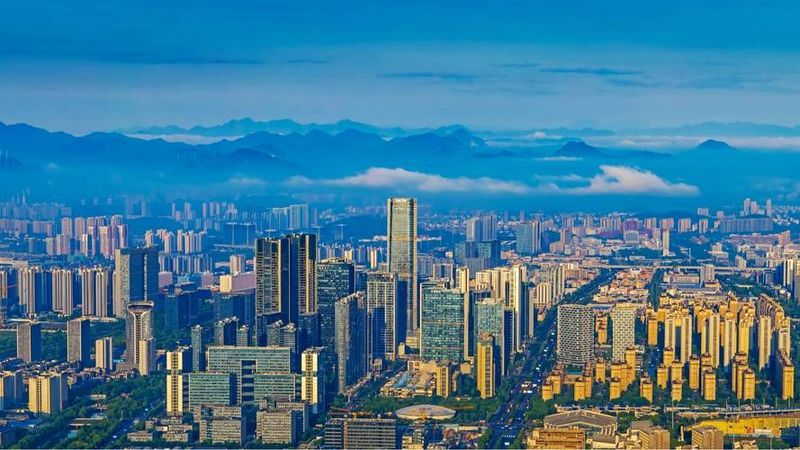
At the level of $46 billion, hangzhou has drawn up a road map for the next decade。
The “fifty five” plan identifies three strategic tasks: first, building an open-source global ecological hub to bring together demonic communities to bring together more than 30 million developers; second, building on smart integration innovations, opening up more than 100 high-value people's collaborative scenes each year; and third, deepening institutional innovation models, leading the way in such areas as data factor reform, landscape exchanges, and business access to the sea。
At the industrial level, the programme of action to accelerate the development of the artificial intelligence terminal industry (2026-2027) locks in ten broad sub-routines, ranging from smart visual terminals, smart robots to ai toys, flying cars, both for consolidation of stock advantages and for the future. In line with the blueprint of the advanced manufacturing cluster “296x”, hangzhou aims to develop two trillion-class clusters of artificial and visual intelligence, as well as 900 billion-class clusters such as smart robots. By 2026, the artificial intelligence core industry will have collected more than $550 billion。
But hangzhou's soberness is as important as its ambition。
In comparison to beijing, the “original” capacity of the primary sources of innovation and basic theory at the top scientific research institutes remains to be strengthened; the accumulation of bottom hardware, such as ai chips, computing infrastructure, is inadequate compared to shanghai; and there is a gap in the ecological and intellectual manufacturing capacity of the hardware supply chain compared to shenzhen. More critically, hangzhou's ai enterprises, which are dominated by start-ups, have yet to develop “chain owners” with a strong catalytic role。
A healthy ai ecology requires a combination of “chain-entrepreneurs + entrepreneurship + capital soil + policy patience”. Hangzhou has gained advantages in the latter three areas. Its differentiated path is also clear: the “first source” of open-source innovation, the “first spot” of smart innovation, and the “first vanguard” of institutional innovation. The completion of the “link master” shortboard is the most critical card battle in the long run。
Concluding remarks
Looking back at the rise of hangzhou, it is not a victory for the city, but a validation of methodology。
In the “leave-integration” triad, hangzhou has developed a governance ecosystem of light intervention, elasticity and strong linkages. Rather than relying on a policy or an enterprise, the operating system allows innovation to grow naturally from the soil. From the “six dragons” to the “five phoenix”, from 46 billion to trillion blueprints, hangzhou is proving one thing: in the run of hard nuclear technology, institutional patience, ecological thickness and strategic strength are far more important than short-term sprinting。
Hangzhou may not be the fastest runner in the second half of the global ai competition, but it is making itself the one that runs the furthest。