On 1 august, the institute issued the latest 100 city house prices in july 2026。
Let's start with the new room。

In july 2026, the average price of a 100-city new dwelling was $17,229 per square metre, with the ring and year-on-year increases. Specifically, the ring ratio rose by 0. 26 per cent, or 2. 09 per cent over the same period. That is to say, house prices have begun to rebound, either as compared to last month or as compared to the same period last year。
But this rise is not a full-blown increase. By city level, the first-line urban ring ratio rose by 0. 63 per cent, the second-line urban ring ratio by 0. 14 per cent, and the third-line city by 0. 07 per cent。
It is clear that the higher the level of power, the greater the momentum, the lower the level of power, the more downward pressure. This is consistent with recent market developments。
It's also very understandable. The main supplier of new housing is the real estate enterprise. At present, after years of decline, real estate developers are more deeply injured and are significantly less able to take risks; at the same time, market sentiment is weak, and real estate firms are reluctant to take the risk of expanding their operations. As a result, most real estate enterprises, especially national ones, have a convergence logic of behaviour, which is to gather as much as possible in high-energy cities。
This has led to increased competition in land markets on both the first and the second line, where land prices are relatively more expensive, and has put pressure on the first and second line cities to increase prices. In the case of vulnerable cities, land prices continue to decline, providing greater space for new housing prices。
At the same time, higher land prices will also make development unprofitable, and higher premiums and profit cushions will have to be made through the development of high-end plates。
Moreover, the decline in the real estate market has led to a poor sale of land in suburban areas, where good land is now being developed and will objectively lead to higher prices than previous so-called new city houses。
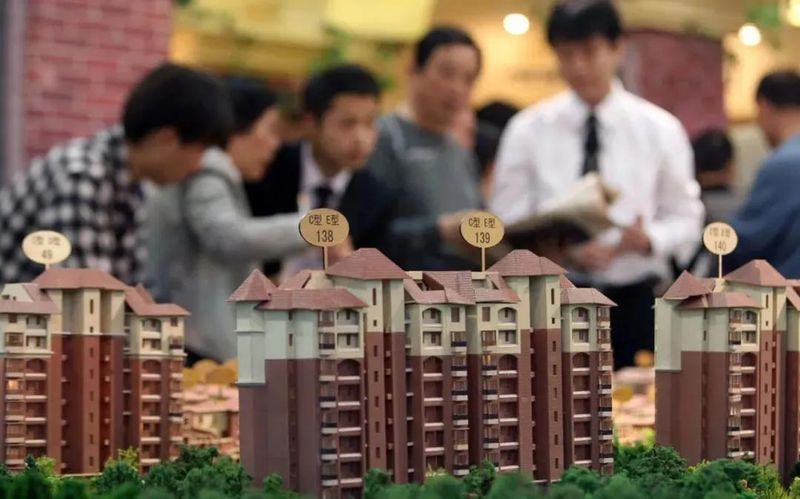
Moreover, in terms of product structure, it is difficult to sell newly needed housing because of the decline in income and the change in the perception of buying housing; rather, as the economy is divided, the upper middle-income earn more and lower-middle-income earner earn more and the lower-middle-income earner, so that the more resistant is the improved housing。
At the same time, the promotion of so-called fourth-generation housing and good houses, with the accumulation of profit margins, and the incentives and willingness of real estate operators to develop a new and improved generation of maori。
At the same time, for developers, after five or six consecutive years of market decline, prevalence issues are no longer a key factor influencing their survival. To be honest, the explosive caused by mobility will explode long ago, and those who do not now have their own means of survival。
The ability to earn money now becomes a key factor influencing the survival of real estate enterprises in the long term. As a result, real estate enterprises are no longer motivated to reduce prices significantly。
In addition, for real estate enterprises, many of the projects in stock are financed, and these finance is secured by a stock project. If real estate enterprises reduce their prices, there may be pressure to reduce fair value on all stock items。
When collateral values fall, banks demand additional collateral or early repayments, which is very stressful for current real estate enterprises and may even lead to a break in the financial chain。
As a result, the small volume of sales increased as a result of the price reductions could not compensate for the potential risks, and housing companies were afraid to reduce prices significantly。
Not to mention the fact that many local governments do not record large price reductions。
Thus, the prices of new houses are sticky and do not fully reflect the cold and hot changes in the market。