With the increase in electric control systems such as fuel jets, electric doors and windows and electric seats. The continued use of conventional wiring will result in a sharp increase in the number of car wires. In some advanced vehicles, wires weigh around 4 per cent of the total vehicle weight. The increase in electrical control systems has increased motority, economy and comfort. However, the resulting increase in complex circuits has also reduced the reliability of vehicles and made maintenance more difficult。
At present, there is considerable contradiction between the development of new vehicle technology and the dramatic increase in the number of car beams and their diameter. To address these problems, the data bus has been extensively applied to the vehicle electrical control system。
What's a data bus
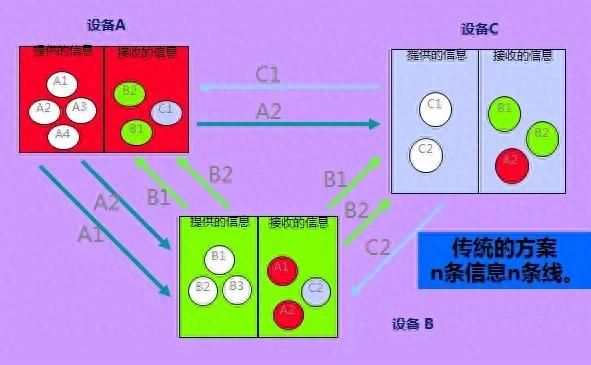
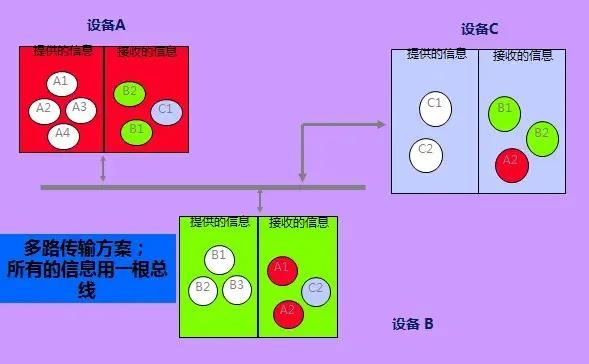
The data bus means that signals transmitted on a data line can be shared across multiple systems, thereby maximizing the overall efficiency of the system and making full use of limited resources。
For example, while the usual computer keyboards have 104 bits to give out more than 100 different commands, there are only seven data links between the keyboard and the host, and the keyboards rely on these seven data connectors to transmit signals using different electro-level combinations (coded signals). Applying this approach to the vehicle electrical system would greatly simplify the current vehicle circuit. A different coded signal can be used to indicate a different switch action, a signal decoded, and to connect or disconnect the corresponding electrical equipment (front light, water scrubber, electric seat, etc.) according to the command. This will allow the conversion of the former one-line monolithic system to a one-line multi-use system, significantly reducing the number of wires on vehicles and reducing the diameter of the beams. Of course, the data bus will also integrate computer technology into the entire car system and accelerate the development of car intelligence。
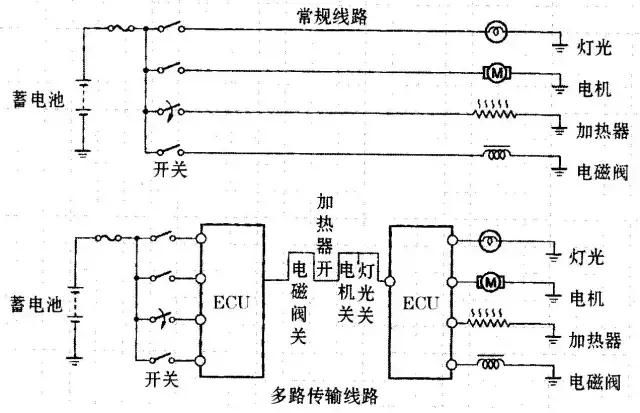
The principle of multi-road transmission
Picture
Picture
Since the 1990s, there has been an increase in the number of electrical control devices on cars, such as electro-fuel jets, anti-capacitating brakes (abs), airbags, electric doors and windows, active hangers, etc. With the widespread use of integrated circuits and single-piece machines in cars, the number of electronic controllers on cars is increasing。
As a result, a new concept has emerged - the concept of a local network of electronic controllers on cars. In order for spare parts produced by different manufacturers to coordinate work on the same vehicle, standards must be developed。
In accordance with the relevant iso standards, can's condensed structure is a bus style and therefore known as can bus. In the design of modern cars, can has become a mandatory device, and mercedes, bmw, volvo and renault vehicles use can as a means of networking electronic controllers。
Since our medium- and senior-level sedans are predominantly european, the most widely applied can technology in europe will also be a national sedan-induced technology project。
Communications bus
Picture
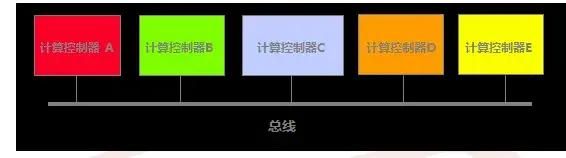
Multiple computer-to-computer communications are carried out using “master lines”。
Different modes of communication
Parallel approaches
In this mode of communication, each line transfers only one binary bit. Therefore, multiple lines are required if multiple binary bits are to be transferred。
Seriality
In this mode of communication, each bit is transported one by one。
That's the way we choose to connect。
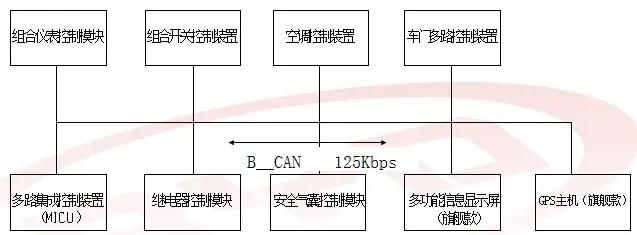
The network connection on board the vehicle is currently based on two can buses, one for a high-speed can bus for the drive system at a rate of 500 kb/s and the other for a low-speed can bus for the body system at a rate of 100 kb/s。
The main connection of the drive system to the can bus is the motors, eu, asr, abs, eu, srs, composite meters, etc。
They have the same basic characteristics and are systems that control direct motor movements. The main connection of the body system to can bus is a centralized lock, electric doors and windows, rear vision mirrors and interior lighting for more than four doors。
Some advanced cars, in addition to the two can bus mentioned above, also have the third can bus, which is primarily responsible for satellite navigation and intelligent communication systems。
Thread-type communication bus
Picture
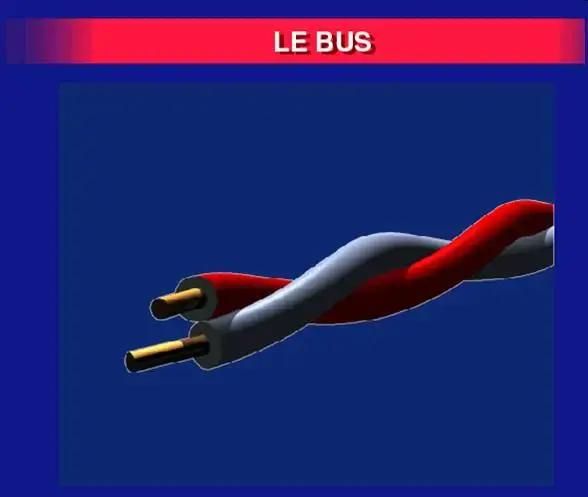
The bus transports frames. It consists of two insulated copper lines with a cross-section of 0. 6 mm2。
They transmit reverse phase telecommunications。
The two lines will be linked together。
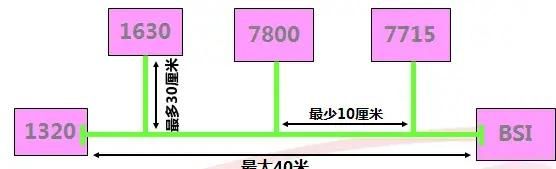
Structure
It's a polytype。
Picture
Can agreement
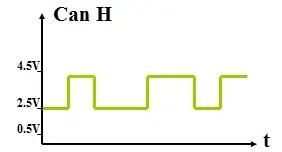
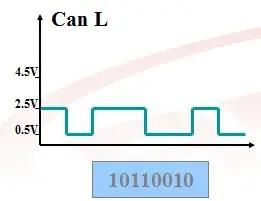
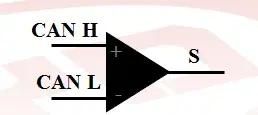
Two lines form the bus, can high and can low。
Picture
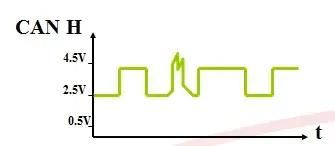
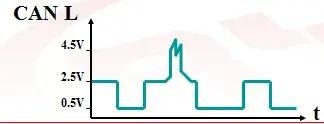
The difference between the two lines can be coded for two different logical states。
Picture
This approach ensures that
Picture
Picture
Picture
Currently, there is no relationship between the two bus lines of the driving system using the can bus and the car body system using the can bus. In the future, engineers and technicians will gradually overcome technical barriers by setting up a gateway to bridge between the can buss in order to achieve resource-sharing and feedback on the signals on the data buss to the dashboards。
The pilot will be able to see if the electrical control devices are working by looking at the screen。
The introduction of data bus technology into cars will certainly contribute positively to the development of automobile electronics。
Can characteristics
Foreground for multi-road bus transmission system
There are clear advantages to the more traditional power supply systems of the multiple-road bus transmission system。
A. Large savings in non-ferrous metals. With the conversion of electrical appliances previously controlled by multiple power lines to a multi-road bus transmission system, a single power line would be sufficient and the length of power lines would be saved by at least 50 per cent。
B. Time savings for line-beam production. The construction and installation of the traditional power supply system is relatively complex because of the multiple power lines and the different lengths of each vehicle type. The conversion to a multi-road bus transmission system, including power lines and signal lines with only three lines, greatly simplified the production process, reduced costs and saved working hours。
C. Extension facilities. The large variety of lines in traditional power systems has created difficulties in organizing production and warehouse management. With the conversion to a multi-road bus transmission system, the difference in the length of the beam and the difference in the control software have greatly facilitated the production of hardware. The additional appliances need not add power lines, re-engineer wire beams, but simply extend the beams, i. E. Easy and economical。
D. Reduced costs of combination switches and increased life expectancy. The traditional power supply system, which combines the power from the switch to power from the appliances themselves, can reach tchoampei to dozens of ampei, and has been converted to a multi-road bus transmission system with only a few milliang, which is one thousandth of the original current, thus not only prolonging life but also reducing costs。
Multiroad transmission technology
Multiroad transmission systems are multiple circuits or devices that complete a particular function. In general, multi-road transmissions can be considered to be wired or wireless simultaneous transmission of many things, such as data messages。
Terminology
Multi-road transmission - multiple messages on the same channel or line
Picture
Modules - an electronic device
Simpler like temperature and pressure sensors, complicated like computers, we call them modules。
Some simple modules in the computer multiplex system are called nodes。
Data bus — access to data running between modules, the so-called information highway
If the module can send and receive data, such a data bus is called a two-way data bus。
To counter electronic interference, the two lines of the two-lined data bus are hanging together。
Automobile manufacturers have been designing their own data bus, which, if not compatible, is called a dedicated data bus。
Networks - multiple data bus links for information sharing, or data bus and module as a system (e. G. Nine interactive information modules between byd-f6 data bus)
Picture
Structure - the configuration of the information superhighway, its input and output ends specify what information can and can be obtained, and if command traffic requires “police” (a special function chip), then there must be “police stations”, perhaps at the input/output end of the module
Communications agreements - so-called rules of the road, including the method of establishing “traffic signs”. The communication protocol for the data bus is not a simple issue, but it can be briefly described as an example. When module a detects the engine approaching heat, it has priority over other less important information (e. G. The latest atmospheric pressure change data from module b)。
The standards of communication agreements imply awakening visits and handshakes. Awakening access is a signal to the module, which is dormant for electricity saving. The handshake is the compatibility of the module with each other and is working。
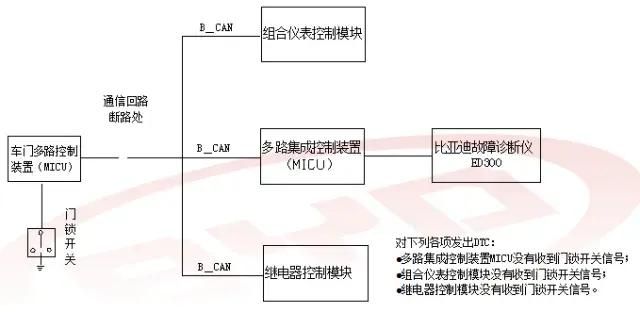
Most communication protocols (and the use of their data bus and network) are exclusive. Therefore, specialized software is required for the maintenance of diagnostics。
Picture