Web server type: knowledge of web servers (e. G. Apache, nginx) and their configurations, some of which may affect performance and seo。
Website protocol (https):
Whether or not to enable https: https is already configured, not only for safety but also as a ranking factor for the search engine. Ensure that https is activated at all stations and that http requests the correct redirection of 301 to https。
Ssl certificate: is the ssl certificate valid and configured correctly
Url structure:
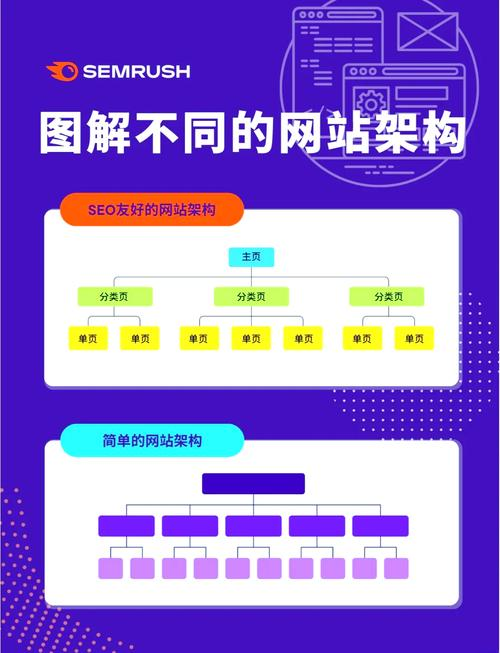
Normative: are urls concise, descriptive and containing keywords (english or spelling)? Is the hierarchy too deep? Is static or pseudostatic urls used?
Uniformity: do multiple urls point to the same content (e. G. Www and non-www. Index. HTML tailings, etc.)? Are they regulated through 301 re-direction or rel=canonical
Robots. Txt:
Existence: is there a robots. Txt file under the website root directory
Is the configuration correct: is it correct to block backstage files, argument urls, etc. That the search engine does not want to capture? Are important css, js files or content pages wrongly blocked
Sitimap. Xml:
Existence: is an xml site map generated
Is the format correct: is it in accordance with xml? Does it contain urls for all important pages of the website?
Submitted: has it been submitted to the search engine through the headmaster tool (google search console, 100 degrees resource platform, etc.)
Is it timely to update: is it timely to update sitemap when new pages are created or pages are deleted
Website access and index status:
Capture error: the capture error (e. G., 404 not found, 5x server error) reported in the long tool of the checkpoint was repaired in a timely manner。
Number of pages indexed to the website by search engine according to expectations? Is there a large number of important pages not indexed or a large number of low-quality pages indexed? (available through the site: command or station master tool)
Is the web structure clear? Is navigation easy to climb through? Is there a spider trap (e. G. An infinite cycle calendar, a combination of parameters, etc.)?
(ii) page-level element optimization: details determine success or failure
Title tag (title tag):
Unique: is the title of each page unique
Length: is it contained within the recommended length of the search engine (in chinese general recommendation 30 words) to avoid being cut off from the search results
Relevance and keyword: does the page accurately reflect and naturally integrate the core keyword? Is the keyword forward
Attractive: is it enough to attract user clicks
MDescription (m)I don't knowCription:
Unique: is the description of each page unique
Length: within the recommended length (approximately 80 words of general recommendation in chinese), ensure that it is fully displayed in serp
Relevance and keywords: is the page brief summary and contains the relevant keyword
Attractive: is it possible to stimulate user desire to click? (although not directly affecting rankings, it significantly affects the rate of hits)
Keywords:
Research and selection: are keyword studies based on user needs and search data? Are the appropriate core and long end words chosen
Page match: does each page optimize around a clear target keyword
Natural integration: are keywords naturally distributed in titles, h labels, text, pictures, art, urls, etc.? Avoiding keyword stacking! (labels are currently marginal to mainstream search engine ranking, need not be set deliberately)
Heading level (healthing tags-h1, h2, h3...):
H1 label: is there and only one per page
Label to mark the most important page theme (usually the main title)?
Altitude structure: do you use labels to construct a clear content hierarchy? Is the use of h labels logical
Contains keywords: does the h label automatically include the relevant keywords
Picture optimization:
Alt text: did all pictures add descriptive alt text? Does the alt text contain relevant keywords? (critical to photo search and accessibility)
File name: is the photo filename descriptive (e. G. Blue-sofa. Jpg instead of img 001. Jpg)?
Picture size and format: are the pictures compressed and oversized? Is modern graphic format like webp used
Internal lInking:
Relevance: does the internal link point to the content-related page
Anchor text: does the link anchor text have descriptive character and contains key words for the target page? Avoiding the use of meaningless anchor text such as click here。
Number and distribution: do important pages receive sufficient internal link support? Is the distribution of the inner chain natural? Is there an island page (no internal chain pointing)?
Bread crumb navigation: did you use the crumb crumb navigation to help users and search engines understand the location of the page
(iii) content quality and relevance: content is king
Originality and value:
Is it original? Is there a copy or a lot of repetition
Can content really satisfy the user's search intentions? Does it provide unique information or value
Is it deep, comprehensive? Avoid empty, general。
Relevance: does the content closely revolve around the core theme and target keyword of the page
Readability and structure:
Is the content clear? Has title, list, rougher focus been used
Is the language easy to understand? Is the layout comfortable
Freshness: does the content stay up to date? In particular, for content that needs to be time-bound (e. G., news, information on activities). The regular updating of high-quality content helps to keep the website active。
(iv) technology seo and user experience: upgrading performance
Page load speed:
Core web indicators: lcp (maximum content mapping), fid (first input delayed, possibly replaced by ipp in the future), cls (accumulative layout deviation) indicators. (use tools such as google pagespeed insights)
Optimizing measures: are graphic compressions, code compressions (css, js), enable browser caches, use cdns, optimize server responses, etc.
Mobile devices friendly:
Responsive design: does the website have a responsive design that can be well displayed on different dimensions of equipment
Mobile usability: is the font too small? Is the button easy to click on? Is there a question of display or function specific to the moving end? (use google mobile-friendly test or station leader tool)
Structured data / schema markup:
Is there a corresponding structured data tag based on the type of content (article, product, faq, recruitment information, local business, etc.)
Is the mark correct and valid? (use tools such as schema markup validator)
Website security: is there a security loophole on the site other than https? Are they vulnerable? (regular security scans)