Overview of the theory of strategic alliances (ter)
– suk41
1. 1 concept and classification of strategic alliances
The concept of a strategic alliance was first developed by jane hopeland, president of the us dec, and roger tycoon of management
Negel was introduced in the 1990s and has since played an important role in practical applications. In english literature, war
There are a number of forms of expression for a few alliances, mainly from the following:
Partners, international communityco-operativearragesandcoalition, international alliance
(c) collabolization (strategic cooperation), etc. At the national level, it was translated into a strategic consortium, and others would
It's called associated businesses, strategic alliances, strategic marketing alliances, corporate collaboration, etc
After the concept of strategic alliances was introduced, there was no rigorous academic definition that gave rise to strategic alliances
Both form and content are changing, and their content and outreach are constantly changing, resulting in many differences
Explanation. At present, the definition of strategic alliances by the academic community is largely based on the following views, which have not yet been harmonized。
One view is that strategic alliances are enterprises made up of powerful, normally rival companies
Or partnership is a competitive alliance. The idea is to emphasize strategic alliances on a scale of equal strength
Of competition companies
Michael potter, the representative of the other view, thinks
The union goes beyond normal market transactions but..
Ltas are not directly consolidated. Its general practice is to value by entering into an agreement with an enterprise
Activities (e. G. Supply agreements) or co-operation with another independent enterprise (e. G. Establishment of marketing)
Joint venture). Kul looks forward to the strategy in his book multinational strategic alliance
The alliance was described as a conventional relationship, and he saw strategic alliances as a common strategy between tncs in pursuit of common strategies. Contents
Various cooperation arrangements entered into as a result, including licences, joint ventures, alliances, cooperative marketing and mutual trade
Agreements, etc
I don't know. Professor charles hill of washington university, usa, also believes that strategic alliances are practical or
Cooperation agreements between potential competitors. Our economist, zhang wei cai, also believes that corporate alliances are business
There are relatively stable, long-term contractual relationships between r & d and production sales. Zhang wei cai agreed on strategy
The alliance is a long-term contractual relationship。
Teecce gave a more explicit definition of corporate strategic alliances from another angle, and he thought
Business strategic alliances are strategies for sharing and complementing internship resources between two or more partner enterprises contents
Targets, with collaborative groups characterized by commitment and trust
Yoshino and rangan, in their book strategic alliances: an approach to business globalization, stated that:
Alliances are a particular dimension of the business of two or more enterprises, and fundamentally, this connection is one
Business partnerships to enhance participation in enterprises through the provision of mutually beneficial technologies, skills or products
Competitive advantages, alliances in a variety of forms, ranging from long-term contracts in non-property-linked markets to merger of property-related linkages
Enterprise。
As can be seen from the above, although there are some differences in perceptions of strategic alliances, they are all covered
Including the following common elements: (1) alliance members focus on long-term objectives and forward economic benefits; (2) alliance partners
Closely connected, beyond normal trading relationships; (3) alliances must be supported at the highest level by member enterprises
The full cooperation of the members was emphasized. In a broad form of union, the union is bilateral or
Variable linkages, at the strategic level of an enterprise or at the operational level of an enterprise, while narrow alliances only include
Some long-term strategic partnerships, with a narrower scope
In combination with the above, shijun argues that strategic alliances are between two or more enterprises to achieve
Specific strategic objectives, such as sharing of resources, risk or cost, complementarity of strengths, while maintaining their own independence
Stronger partnerships, sometimes established through equity participation or contractual linkages, and in some countries
The field takes collaborative action to achieve a “win-win” effect
Scholars also have different views on the specific form of strategic alliances, based on their views
Different perceptions of the alliance definition are also changing. A lot can be divided by different criteria from different angles. Category
No, it can be divided into
(1) an alliance with a buyer may be divided into: 1) a union with a partner. It'll make each other happy
Mutually beneficial alliances facilitate timely and accurate access to information and accurate control of production, which is upstream
Union or forward union model; 2) union with seller. Alliances with original suppliers can ensure that the supply is filled
Sufficient, reduce excessive storage due to market volatility, a downstream or backward alliance model; 3)
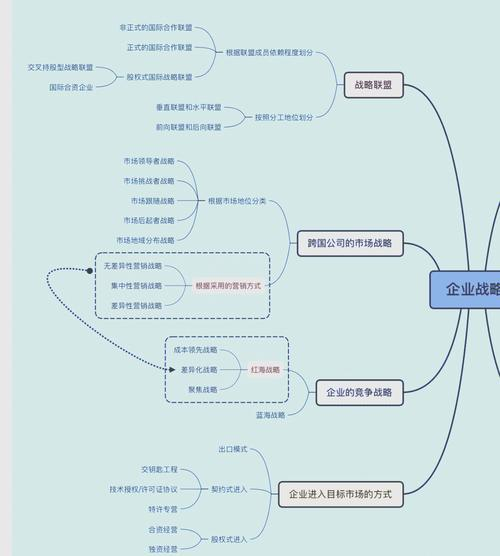
Alliance with competitors. Since the alliance can increase market power or even monopolize, it can
To get higher profits。
(2) depending on the degree of participation in cooperation, it can be divided into: 1) equity alliances. Partnerships with each other
Some shareholding, such alliances are strong and long-term, with advantages and complementarities; 2) contractual linkages
League. Some sort of binding formal agreement between partners, a looser alliance
The way in which the alliance operates is normal only when the common interests are closer. 3) informal cooperative alliances
These generally refer to technology exchange activities, etc。
Yoshino and langan consider the main features of strategic alliances to include: (1) exclusive purchase agreements
(2) exclusive co-production; (3) exchange of technological results; (4) cooperation agreements; (5) joint ventures
All kinds of measures. Dunning believes that strategic alliances can take the form of equity-sharing, such as corporate consolidation
Joint ventures, including r&d partners, co-production, co-marketing and distribution of non-equity forms
In practical terms, strategic inter-firm alliances can take the form of a few enterprises
Cooperation between industries can also be a union between several collectives of enterprises. Unions can use special permits
Equity participation, virtual manufacturing, etc。
1. 2 theoretical interpretation of strategic alliances
One of the most important things that neoclassical economics does when it comes to economic phenomena is that transactions do not cost, that is, transactions
The concept of “transaction costs” was introduced in the twentieth century at a cost of 0. 7 ronaldos, broadening the analysis of economics
Areas and perspectives
I don't know. As an integral part of the theory of transaction costs, williams will determine the determinants of transaction costs
There are two groups: the first is the two essential features of the conduct of the subject of the transaction, and the second is the characteristics of the transaction
Three dimensions. (1) williams considers the human being to be of limited reason. People handle a lot of information on market transactions
At times, capacity is limited, i. E. In real transactions, due to incomplete knowledge of market information
It is not fully aware of transactions. In order to avoid being disadvantaged in a transaction, the top of the transaction will be spent
A certain amount of energy and money is devoted to reviewing transactions. (2) opportunism poses a threat to market transactions. Opportunism
It means that the trading party will use all kinds of false and deceptive means to provide the other party with false information to realize the proceeds. Will
Limes thinks opportunism exists in market transactions, and this opportunism hypothesis leads to transactions between the parties
The process needs to be thoroughly screened, increasing transaction costs. (3) specificity of the course of dealing. Williams thinks we should
The ease process has three dimensions: (1) asset-specific. When a large amount of money is invested in a specific transaction, it's not a good idea
The assets invested are at high risk because if the transaction is terminated, prior period input funds will not be available back
Receipt; (2) uncertainty of transactions. The market environment is complex and variable, and there is a possibility that both sides of the deal could switch to partners
Transferring to other businesses increases the performance risk of transactions; (3) transaction frequency. Increase in transaction frequency
This leads to higher transaction costs, as the total transaction costs are linearly related to the frequency of the transaction。
Douglas scnorth had done a survey that had found that 45 per cent of united states national income was used for trading
It is therefore important and meaningful to find ways to reduce transaction costs between them. Establishment of strategic alliances
To facilitate rapid inter-firm access to market information, to reduce the number of transactions and to reduce opportunistic behaviour, thereby linking
The two parties bring benefits。
On the basis of williams' decisive group analysis of transaction costs, the establishment of a strategic alliance would help the enterprise
Mutual provision of transactional information to improve the understanding of the transactional chain between the parties and reduce the number of transactions due to individual enterprises
The risks of inadequate rationality due to limited capacity. Strategic alliances can also reduce opportunities in the course of transactions
Jurisprudence, because one-off betrayal and fraud will bring revenge and punishment to the other side of the alliance
Mechanisms reduce the probability of opportunism occurring. In terms of the individual nature of the transaction, when a business is strategically linked
After the alliance, companies reduced the limits of individual incompetence and the scrutiny of trading processes triggered by opportunism
Costs, increased profits from transactions. From the point of view of the course of dealing, strategic alliances are also lower business
An important factor in transaction costs. The specific nature of the asset means that a large portion of the capital invested will be made up
For sank costs, this part of the cost cannot be realized and can be recovered only through the profits of the transaction. Assets
The higher the level of specialization, the higher the cost of moving one enterprise to another
A breach of contract by either side of the trading enterprise would result in significant losses to the other. When a strategic alliance is formed between businesses, it's not possible to find a solution
Trading relationships have stabilized and the rational use of assets is guaranteed. When there is uncertainty about the course of the transaction
The stability of the coalition organizations offset the uncertainty of the external environment, and communication between the coalition enterprises inhibited opportunities
The threat of extremism. When business-to-business alliances are established, business-to-business transactions become an institutional arrangement, and fewer
The negotiation and communication costs required for each transaction have resulted in significant savings in market transaction costs。
In summary, according to the transaction cost theory, corporate strategic alliances have been instrumental in reducing transaction costs and increasing the profitability of transactions
It is important that enterprises be provided with a least-cost institutional arrangement。