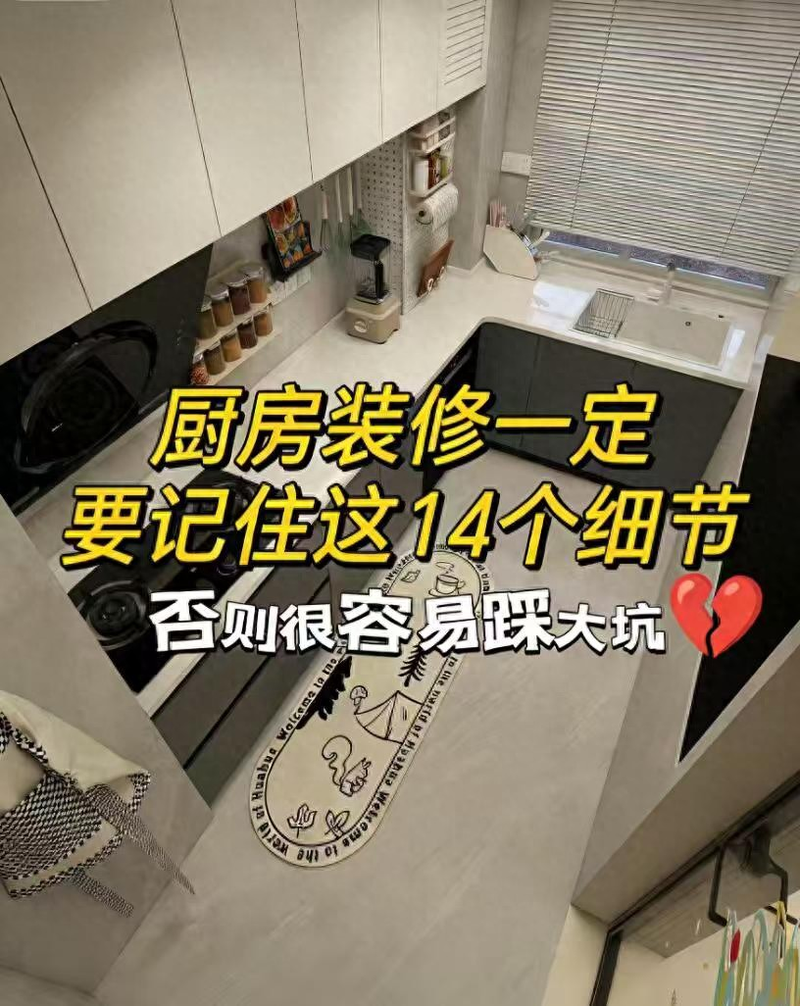
The kitchen is being renovated, and it's not worth it. Many people have finished their kitchens to find that they either struggle to get their food or hide it cleanly and even when they cook. Today, we're sorting out 14 safe kitchen pits, each detailing the real occupancy experience, saying, "why can't you do it?" and "how can you do it?", the rookies are just copying and avoiding regret
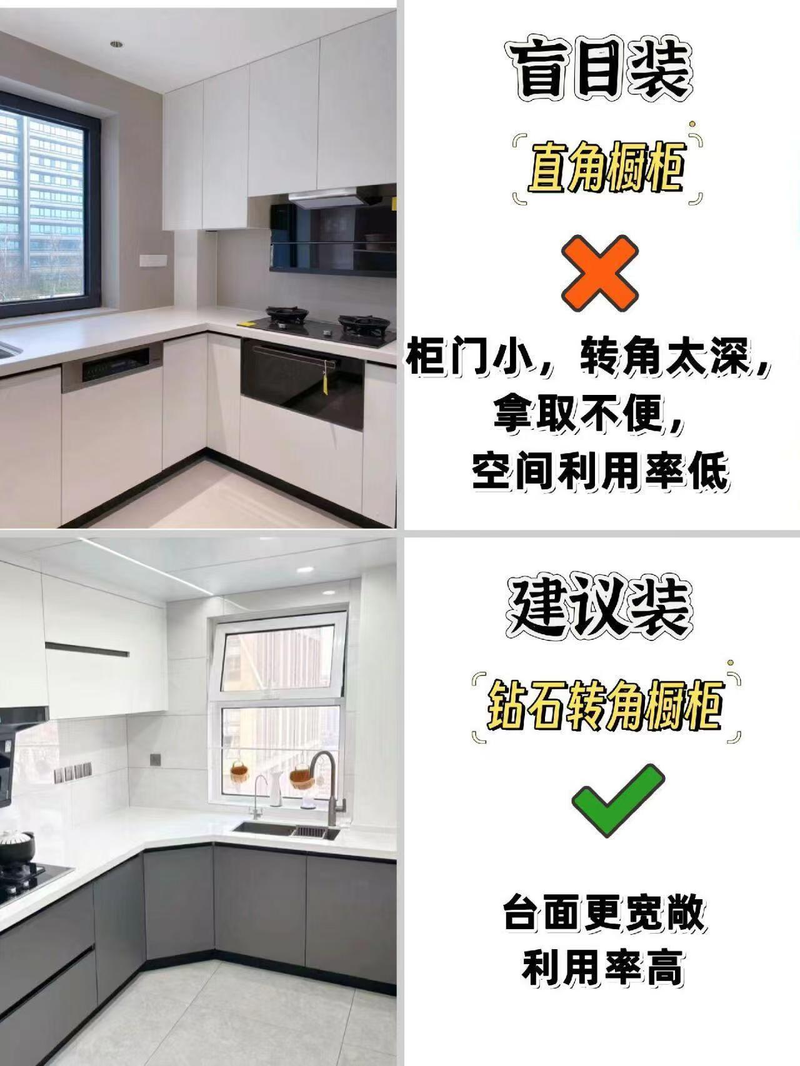
1. Rectangular corner: no direct corner money, choice of diamond corner cabinet
The rectangular is a “space waste and disaster area”! The food and cooking equipment at the depths of the corner are “half a day's worth” and have long been “uninhabited” and the door is small and large items cannot be placed。
It is recommended that the diamond corner cabinet, with a wider surface extension, be accompanied by a joint basket, with a light pull to get to the deep corner, that the space utilization be filled directly, and that food be taken while cooking。
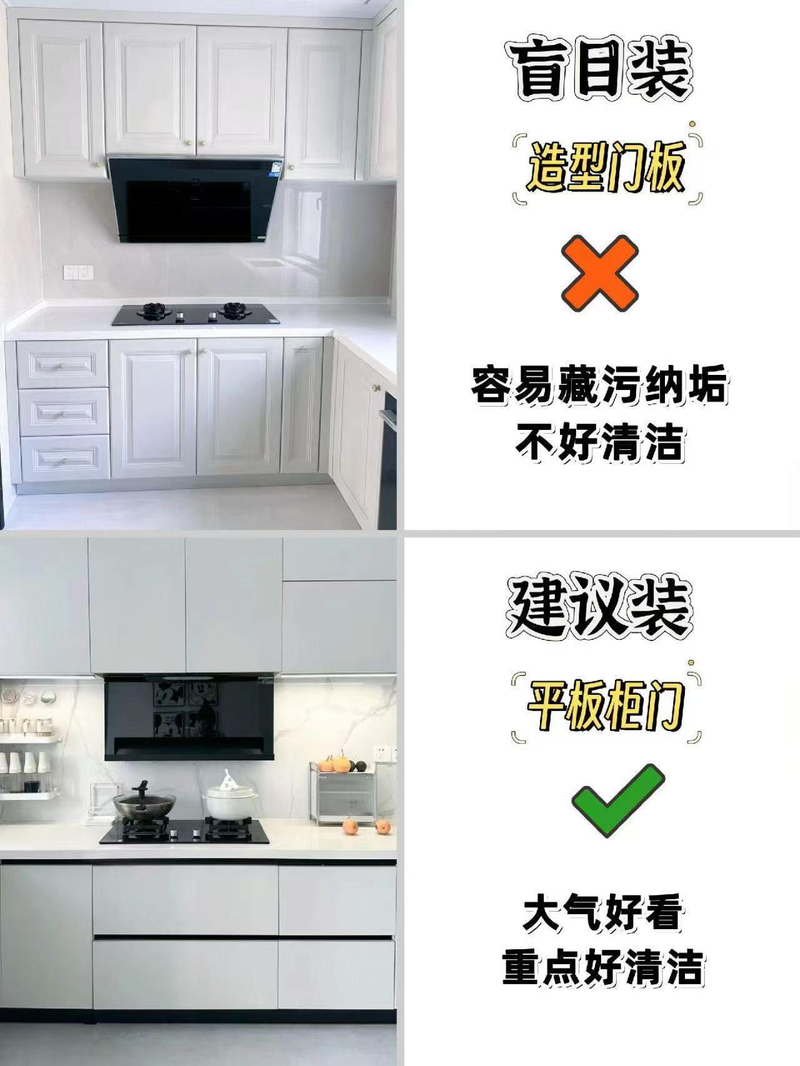
2. Quarry style: non-conforming/skin sense, selection of tablet light
The sutures of the plastic cabinet doors (e. G. Cam texture) are full of oil stains, and the rags cannot be wiped and the toothbrushes are exhausting; the skin cabinet doors are more pottened, fingerprints and oil stains become dirty, and they are easily shaved and the frequency of cleaning is doubled。
The tablet high-lighted cabinet door is a “soft gospel” with a smooth surface and a wet rag after the oil has been splattered, and it is shaving and grinding and is fresh for several years, with no stale style。
3. Surface material: no sheeting, stone and stone selection
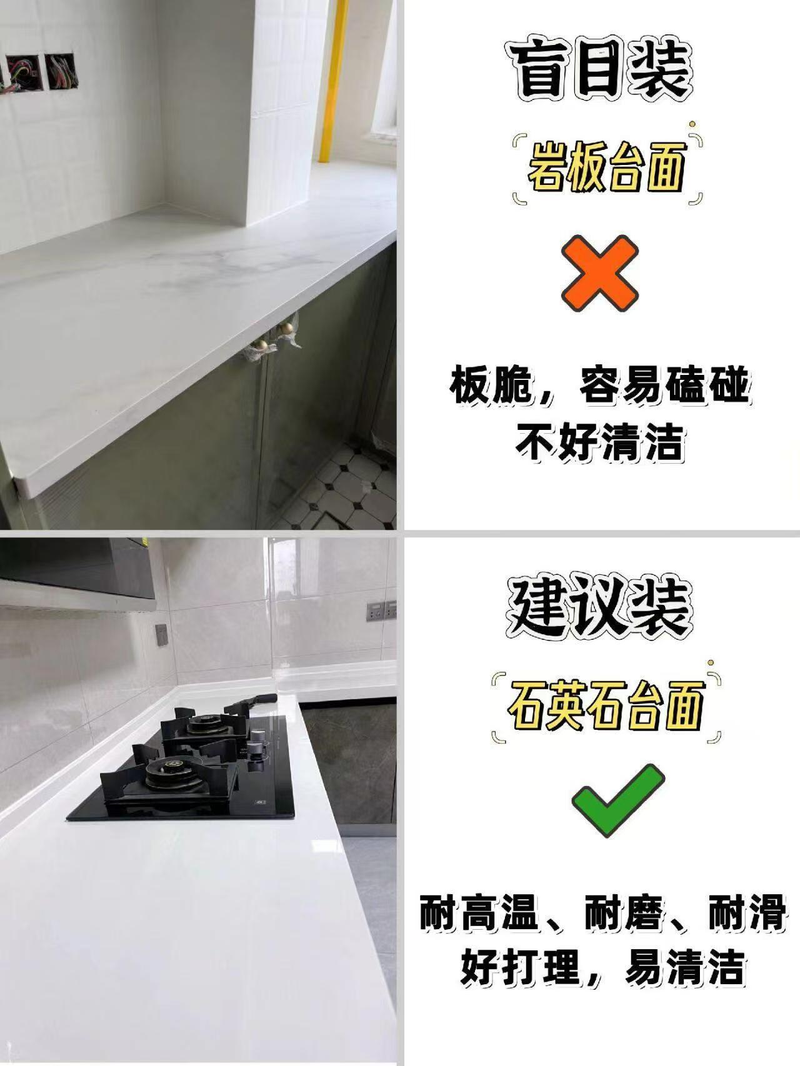
The rockboard appears to be high-end, but it is “bricky as glass” and it breaks when it comes to heavy matter, and the edges are prone to collapse and the cost of maintenance is extremely high; daily cut vegetables also have to be prepared for the shaving surface。
Stonestone is the “ king of prices” on the kitchen table, which is warm and smooth, and which is not afraid of scratching, oil stains, cleaning only, and normal households for 10 years。
Kitchen doors: no trajectories, very narrow slides the door
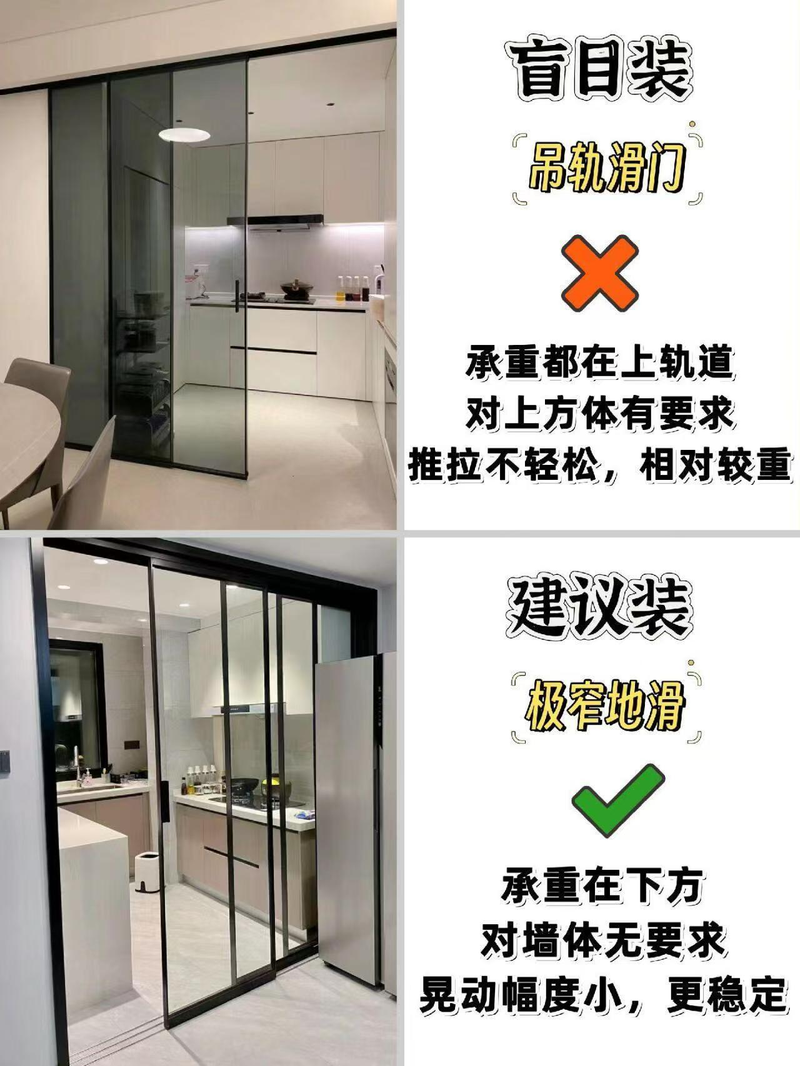
The weight of the trajectories is placed on the orbit, which is extremely demanding for the walls, with long periods of time that are prone to deformation, and when pushed and pulled, it sank and even falls; and it is difficult to clean up and hide oil。
The extremely narrow slide door is heavy below, no matter what the mass of the wall is, the push is smooth and smooth and the stability is full; the bottom orbital design is good, it does not store dust, and it creates a very simplistic value that makes the kitchen spacious。
5. Water tank pattern: no small doubles, large singles
The small troughs look at “a clear division of labour”, but each of them is not enough in length, and can't be discharged when cooking pots, soup bowls, and water can be spilled over the table for longer than washing dishes。
Large cells are “all-powers”, either super-cooked or dishwashed, which can be eased down, with plenty of space to wash and water not so easily splattered; with scalable taps, clean tanks with no dead corners, and small kitchens that can save surface space。
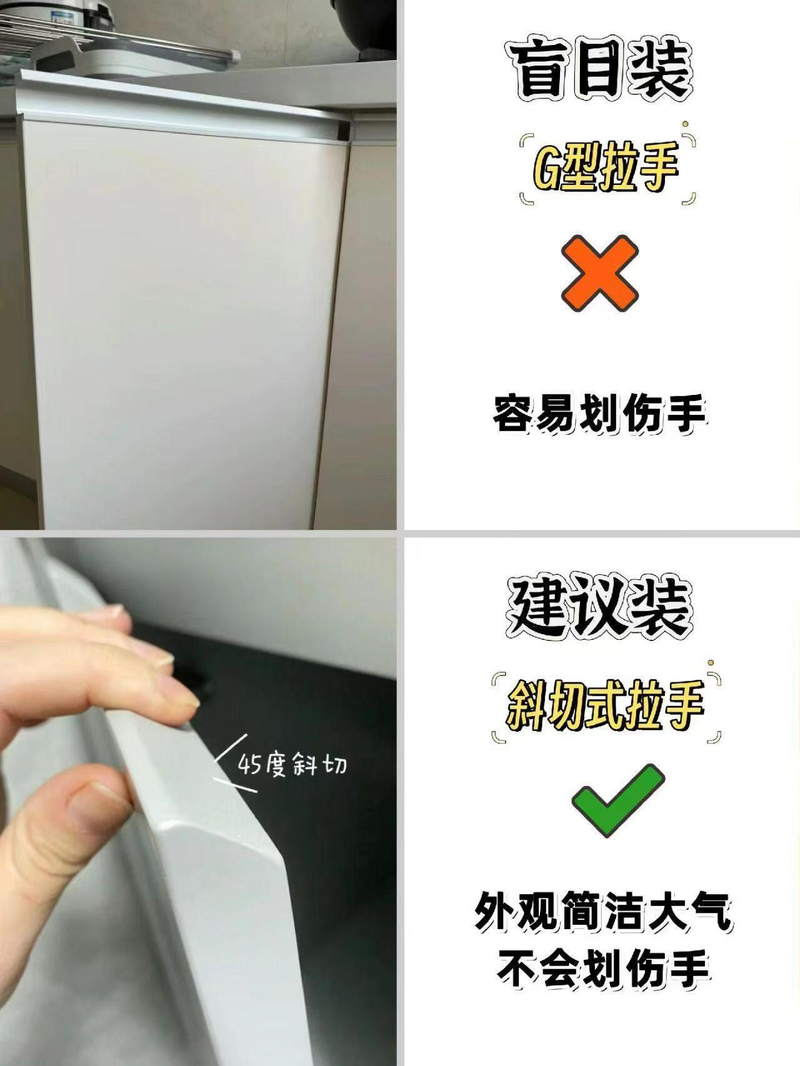
6. Quarrying: 45 degrees tilt/hidden
The g-hands are sharp on the edge, and when cooking, it is easy to cut the arm; the gap in the plain hand is full of oil, which is repeated when cleaning, and the prominent hand-lifting is easily touched, especially when there are children at home。
The 45-degree slashing hand is simple in the atmosphere, with no sharp edges and no hands scratched safely; the hidden form of hand-strangling (or a cm hanging under the door instead of hand-strangling) is more timid, with no bumps on the surface, clean-up, and improves the overall quality of the kitchen。
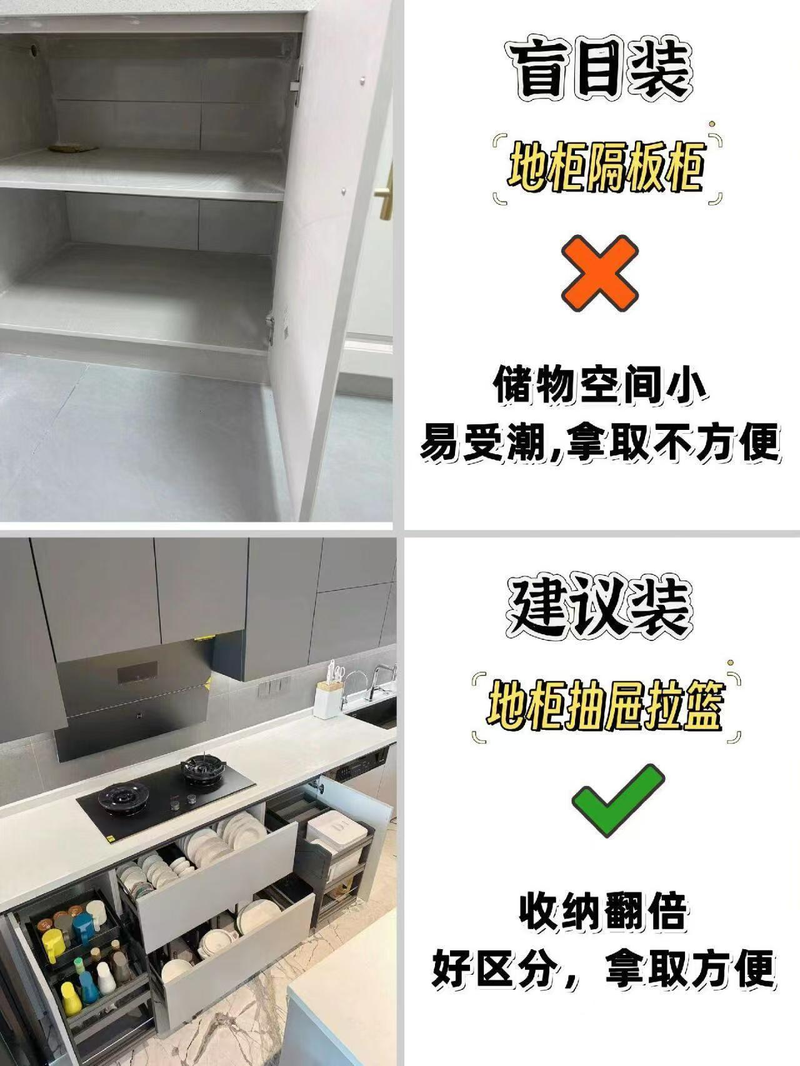
7. Collection of underground cabinets: no compartments, selected drawers
The cabinet appears to be capable of putting things on the table, while “the upper floor does not get them, the lower floor bends”, and the food and cooking sets are piled together and turned around when looking for them; the bottom is also prone to bad tides and damage to food。
The drawers allow the intake to be “observed” by placing pots, utensils and food items in groups, without bending over, to obtain the bottom items, with a collection capacity double that of the partition cabinet; some of them are also designed to be damp in the kitchen。
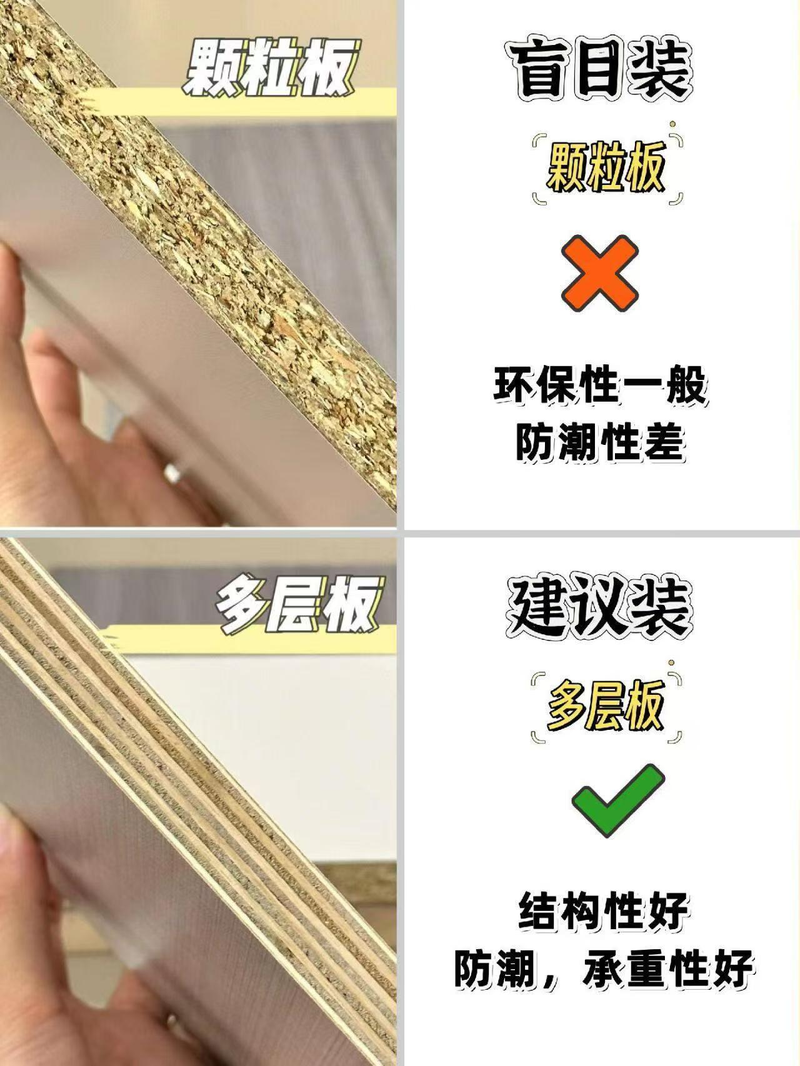
8. Counterboard: non-particle plate, multi-layered
Particle plates are generally environmentally friendly and extremely damp, kitchens are chronically damp, cabinets are prone to swelling and deformation, and even moldy, affecting the safety of food products; they are also of poor weight and heavy matter is susceptible to deformation。
Multilayers are structurally strong and have excellent damp resistance, and even if the kitchen occasionally leaks, they do not easily deteriorate; they are heavy, full of pots and food, and they are more expensive than granulate plates。
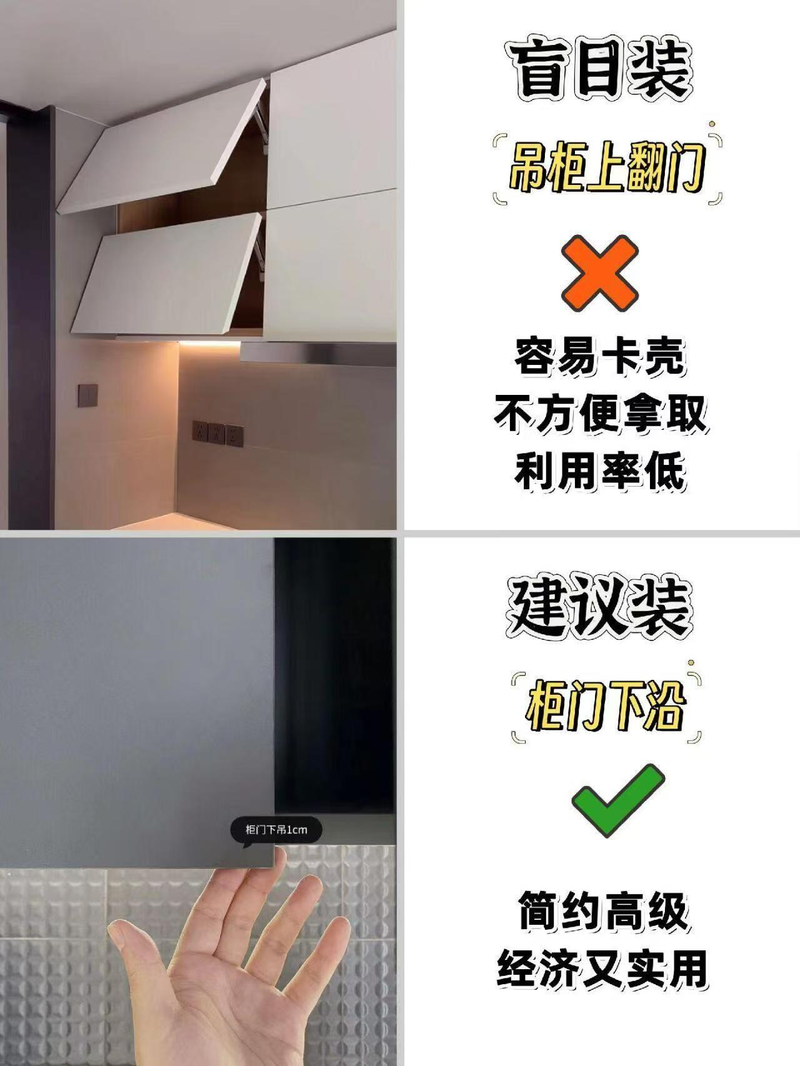
9. Opening of the container: no door-turning, selection of design proposals
It is necessary to push the door up hard on the gallows, and the short ones simply cannot reach it, and it is easy to jam the shell when opening doors; it is particularly difficult to remove high-level items with stools and their utilization is extremely low。
Under the door, the design is simple and advanced, with no extra hand-lifting, and the door can be opened lightly and easily, regardless of the size of the individual; it also avoids a bump in the head when the door is turned over, which is useful and cost-effective。
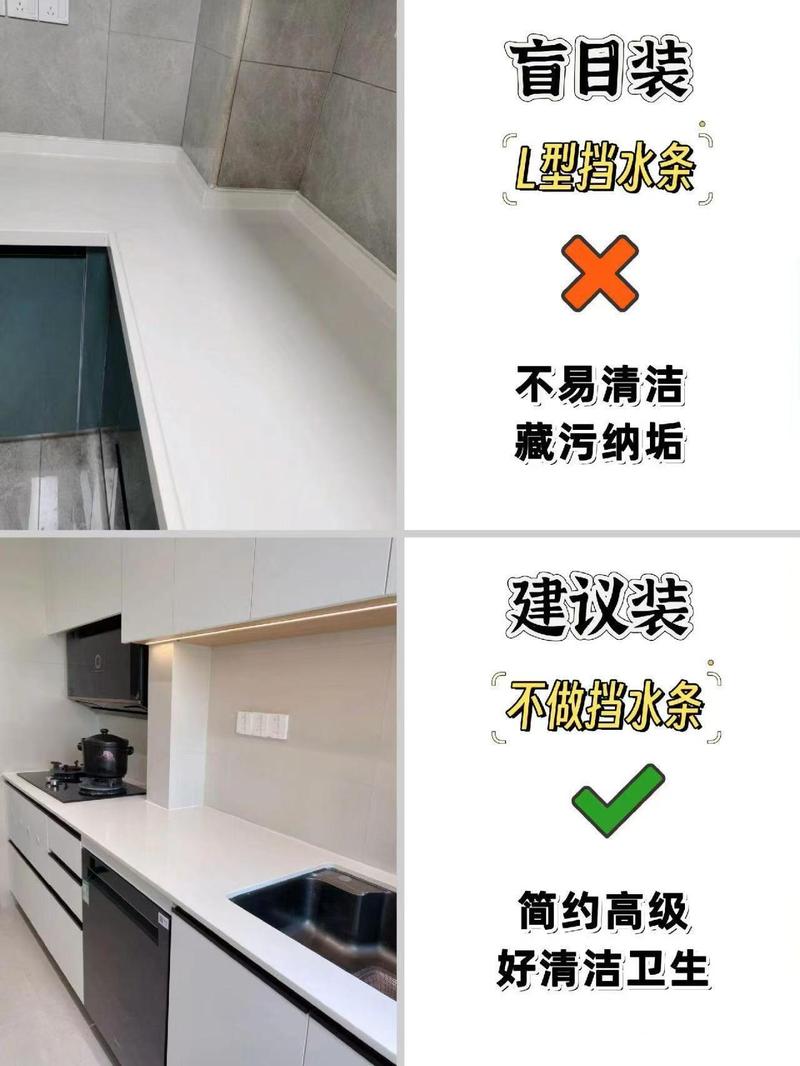
10. Water bar: no l type, no arc paragraph recommended
The “sanitary corner” of the l-walls and surfaces and the sutures of the walls is where oil stains and food residues are hidden, brushes are unclean, long and dark and particularly dirty。
The pursuit of simplicity can be straightforward, smooth on the edge of the table and clean to the end; if you fear a leak, you can choose an arc to block the water bar, without a straight-angle gap, clean, and avoid water accumulation。
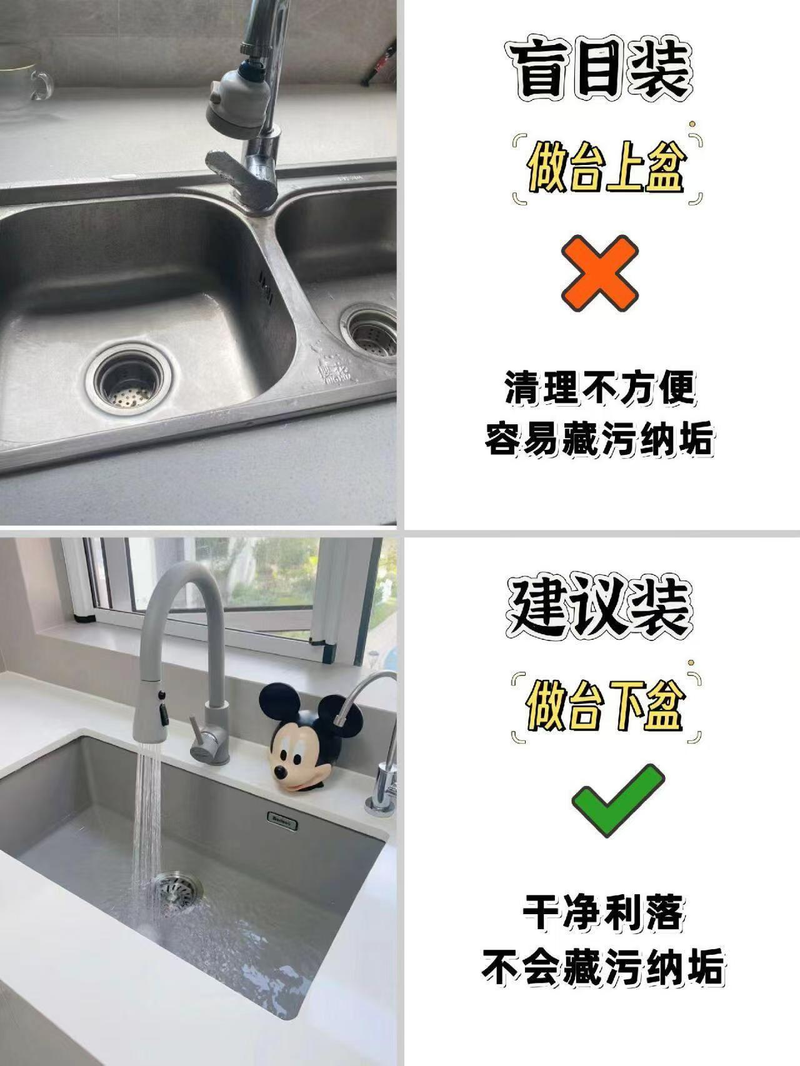
11. Water tank installation: non-platform, selection of subpot
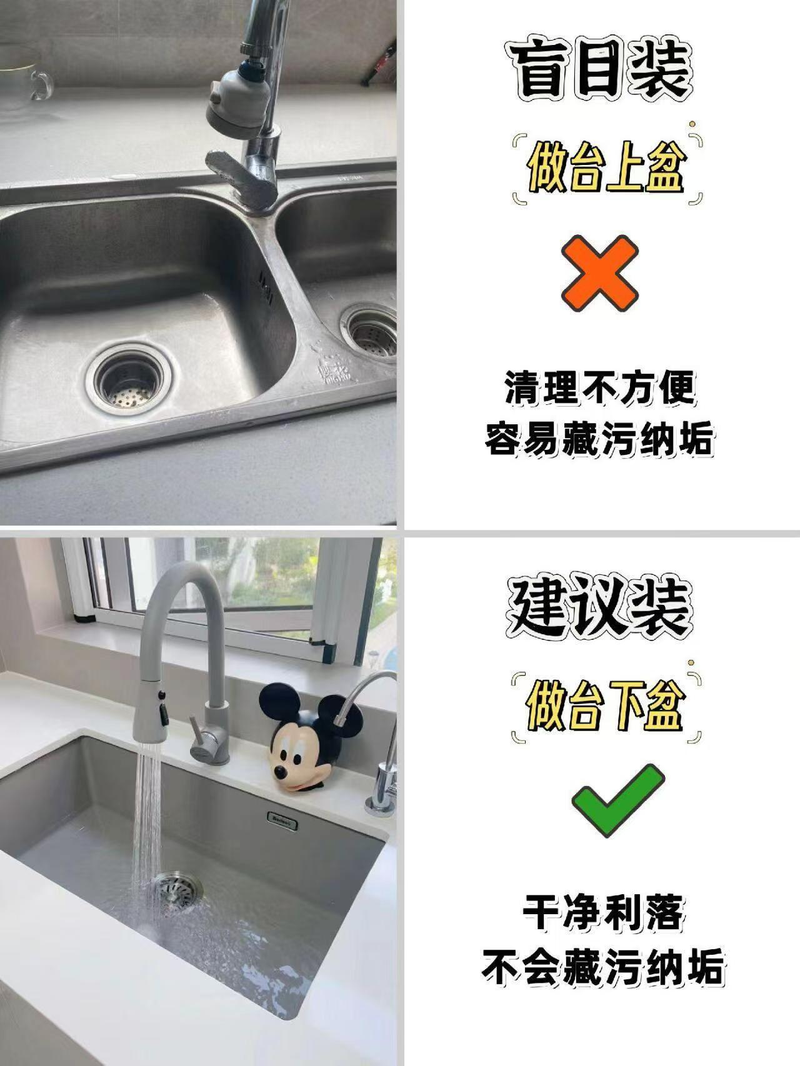
There are visible seams on the stage and on the surface, which are full of oil and water, and which cannot be wiped out, and the edges of the basin are soared that the cleaning table is particularly arduous。
There is no seamless connection between the bottom and the surface, so that when you clean, you just have to wash the surface of the water and oil into the basin, without any sanitary angles; it is also more neat, with any good material, and it is more sustainable。
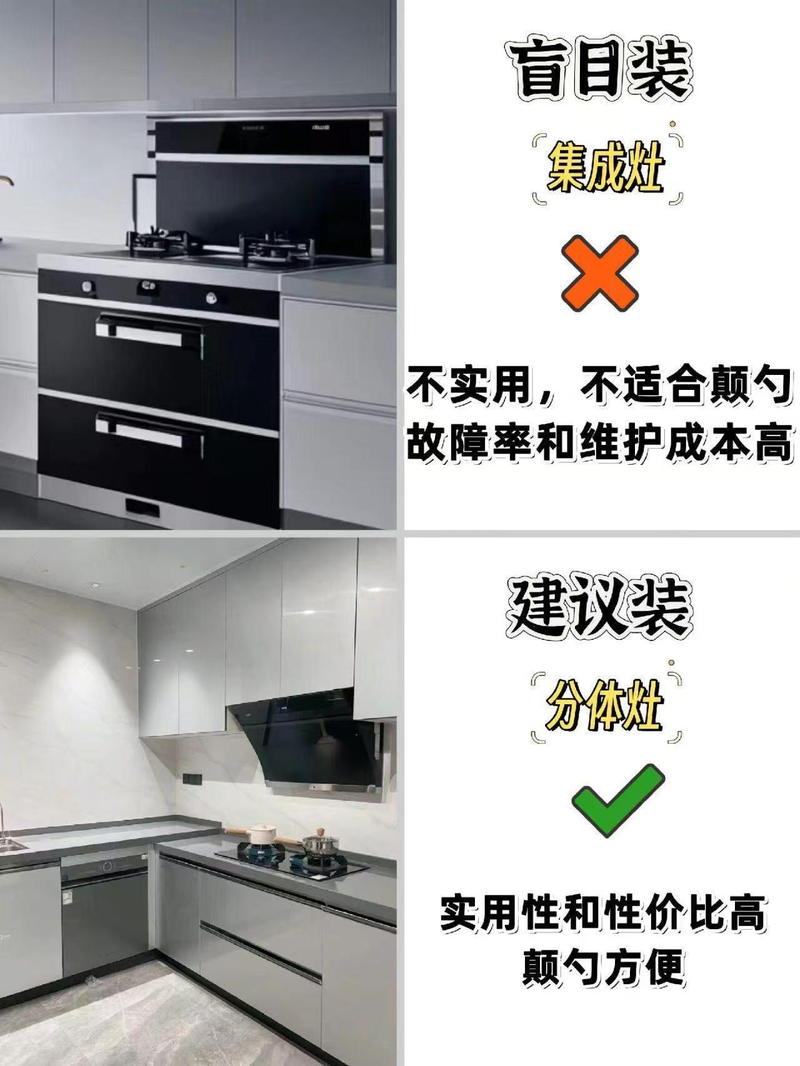
12. Cooker selection: no integrated stoves, selection of silos
The integrated stove, which appears to be fully functional, is not suitable for medium cooking, and can be blocked and easily turned off; and there is a high failure rate, high cost of post-maintenance maintenance and a problem of incomplete smoking in part of the integrated stove。
The break-up stove is a “middle kitchen requirement” with a high level of fire, spooning and flexible fire, which is in line with daily cooking habits; high value for money, low failure rate, simple after-care and easy replacement for most households。
13. Additional detail 1: retention of sufficient plugs
There are not only two to three outlets. The kitchen needs a variety of appliances, such as a cooker, a microwave oven, an air fryer, a water purification machine, etc., which are not enough to fit in, which is dangerous and messy。
It is recommended that five holes with switches, four to six on the side, two below the sink (for water purification, garbage disposal) be installed and that special booths be reserved for embedded home electrical positions to avoid a lack of end-use。
14. Additional detail 2: platoon height to height freeze
The height of the table is inappropriate and the cooking is long enough to cause back pains。
Reference formula: the height of the table = 2 + 5 cm tall (e. G. 160 cm tall, 85 cm above the surface would be the most appropriate); the cutting area and the cooking area could be made high, the cutting area higher, the cooking area lower and the cooking area easier。
Last reminder
The core of the kitchen renovation is the “practical priority”, and the 14 above details appear to be insignificant, but directly affect access experience. The pits were kept in the book before the renovations, and the construction was carried out in a manner that would allow for the installation of a kitchen with both adornment and utility。