In my heart, i've waited for at least eight years。
Since march, the national standard for high rate fees has been harmonized and the ministry of transport and communications has boarded four “red lines”: no price increases, no elimination of etc, no cancellation of concessions, no additional charges。
Those four sentences are better for people who drive the highway every day than for any slogan. There was a long trip, especially across the province, and there was nothing wrong with it: a set of algorithms to go to the station, a “character charge” to go to the station, a bill that could not be read, a client's uniform couldn't get through, and no door to defend his rights。
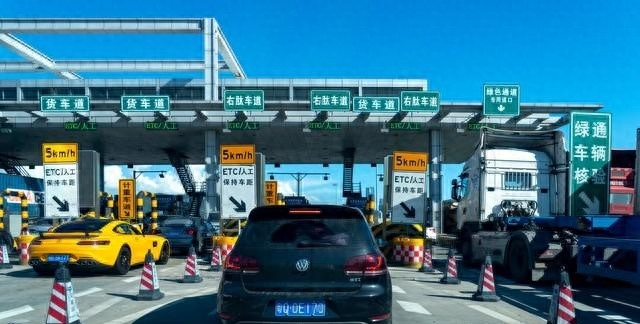
It is now officially stated that there is a national algorithm, a caliber, a platform. Let's just say, no one's ever going to do anything about high-speed charges。
More crucially, a small detail has changed very carefully: mobile phones are fully paved without a card, and the licence plate is the pass. It's okay if you don't drive the etc. There is no need for cards, codes, and there is no need to search for cash and collect numbers at the toll station。
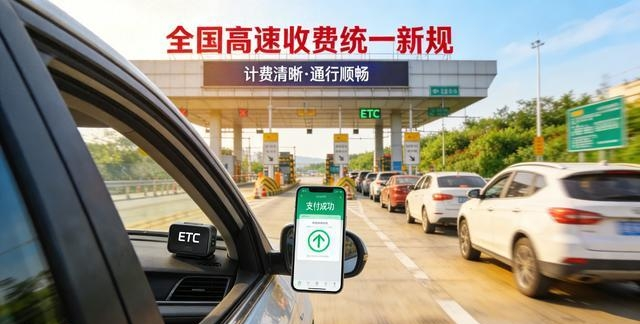
When i saw the news, i said in my head, "this time, the man who drives the car finally has to drive."
It's a story that reminds me of the past。

On one occasion, i ran from henan to hunan, moving along the highways, leaving the station with a cell phone ringing, and one after the other. When the car stops, i look at the bill, the amount doesn't match my estimate。
Calling a customer service call, the others are polite, but all they say is the familiar phrase: “systems are fine” “wait patiently for verification”. As a result, one and a half months. Call me back at the end and say, “at the end of the day, the billing is normal”. That's when you knew it was almost gone。
You must have had a similar experience with the owner of the car, "how come the same road, this month's button 120, last month's button 90?" there are also people who say, “over the provinces, it feels like they've been paid more”. Repeated deductions have also been found, and the appeals process has been looped down, people are numb and money is still on the way。
The biggest question in the past was not just “how much to collect”, but “how much to collect”. The combination of inconsistent rules, non-transparent bills and no way to complain becomes one result: people don't believe it。
This reform, the most serious punch, was made on these points。
The national uniform rules, whether you are high on the heilong river or under the sea, are the same system, the same algorithm, and are clearly costed by the length of the road. What kind of "locality plus a standard" "silver factor" doesn't work. The place doesn't count. The whole country has a ruler。
The bill is no longer in the "astronomy" category, and it can be opened to show you how much each road, every kilometre. As soon as your cell phone is turned on, which section, how many kilometres, how much unit price, how many totals, it's all clearly written, no one wants bad thoughts, no place to do it。
This time, the ministry of transport and communications gave four bottom lines, which, in plain words, meant cutting down one by one。
First, prices do not rise. It's 80 bucks from a to b, and it's still 80, how the car is divided, how the sections are calculated, and continue to follow the original benchmark. Not in the name of the “upgrading system” “uniform reform” and not in the name of adding a cut-off price to the top, let alone in the form of the “technical service fee” or the “system maintenance fee”。
Second, etc doesn't phase out, and it doesn't do "disguise." you've already got etc in your car. Don't worry about it. You don't have to take it off. As usual, 95 discounts or 95 discounts. If you're in the middle of a box with a sticker, if you want to switch to a cell phone, it's okay。
Thirdly, the preferences are kept intact and holidays are implemented free of charge. The four holidays of spring festival, ching ming, 51st national day and free passage of minibuses are still in place and the time has not shrunk. The key points have not changed, and you are still on your way out. All you have to do is drive the car out of the highway before the free hour, and if you're going to slow down, the system's going to pay for the whole thing. The game is very clear, just keep the schedule。
Fourth, there is no “subsistence money” for binding, checking or filing. No “opening fee” is charged, no “service fee” is charged, and no one will be allowed to come up and ask you for “service fee”. If a third-party platform is willing to charge the “first-in-a-kind fee” in the name of “truck-in” “green passage”, it is a blatant red line。
It's one thing to write those words on paper, and it's another thing to leave them in the system. The benefits and pressures are now on-line: the data are in one pot, and whoever wants to move the books leaves more visible traces. It's a lot easier to keep an eye on the pot。
In this reform, mobile phones plus unlicensed traffic is one of the most important things i personally value。
The owner of an etc-free car is a fixed process on the highway: queue, pick up a card, enter a station, line down the highway, hand over a card, pay for it. On holiday, a long line of manual charges, drivers scrambling while stepping on the brakes seemed to have only two or three more vehicles ahead and the convoy in the back was dragged outside the bend。
It's a much simpler game now, and you're three minutes in advance in twitter, in payment treasures, or in official little programs, tied up the license plate and payment account, and it's done。
When entering and leaving the toll station later, identifying the plates, checking the information, withholding the fees, all go through the backstage, lift the pole in front of you, and you pass the door and you don't even hear the sound of the drip. It's pretty efficient, but you don't need any hardware, you don't need a card。
Better yet, this mode of access is national. You drive all the way from the northeast to hainan, through the middle of the province, through the toll stations, without cutting systems, without changing apps, without worrying about "this place can't come out." this unification of truck drivers and long-distance operators is a double saving of money and time。
The billing has also become more “real”。
In the past, a lot of places have preferred the logic of "the most far-off route" , where you change your course and take off ahead of speed, while the system calculates according to your "last exit that should have gone." as a result, a lot of people have gone a little further, and the bills haven't changed。
They are now priced on a paragraph basis and charged as actual mileage. How many kilometres you've gone, the system is clear, and it's clear and clear that you're going back, you're going back, you're going back, you're going back, you're going back, you're going down, you're going back, you're going back, you're going back, you're going back, you're going back, you're going back, you're going back, you're going back, you're going back, you're going back, you're going back, you're going back, you're going back, you're going back, you're going back, you're going back, you're going back, you're going back, you're going back, you're going back, you're going back, you're going back, you're going back, you're going back, you're going back, you're going back, you're going, you're going, you're going, you're going, you're going, you're going。
Imagine a scenario: you were going 100 kilometers, halfway to a sudden emergency, off the highway, only 80 kilometers. And as a reminder, you see in the bill: 80 kilometres, how much, how much. You're gonna have to pull your finger。
To be honest, you really spent the money, the way you roll under your wheel, and you're finally right。
Different types of car owners, in the context of this reform, actually have their own “fine points”。
People who already have etc, for example, hardly have to do anything. The only change in the back-office system is smarter and more stable. If you're in a rush to experience a cell phone that doesn't feel like it, you'll have to tie up another license plate and see which way you're going。
People who don't play etc are completely out of line life. It is not necessary to take time to go to the bank and to line up the cards in the service sector, nor to struggle with whether to buy equipment or not to paste the plastic sensor. A few minutes on the mobile phone, the licence plate and the payment account are connected, and the road is open。
If there are elderly people in the family, they can also go to the service area or the sub-window for help. For many people who are not familiar with smartphones, this option is critical, and what they fear most is being “outside” by the system。
The truck driver's side, too. A long-distance trip down the road would have been more than a half a day, counting the province's road and the bridge in that province. Now that there is national uniformity, all car-type classifications and pricing logic are being applied, you can estimate more accurately the cost of a transport trip, with a “detail” in mind before work starts。
In some places, the concessions given to the new energy truck are clearly posted, not the kind of “intellectual knowledge”. The more complete the information is, the better it is for everyone to choose。
What matters most is that there are three questions: how i'm going through the accounts, how i'm going to do it wrong, and whether i'm going to be "set."。
In the new system, every time you make a charge through a toll station, your phone plays an electronic biller. You can see where you're going, where you're going, how far you're going, how much is the rate, and what's the last one. It's just like the internet purchase order。
If you're free one day, pull the two-month traffic records over and over again, it will soon be possible to see whether any of them appear particularly impressive。
If you do find problems, such as double deductions, a clear error in the mileage, you're going to file a case directly on the biller's page, as soon as you fill out the relevant information online. The official commitment was to give you the results within three working days and to return the extra money。
The key point here is that you don't have to run windows, seals, print materials for a hundred bucks, and you don't have to talk to the various billing units to figure out who's running the money。
Of course, there are two things that need to be done: one is to keep up with the regulations, not to put out the fire after problems have occurred; the other is to have a habit for the owner himself to look at the bills and ask questions。
Because once everyone's staring at the account, it's much harder for anyone who wants to do it。
This reform may not be so “battered” in the short term for those who usually drive to and from work, but it will be very intuitive for those who often travel long distances across the province。
It's a good time to understand, it's a fast stop, it's a good way to go, it's at least a little less like the one or two hours of holiday at the gate. The money is not to cut you by half right away, but to cut off all the "no-paying" "no-go-go-go-go."。
The deeper change is “trust”。
There was talk of high-speed charges, and there was a lot of complaints in the comment area. Why is everyone so angry? Many times it wasn't because of the dozens of dollars, but because of the feeling of being blinded: "you said you didn't take the bills, and i couldn't read the bills; you said the system was okay and i couldn't find the evidence."
Now on the platform of national unity, the rules are in place, the algorithms are thrown on the shelf and there are signs of problems. You will slowly find that the focus of the discussion has moved from “suspecting whether there are problems” to “specifically where there are problems and how to solve them”。
I hope this high-speed fee reform will give a wake-up call to other areas of public fees: don't be afraid of complexity or opacity. People do not have to be cheap enough, but they have to figure out where the money is spent。
Speaking of which, i'm curious myself: do you think, after unification, there are new ways to play, like more intelligent steps, or a special set for commuters, freight drivers
Have you ever had any experience of being mischaracterised and re-characterized around you, and could this national unity reform help you to take that down
You're welcome to tell your story in the comment area. The frustration on your highway may be the raison d'être of this round of reforms. What do you think? I'd love to hear it。