In recent days, the provincial development and reform commission and the provincial department of eco-environment have issued a circular to improve the implementation of the peak valley hours power price policy by users of electricity and heating, which was implemented between january 2026 and march 2027, to optimize the price mechanism to guide users to a reasonable choice of clean heating。
The circular specifies that users of electricity and heating during heating are direct users of the electricity grid, which is the only method of heating, and non-resident users of electricity at the cost of living, such as schools and social welfare facilities. Rural “coal-to-electric” central heating users are treated as residential heating users without participating in the market trade in electricity. “coal conversion” users in priority cities and regions are listed by municipalities to ensure full coverage of policies and avoid the waste of subsidized resources。
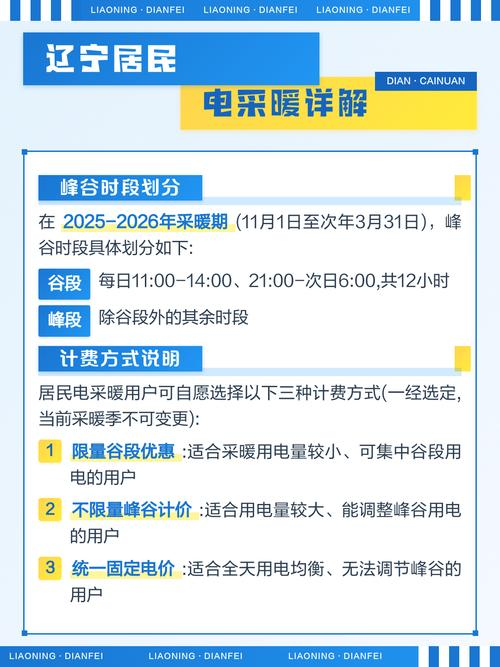
The heating of electricity for the heating period between 1 november and 31 march of each year is implemented by users of electricity for the heating period. In other months of the year, electricity remained at the original electricity price policy. The peak valley time period, which takes into account, inter alia, the state of our electricity supply and demand, the nature of the system's load and the ability to regulate it, is divided into the population's electric load curves and issued before the annual heating period. The heating period between 2025 and 2026 was from 11 to 14:00 and from 1 p. M. To 6 p. M. For a total of 12 hours. The remaining period is peak。
Residents can choose their own method of billing on a voluntary basis, taking into account the reality of the situation. The first is for heating up to 3,500 kwh, with a 50% reduction in the price of the grain segment, i. E. 0. 52 kwh per kilowatt-hour and 0. 26 kwh per hour per hour per hour per hour per year, respectively, for less than 1 kwh; and for subsequent heating periods, with the application of the residential metering price, i. E. 0. 52 kwh per kilowatt-grade, which is primarily suitable for heating, which can be concentrated among users of the valley. Second, no ceiling for heating power, 0. 52 kw/kw below the peak hour of a kilovolt voltage level, and 0. 4 kw/kw for valley time, are primarily suitable for users with larger amounts of electricity to adjust to the peak valley. Third, there is no ceiling for heating power and a uniform cost of $0. 46 per kilowatt-hours, which is primarily suitable for all-day heating power balances and does not regulate the peak time of users。
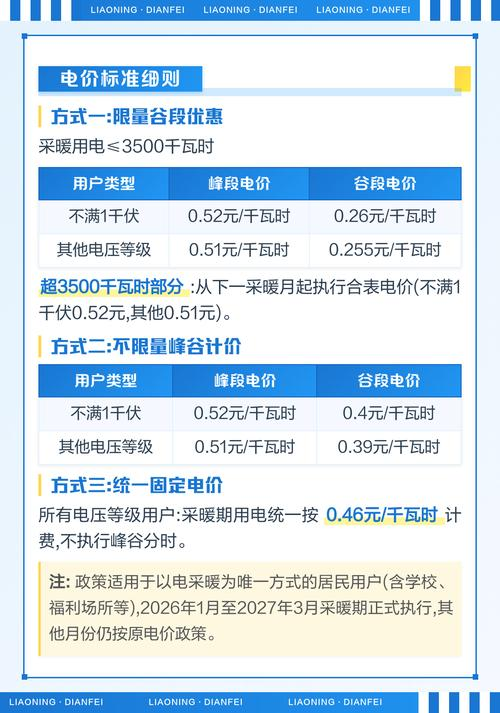
When selected, the current heating season will remain unchanged. If the inventory user does not propose an adjustment, it is defaulted to proceed in the same way as the original policy. At the same time, the power grid enterprise has an online and offline reporting line, which is easily accessible and efficient by completing operations within 10 working days. Electro-grid enterprises are required to install, free of charge, replacement meters for residential heating users, which cannot be measured separately, to use the total amount of electricity for heating during the heating period and to implement a time-price policy for residential heating peak valleys. In the event that this notice was not implemented on time owing to the failure to replace the metering devices, the user applied to the territorial power provider for reimbursement within three months of the schedule adjustment (replacement)。
The relevant head of the provincial development and reform commission (pdrc) stated that coal dispersion and heating have long been the main mode of heating in the northern rural areas. In order to reduce atmospheric pollution from the combustion of loose coal, in 2018 i was able to reduce public expenditure on heating and promote clean heating throughout the province by piloting a time-to-hour electricity policy for the peak valley. As clean heating progresses further, the range of users of electricity and heating is expanding year by year, with different individual needs for electricity, electricity prices and peak time. As an upgrade of the 2018 policy, the new policy is more precise in following the latest national policy on clean heating and energy reform, taking into account the real needs of the population, and shifting clean heating from a “pilot push” to a “system attack” by matching the latest peak times created by the electricity spot market in our province and by adding flexible billing to meet different household heating needs。
Liao ning daily, journalist jo ting ting ting