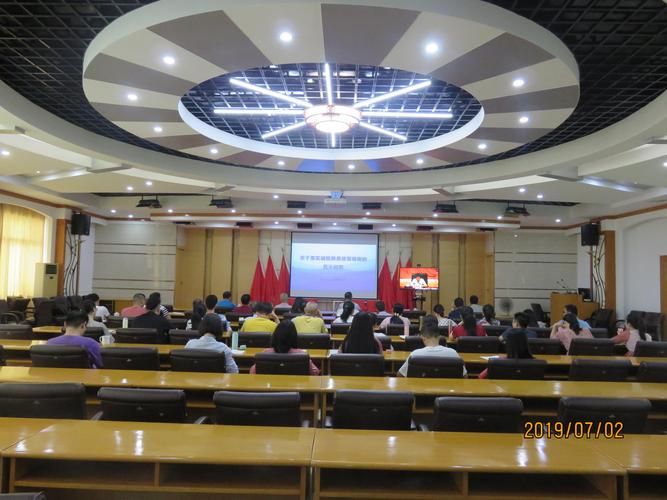

Volunteers tell residents about electricity
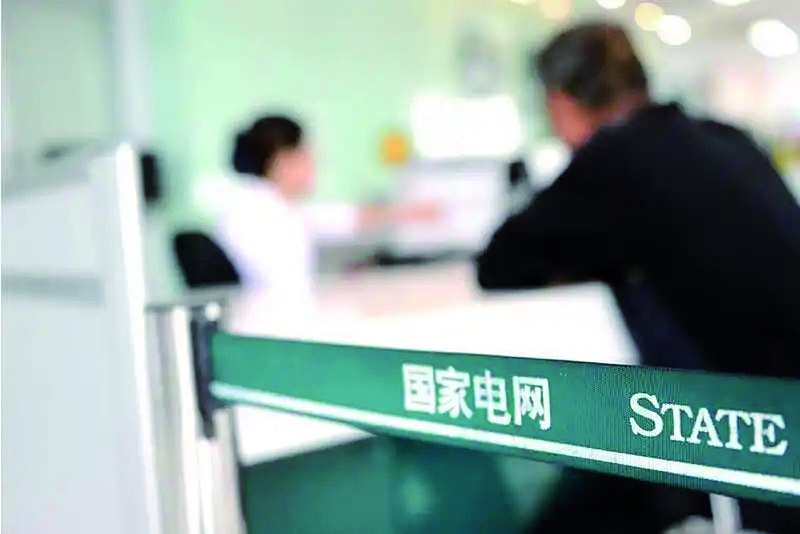
In recent days, multiple internet users have reported a sharp increase in household electricity costs since july, reaching a monthly cost of thousands or even higher. In response, journalists called the national network client service centre, where staff indicated that in the event of an anomaly in the user feedback form, the electricity company would screen the actual usage of the household, check back-office data for correspondence, anomalies and test the meter function。
Since the beginning of summer this year, it has been reported that the national electricity load has been high four times and the national grid has been high five times. From 4 to 6 august, the national grid area reached an all-time high of 1,233 million kilowatts (kw) for three consecutive days, an increase of 53 million kilowatts over last year's extreme of 1,180 million kilowatts. Is it because of air conditioning
Elevator price:
The more electricity you use, the more it costs
Journalists have learned from the national network client service that most provinces and cities currently have residential steps such as sichuan, hubei, chongqing, jiangsu, shandong, heilongjiang, beijing and shanghai。
Yuan jiahai, professor at the faculty of economics and management of the university of electricity in north china, introduced journalists to the question of the price of electricity on the residential ladder as an incremental price-setting mechanism for electricity in order to guide the population to rational, low-cost electricity use and to increase the price of electricity over the ladder。
Prices for steps are generally divided into annual steps and monthly steps, meaning that prices rise gradually to higher levels as long as the amount of electricity used is higher than basic household electricity and reaches the second or third tranche of the year. As the slot rises, so does the price of electricity. As a result, the same amount of electricity will be used, as the price of electricity increases。
The director of the chinese energy policy research institute at xiamen university, lim boqiang, pointed out that a monthly ladder pricing could lead to a particularly high electricity cost for one month, especially during the summer season when electricity costs are easy to reach the third ladder and are relatively cheap in other months。
The higher the cost of electricity at the end of the year, the higher the price of the stairs will be in the final months of the year. Whether in years or months, the pricing of the ladder means that the more electricity is used, the more expensive it is, and if it is used less, the same way。
According to limbergh, provincial electricity pricing criteria are based on local resource conditions and relate to local loads and resource endowments. In hunan province, for example, monthly ladder pricing is encouraged to encourage residents to use less electricity during summer and winter, when electricity is tight or scarce。
According to yuan jiahai, we have a long-standing policy of paying less than the cost of electricity in business and industry, and the cost of electricity in agriculture is subsidized by commercial and industrial users. In other words, the cost of electricity is subsidized by business users. In this case, the “opening of electricity” would also result in a waste of resources if effective price mechanisms were not introduced. The policy on the price of electricity is designed to guarantee the population's basic access to electricity, while the return cost is added to the cost of electricity for the comfort, luxury type that exceeds the guaranteed level。
Why do some provinces price steps per year, and in some cases monthly steps? In response, yuan jiahai indicated that this was related to seasonal power peaks in some provinces。
For example, after 2019, the maximum winter load has reached its peak in summer, causing severe seasonal power balance difficulties. In such cases, the seasonal peak price policy is used to guide the population to rational use of electricity. Since summer air conditioning and winter heating have generally accounted for 30-50 per cent of the maximum load of summer winters in many areas, increasing user-side demand response through price signals has become an important tool for the electricity system to cope with load peaks。
Time price of electricity:
The price of electricity varies at different times
In addition to the price of the ladder, there is also a time price or peak price. According to yuan jiahai, the so-called peak valley hourly electricity price refers to a 24-hour period divided into time periods, depending on the changes in the load of the grid, with different levels set for each time period。
In short, the time period for which electricity is charged, and the time period during which the user uses it, is charged at the unit cost of the electricity for that period. Therefore, there is also a difference in the cost of electricity between users in the same area and in the same amount of electricity。
The introduction of peak valley hourly electricity prices is intended to encourage users to rationalize their use time and increase the efficiency of their use of electricity resources。
According to the national network client service, some provinces also provide peak valley hourly electricity services based on residential steps, generally divided into “peaks” and “vale” charges such as anhui, fujian, henan, jiangxi, ningxia and shanxi. In jiangsu province, for example, users can apply for time-lapse operations on the national network app, or to the office. Residents may voluntarily opt to open up or cancel the time-fixing “generally, once chosen, it cannot be changed within a year”
Under what circumstances would it be more cost-effective to open the "stairway + time"? The national network client service centre (nscsc) explained that it would be more cost-effective for users to use more electricity in the valley (generally from night to morning) and less expensive for users to use more electricity during peak days。
For example, according to the national network for the construction of electricity, the peak hourly electricity price for local residents ranged from 8 to 22:00 and from 22:00 to 8:00. In the case of the province, for example, the peak time period was three cents higher than the slotting price and the valley time period was two cents lower than the slotting price. However, applying for peak valley electricity is not necessarily more expensive, and it is more cost-effective to use the low valleys more than 13. 1 per cent of total electricity per month, and users are advised to consider the entire year-round electricity habits before making a decision。
This summer:
Why is the electricity so expensive
In the face of increased electricity costs, some netizens thought that the price of electricity had been increased. In response, journalists have been informed by the national electricity grid that, in the 26 provinces (autonomous regions, municipalities directly under the state's power grid), there have been no increases in electricity prices this year。
For its part, lim bhajong told journalists that electricity bills are generally rising throughout the country this year owing to the high temperatures and that they are rising as the standard of living increases and air conditioning is used more time。
According to the press conference of the china meteorological administration in august, the average number of high-temperature days in the country since its entry into china this year has reached 8. 5 days, with the highest average temperature of 16. 8 degrees c over the same period in history, with the highest temperatures in the six provinces (districts) of shaanxi, henan, shandong, hubei, sichuan and xinjiang。
In august, large parts of the country are expected to experience high temperatures close to the same period of the year, especially in east china, china and south xinjiang, where high temperature (35°c) days are higher than in the same period of the year, and where the risk of a phased heat wave is higher. It is recommended that summer cooling measures be undertaken to protect against the effects of high-temperature weather on human health, to respond to the surge in the power load caused by high-temperature weather, to provide scientific power dispatch and to provide peak-summer energy protection。
According to financial reports, the national electricity grid has reached a record high, with air-conditioning loads increasing significantly in high-temperature areas such as chongqing, shaanxi and henan. At 1300 hours on 5 august, for example, the chongqing electricity grid had a power load of 30. 16 million kilowatts, the first to exceed 30 million kilowatts, of which cooling loads such as air conditioning accounted for over 50 per cent. On 4 august, the electricity grid in xavian reached 1,376,000 kilowatts, an increase of 15. 5 per cent over last year's maximum load. This is also the fourth ever-highest electricity load on the sian grid since summer。
Yuan jiahai indicated that if during the peak months of electricity use some users could not stand the heat and had to operate air conditioning 24 hours a day, the cost of electricity would have increased dramatically. In summer, air conditioners are set up at 1°c, which generally saves 6% - 8% of energy, at 18°c or at 26°c, with large variations in electricity costs over a month。
Three reasons for the higher cost of electricity in the summer were described in a recent general scientific article on the national electricity grid。
First, the summer temperatures are high and refrigeration equipment is used for long periods of time. The use of refrigeration appliances, such as air conditioners, is on the rise due to high summer temperatures, with consequent increases in electricity use。
Second, indoor and outdoor temperatures are high and electrical refrigeration is more expensive. Since the amount of electricity used in refrigeration appliances is not only associated with the temperature set, but is also closely related to the temperature outside the room, the greater the temperature difference in the room and outside, the greater the cost of electricity in refrigeration appliances。
For example, air conditioners are set at 26 °c, and the same air conditioner, at 35 °c high temperatures, is more power-consuming than during weather at 30 °c。
Thirdly, electricity is overgraded by the price of the ladder. With the long-term operation of electrical appliances such as air conditioners and water heaters, some of the population has actually reached the second and third steps, with the attendant increase in electricity prices。
Policies
Keep in mind the five points
The use of air conditioning has become a hot topic in the recent past, when high temperatures continue. Remind me not to turn on the air conditioner, remember that at 5 a. M. The air conditioner is power-efficient and comfortable。
I. Gold temperature of air conditioners: 25°c ~ 26°c during the day, 27°c ~ 28°c at night
The daily air-conditioning temperature suggests a “gold zone” at 26°c ~ 28°c, which does not cause air-conditioning disease at too low a temperature, which is most comfortable and relatively less electricity-efficient. 25°c ~ 26°c during the day and sleep can rise to 27°c ~ 28°c at night to avoid cold after midnight。
Ii. Mode selection techniques: sleep patterns, dehumidisation patterns, energy saving patterns
1. Sleep mode: some branded air conditioners have special sleep mode, which automatically increases temperature and reduces wind speed, saves electricity and avoids cold after nighttime。
Dewetting mode: the dewetting mode is the preferred wetting area at >60% wetness (e. G., southern moist season), 30% wetting pattern compared to cooling power saving and 2°c ~3°c reduction in body sense temperature。
3. Energy-saving models: some branded air conditioners can opt for power-saving models and can also reduce the consumption of long hours at night。
Iii. Combination with cooling of fans: ac + fan combinations
Air-conditioning + fan combination: air-cycle fans can fit in everyday houses / fans, which allow the air to flow inside the house, promote the cooling cycle and reduce the body temperature by 2°c ~ 3°c. For example, air conditioners have a 28°c plus fan feeling of 26°c。
Iv. Air-conditioning winds are blowing upwards: cold air will naturally sink down
Air-conditioning winds are set to blow up or down. It's because cold air is more dense than hot air, and it sunk like water. When the air-conditioning cold wind blows upwards: the cold wind reaches the ceiling slowly and evenly to the entire room。
Short-term outings: not recommended to turn off air conditioners < 1 hour
Reactivation of air conditioners is equivalent to a continuous operation of 20-30 minutes. It is recommended that the air conditioner not be shut down and that the temperature of the air conditioner be raised to 1°c ~2°c。
According to china news weekly, people's daily