The impression of printers is that many people are still in the office, and as learning and home-based office needs grow, household printers have become one of the necessary equipment for many families. How to select a suitable printer is the focus of a lot of attention, and let's give you a more detailed description of what kind of a home printer chooses。
I. Type of printer
Printers can be broadly classified as inkjet printers, laser printers, needle printers and heat-sensitive printers。
1. Inkjet printers
Inkjet printers are currently one of the most economical printers, divided into cartridge printers and ink printers. Currently, inkjet printers are essentially colour printers that can be purchased at a price of several hundred dollars, while paper is widely used, with special types of paper, such as paper in the form of paper and copper, in addition to the usual print paper, and with more flexibility。
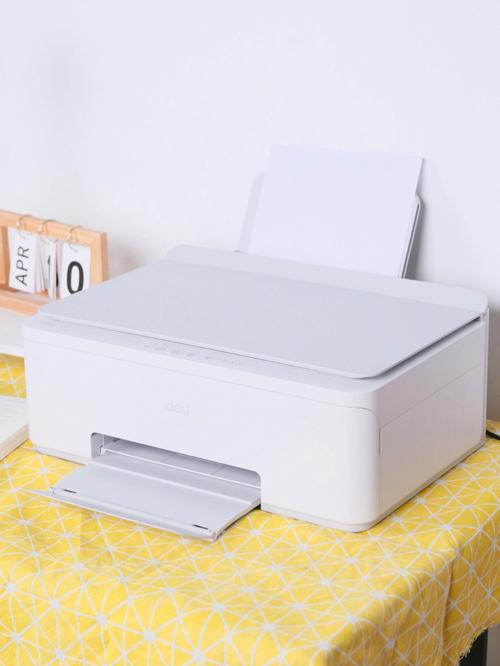
Also, small size maintenance of inkjet printers, especially ink-kilo printers, can be self-drinked, with cheaper printing, for example in the case of a4 paper, with a minimum cost of less than one cent for black and white printing and a minimum cost of less than three cents for colour printing, which is well suited for households with low budgets。
The printing of inkjet printers is also of high quality and, in particular, the printing of high-level colour photographs with a resolution of 4000 dpi-9600 dpi。
The biggest problem with inkjet printers is that if they are not used for long periods of time, the ink head is clogged and very difficult for families with small print volumes. Also, the printing of inkjet printers is slower, especially when high-clean colour pictures are printed, it may not be possible to print one in minutes。
At present, many inkjet printers, if not used for long periods of time, will automatically clean their head, avoid head plugs and maintain them relatively easily。
2. Laser printers
The principles of laser printers are relatively complex and the printed content “prints” are placed on paper through laser imaging, heat pressure, etc。
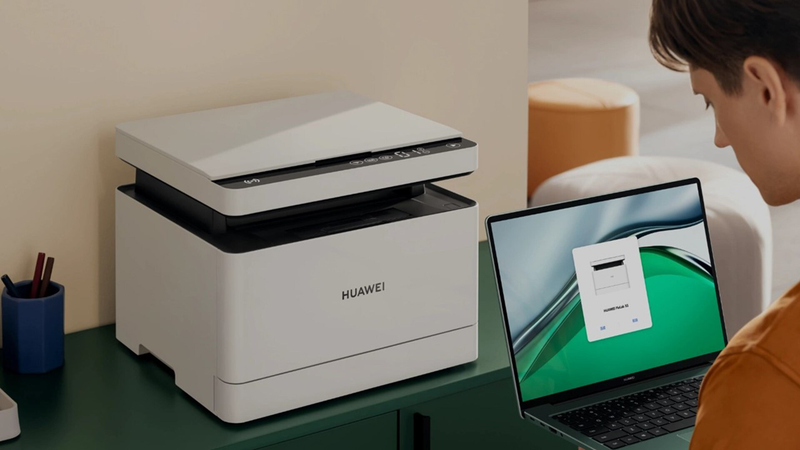
Laser printers print very quickly after preheating, usually with more than a dozen copies per minute, and are well suited for a large number of printing assignments. The maintenance of laser printers is simple and easy, especially without the problem of head plugging, even if it is too long。
The disadvantage for laser printers is that prices are relatively high, with black and white laser printers at a minimum of several hundred dollars, generally in the range of 1,000 dollars; and colour laser printers generally have prices above 2,000 dollars. In addition, laser printers have a relatively low resolution, usually only 1,200 dpi, which is less effective than inkjet printers when printing some high-resolution pictures, so laser printers are not recommended if they are required to print colour photographs。
Laser printers produce ozone during their use, and their relatively small long-term inhalation of carbon powder particles may have some health effects that require attention when used in households。
3. Needle printers
A needle printer is a special type of printer that impacts the colour belt through a print needle and creates print characters on the paper。
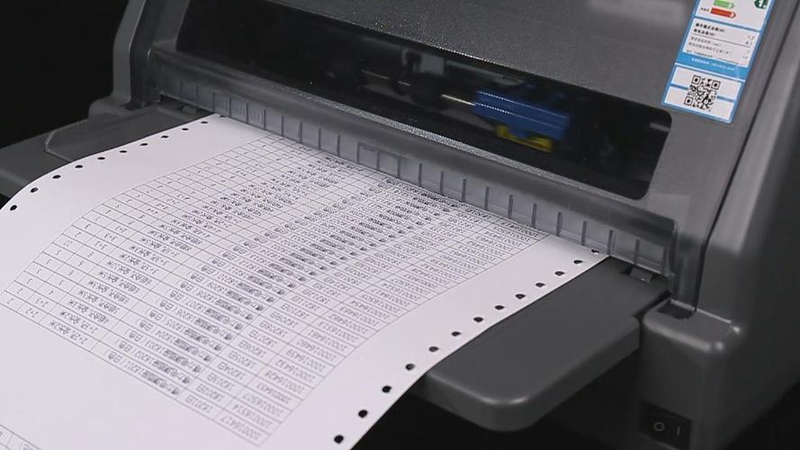
Needle printers are low-cost in terms of consumables, their colour belts are very cheap, usually only for a few dozen dollars, and they are simple in structure and easy to replace and maintain. Needle printers are also more adaptable and have a longer useful life and can process a variety of different thickness papers to meet different printing needs, especially multiple layers of double paper, which are well suited to multiple printing or to a rewriting situation。
The print clarity of the needle printer is normal and there are obvious pixels points to be observed carefully. At the same time, needle printers are used with great noise and are slow to print and can only be printed in black and white and not in colour. The use of needle printers is limited, and the main groups currently used are those that need to print invoices or those that need to be printed on both sides of the spectrum, with little regard for needle printers。
4. Hot-sensitive printers
Heat-sensitive printers present patterns after exposure to heat-sensitive paper using semiconductor heating elements on the printing head。
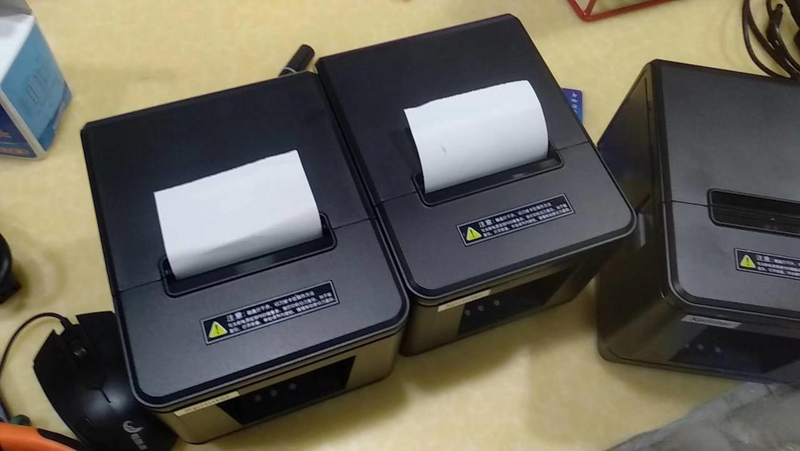
Hot-sensitive printers have the advantage of speed, low noise, clarity and ease of use. Moreover, heat-sensitive printers do not need to consume ink, ink, powder, colour bands, etc., and are relatively simple to use and maintain。
However, heat-sensitive printers are required to use specialized heat-sensitive paper and can only print black and white patterns. Heat-sensitive paper is kept for a relatively short period of time and can be kept for 10 years in an environment of suitable temperature and light avoidance, but most may be kept for less than six months. At present, hot-sensitized printers are mainly used to print small tickets such as takeout, supermarkets, etc., and are not suitable for domestic use。
Currently, the most suitable printer for household use is the ink printer in the inkjet printer, which has the highest value for money and a lower cost for consumables, as well as a better quality printing of colour photographs. The second is laser printers, which are simple to maintain and print quickly and suitable for use by households that do not need to print colour photographs。
Ii. How to select printers
1. Printing requirements
It is important to know your printing needs before using them. For example, it is important to select ink-jet printers for photographs and colour photographs, and to print only for children, without the need for colour printing or a small print volume, and to choose black and white laser printers for the highest value, especially without fear of long idleness and head-stuffing。
Budget
Ink-jet printers have a relatively high value, such as ink-jet printers at around $500; ink-jet printers usually at over $700; and black and white laser printers at almost $700。
In addition, domestic printers are relatively cheap and foreign brand printers are relatively high and can be selected on the basis of their own budgets。
In addition to this, the cost of materials must be considered. Ink printers, for example, can fill their own ink, and ink is relatively cheap, with a larger print volume and lower printing costs than an ink printer. If laser printers are selected, be careful whether they can be powdered, the cost of powdered selenium drums is somewhat higher than the cost of non-plugged printing。
3. Maximum support
For the majority of households, the largest range a4 supports our daily use needs. However, special industries, such as designers, may often require printers with a3 or more large surfaces, which need to be carefully selected。
Functions
Currently, most printers have three-in-one printing, scanning, photocopying functions, as well as more user-friendly online printing functions such as app, applets, etc. In particular, the remote printing function requires the use of computers as printing servers, and mobile phones and computers are easy to print at any time。
Printers that support automatic double-sided printing can save paper printing, but printers cost hundreds of dollars and can be purchased on their own budget。
5. Branding
Printers in traditional brands are relatively reliable, although at slightly higher prices. For example, the brands of appleson, hewlett-packard, jia-kian, brothers, unions, etc., are extremely durable for inkjet printers and laser printers, and print quality is excellent。
In recent years, nps printers have had a clear advantage over value for money. For example, as a brand of a laser printer with china's first autonomous intellectual property right, the price of a laser printer is very high, with a minimum of about $500 available and a very high value for money。
Other national production plates, such as those of mi and hua, also have considerable advantages in the area of printers, such as strong ink printers, which are very pro-people-friendly; and chinese laser printers, which are particularly prominent in terms of intellectual interaction, intellectual correction, etc., and also have good reputations。