Transparency
As the tides of rabbou and molly, which bubble matt's rambub and molly, continue to dominate social platforms, a breathing, interactive “live play” — parrots — are sneaking into young people's lives。
In the flower fish insect market in fan village, guangzhou (new world) the parrot trading area has grown and young faces and schoolchildren have become the main buyers. The “bird play” hobby, once dominated by older persons, is rapidly evolving into a new wave of pet consumption led by urban youth. Nautilus, a highly interactive, easy-to-breed “live play”, with its unique companionship value, is challenging the status of static blind boxes in the minds of young people on social platforms and in real life。
Sheep’s evening reporter recently visited guangzhou city of pepsi to explore the social phenomenon behind this new trend in pet consumption。
Market spies: the colourful trading of parrots' “family”
Walking into the new world of frozen birds and fish bugs, there's a sound of fresh birds coming from the parrot marketing area. “the tiger parrots have just arrived, 25 dollars for one, which is especially good for new recruits.” mr. Li opened the cage while warmly introducing ms. Zhou, who had come with two young friends, to her selection。
Ms. Zhou indicated that the children had just finished their exams and had taken them home to choose some parrots. Journalists have seen in the market that over 100 bird-selling slots are full of all kinds of parrots, that many children crucify the parrot in front of the cage, and that shopkeepers are enthusiastically introducing their parents to their habits. One parent told journalists that urban children were not normally exposed to nature's animals and that the children were here in a small animal class。
In a shop called the lion parrot, journalists observed that in just half an hour dozens of customers had been brought in to stay at the shop and to watch and select, with the client group focusing mainly on young people and schoolchildren. The owner of the shop, ah rong, revealed that more parents would come to buy parrots during the summer vacation with their children。
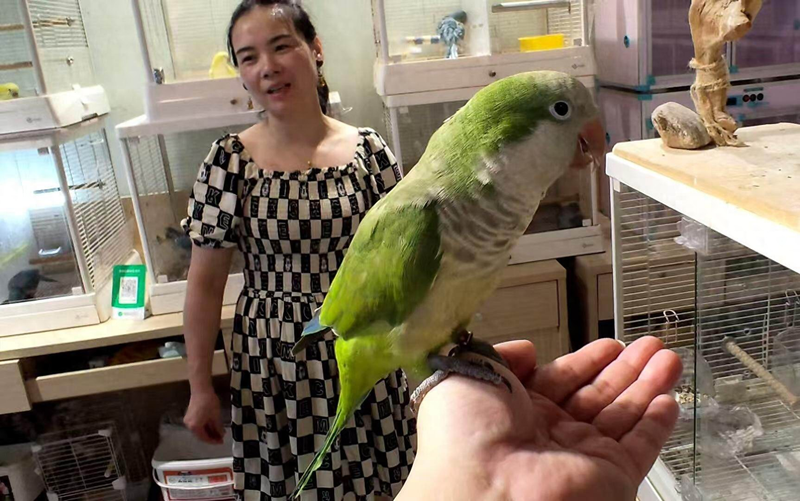
Put your hand on the abdomen of a monk parrot and he jumps
The journalists noted that, in addition to the above-mentioned conventional varieties, some of the rare parrots, which varied in hair color, were also receiving attention。
Ms. Chen, a businessman, presented a yellow parrot and described it as follows: “the feathers are yellow in rare varieties at three times the price of common parrots, and young people often come to buy them”
It is understood that the market-based parrots come mainly from formal farms in foshan and toung, that merchants gather on wednesdays and saturdays and that each shipment requires animal quarantine certification to ensure regularity and health of parrots。
According to the director-general of the new world management company, fanmura birdfish, the currently legally tradable species of parrots fall into two main categories. The first is the “three parrots”, which are freely traded without administrative clearance — the pony-faced parrots, the tiger-skinned parrots and the phoenix parrots — who are in the market with the greatest circulation. The price of parrots is usually around $20-100, which is not only colourful, but also healthy; the variety of walnuts and walnuts that are common to parrots with a face, at a price of $70-500, with a high price; and the price of parrots is 100-300。
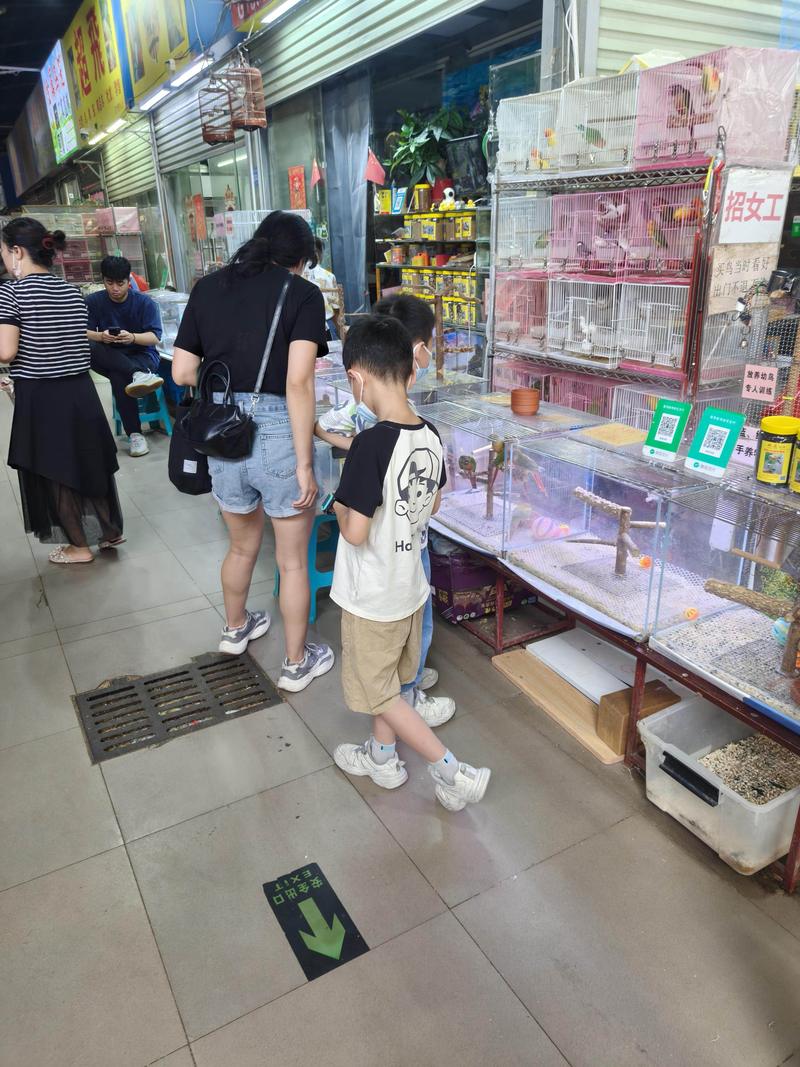
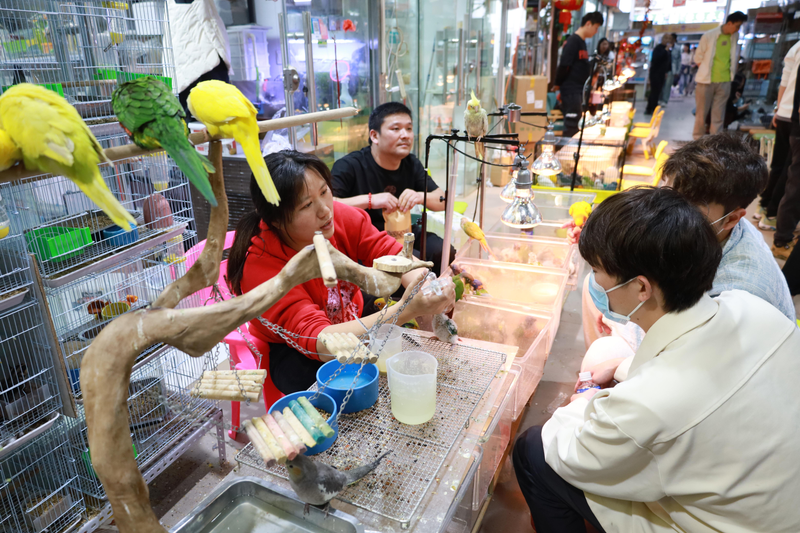
The holidays are coming. A lot of students come to visit
The other category is species that require a special logo to be traded, including the feldom parrots, the vicusan parrots, the green cricket parrots (commonly known as the little sun parrots), and the parrots. These parrots belong to the cites appendix ii species, and individuals are required to bear the “chinese wildlife management logo” when raising and trading. Journalists learned at the market that the price of a parrot on the green cheeks is between $600 and $1,500, with an excellent sense of direction for training to fly; that among parrots and parrots, the price of a parrot is relative to the people, between $1,500 and $2,500, and is favoured by its excellent linguistic talent; and that the price of a parrot on the abdomen is over $2,000, colourful and highly interactive。
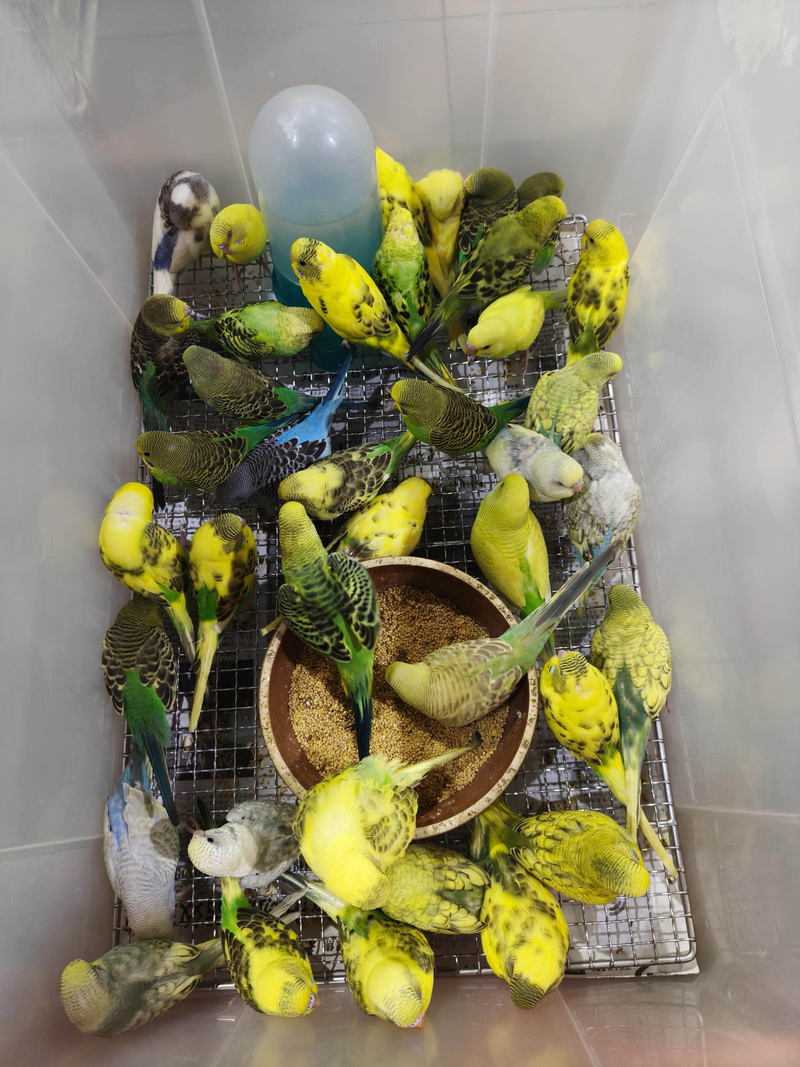
A raisin parrot
Emotional needs: parrots become “cure partners” for urban youth
In the market, journalists meet a 95-year-old white-collar lady who is choosing to buy bird food. She smiled at the pictures on her cell phone, and a parrot was standing on the keyboard with his head on the "sitting" lens. “during the past year, when work was particularly stressful, it began to feed it, and every day it flew home to interact with me on its shoulders, especially to heal, and all the troubles were gone.” ms. Zhou's words were full of spoils。
According to choi weiqiang, parrot market prices have risen year by year in recent years. Previously, birds were mostly the hobby of the elderly, and now more and more urban white collars and school students are looking at this brand-new pet. According to him, the annual sales of parrots in the country amount to tens of billions. The parrots are increasingly accepted, arguing that, unlike pets such as cats and dogs and fish watchers, parrots are relatively easy to feed while they live longer. Without the need to provide them with vaccinations, cut their hairs and bends, the breeders need to interact with them on a regular basis, at a monthly cost of only $20 or $30, which is affordable。
Data from social platforms also confirm the fire levels of parrots. It's been over 2. 8 billion times since the shivering of the parrot's daily topic, and it's been over a million times on b. "my account has accumulated 50,000 fans by teaching parrots skills and making short videos." birds are not just my hobby, but a whole new way of socializing." in little red, there are more than 100,000 notes on topics such as the “paracuit training course” “handing diaries”, creating a unique culture of rearing。
Policy direction: normative development of parrot industry new march. Cheng
It is a matter of concern that the parrot industry is receiving positive signals at the policy level. Henan has taken the lead in piloting the special marking management of artificial parrots, providing a practical sample of the normative management of the parrot market by means of technical means such as implanting nanochips to track parrots and trace disease。
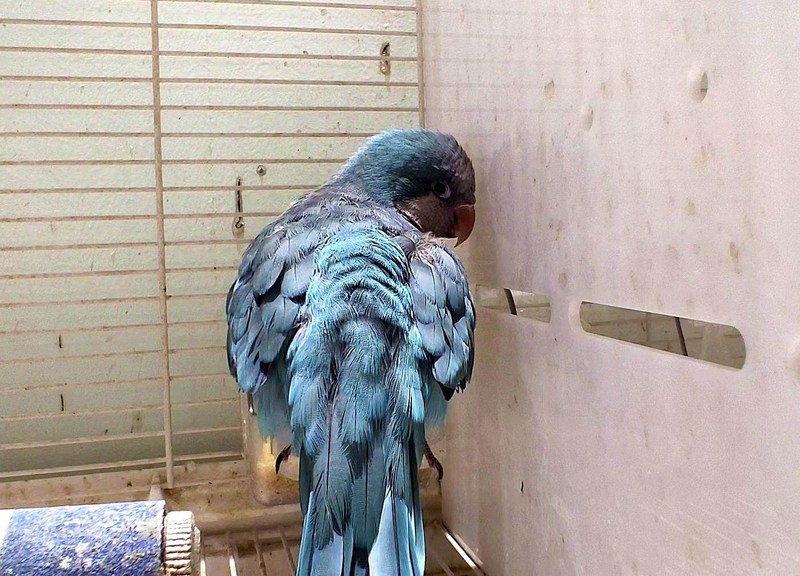
A monk parrot hiding in the corner of a cage
In the light of macro-policy trends, the national commission for development and reform, in its new version of the catalogue of industries encouraging foreign investment in 2025, explicitly stated that it “directs parrot farming towards scale and standardization”. On this basis, industry experts predict that, in 2025-2026, the economically developed provinces of guangdong and zhejiang are expected to expand the scope of the pilot, opening up trade in medium-sized parrots, such as the golden sun parrot, and increasing the number of open varieties to 7-8. However, this open-ended process still requires an integrated consideration of multiple factors such as wildlife conservation and the chain of the smuggling industry. As for large varieties such as african grey parrots and sunflower parrots, although some of these are relatively mature, they are still under strict protection because they belong to the species in appendices i and ii of the convention on international trade in endangered species of wild fauna and flora, respectively, and their release is not known in the short term, with industry predicting that further policy adjustments may be possible by 2030, but official policy will be required。
“redness of parrots is the result of a combination of the economy of isolation and emotional consumption.” according to the cui weiqiang analysis, “the demand for space for parrots is small and interactive, compared to traditional pets, and it is well suited to young people's lifestyle of `lightly quantifying rearing'”. At the same time, he reminded consumers that “some of the large parrots can live for up to 50 years and must be fully assessed before purchasing them and avoid impulsive consumption”
This shift in the consumption choices of young people, from static to lively pets, reflects the urgent need for emotional interaction in contemporary societies. In fast-paced urban life, these elves are becoming a new vehicle for young people to ease their loneliness and seek emotional comfort。