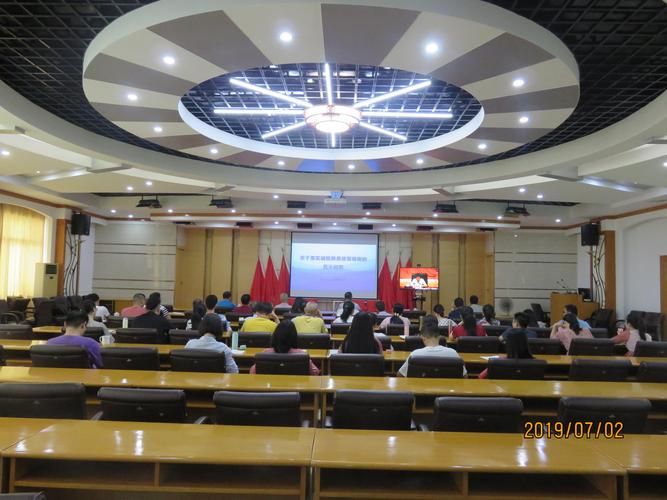
“transformation of the management of non-resident users from existing water schemes to water quota management. On the basis of the water quota, the water quantity and price-added criteria are implemented in three tranches.” on 2 july, the jenan municipal and rural water authority held a special briefing on the implementation of the gradual prices system for water excesses in towns of jenan since 1 july。
According to the new system, water management for non-residents in towns was changed from the original water plan to water quota management. The so-called water use quota is the amount of water required for life in a unit of products, area or per capita time. The city of jenan demands that the trade quota for water extraction in shandong province be strictly enforced. (c) in sectors not covered by the provincial industry water quota standards, the state sub-sectors are selected; in sectors not covered by the national and provincial industry water quota standards, the municipal non-resident water user production practices are combined with the setting of national and provincial water quotas。
In accordance with the water quota, the city of jenan has been divided into three tiers, combining water resource management needs and user affordability: the first water volume base is the quantity of water collected by the industry; the second is twice the quantity of water collected by the industry; and the third is in excess of the volume of water collected by the industry。
Similarly, the price-added criteria are divided into three tranches: one-fold for the second and two-fold for the third。
The city of jenan provides for the so-called incremental increase of the non-resident's over-allocation of water, in principle only for the basic price increase, i. E., $4. 25 per cubic metre, excluding taxes on water resources, sewage charges (currently $6. 05 per cubic metre for non-resident users in jenan, including $4. 25 for basic water, $0. 40 for water resources and $1. 40 for sewage treatment), but for the “two or more remaining” (high-energy, high-pollution, high-capacity excess) sectors, the jeinan market provides for a two-fold increase in the price of water for households。
With regard to the billing cycle and the method of collection, the city of chinan requires that non-residents use excess incrementally increased water charges in addition to temporary water for capital construction, to be measured quarterly as a contribution cycle. In the case of construction water users, the payment of the excess incremental fee is measured when the quantity of water used in the construction works reaches the authorized quantity。
It is understood that the original water plan indicators were based on a three-year weighted approach, taking into account both water quotas and the actual use of water by users. (a) the implementation of the increase (not progressive): the first is water for the inhabitants ' households, primary and secondary schools, nurseries, kindergartens and social welfare units, as well as for the greening of the public green areas, which is charged at a rate of one-fold the cost of water. The second is for agencies, groups, army camps and hospitals, universities and colleges, and scientific research units, which are less than 20 per cent over-programmed and charged at a rate of more than one hour for water, and more than 20 per cent over-planned for water. Thirdly, factories, hotels, hotels, etc., have over-programmed less than 20 per cent, twice the cost of water, over 20 per cent less than 30 per cent of the cost of water, four times the cost of water, over 30 per cent less than 40 per cent of the cost of water, and over 40 per cent of the cost of water。
“the pre-existing system of over-planned surcharges on water is based on accounting for actual water usage against the water plan indicators issued, but water use plans are based on irregularity and lack of science, leading to greater disagreement among water users. The introduction of a system of progressive pricing over-alignment increases can better safeguard users ' reasonable water demand, and the effective use of price leverage in optimizing water allocation, regulating water demand, etc., is important for promoting supply-side structural reforms and the transformation of old and new kinetic energy. “the relevant head of the jenan municipal and rural water authority introduced the report。
In addition, with the introduction of a progressive increase in the amount of over-allocated water, the increase in the amount of water charges will be converted from the original non-tax revenues of the municipal treasury to those of the water utility, which will be collected by the municipal water conservation offices. In accordance with the principle of “access to water, use of water”, the increase in water charges will be used for network and household modifications, improvement of metering facilities and upgrading of water quality, etc.; a percentage may also be withdrawn to provide incentives for enterprises with high performance in water conservation, for the upgrading of water conservation technologies and for the promotion of water conservation techniques。
It was stated that, in line with the request of the national commission for development and reform to fully implement the non-resident over-allowance progressive pricing system by 2020, the city of jenan would work together and implement it in stages. In combination with the water structure and economic development of our city, we have taken the lead in over-aligning and progressive increases in priority sectors and more mature water users, building on experience, improving systems and gradually expanding implementation until it is fully rolled out。