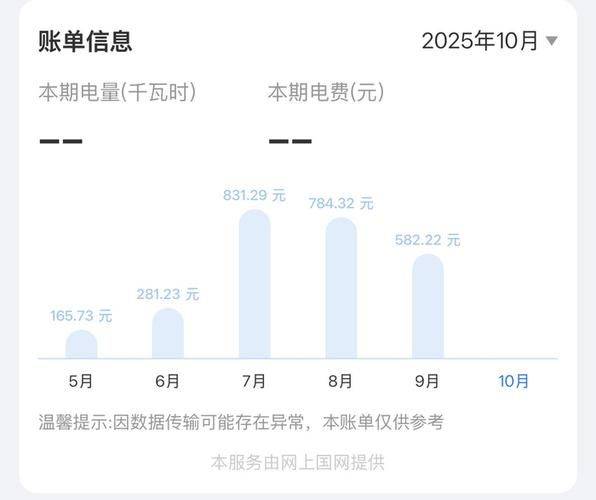
In recent days, multiple internet users have reported a sharp increase in household electricity costs since july, reaching a monthly cost of thousands or even higher. Some netizens said, "why is electricity more expensive in july? It's not like the meter broke?"
In response, the staff of the national network client service centre indicated that, in the event of an anomaly in the user feedback form, the electricity company would screen the actual usage of the household, check back-office data for correspondence, anomalies and test the meter function。
If the meter isn't broken, but your house charge is still “sliding up”, then the following reasons should be considered。
01
Elevator price: the more electricity is used, the higher the price
Why does the electricity cost increase when it's just like last month
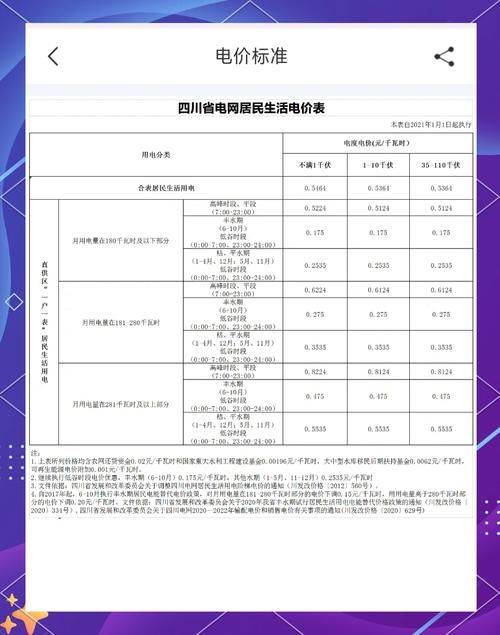
The residential ladder price is a price-fixing mechanism that increases the price of electricity by step with the volume of electricity used. Journalists have learned from the national network client service that most provinces and cities currently have residential steps such as sichuan, hubei, chongqing, jiangsu, shandong, heilongjiang, beijing and shanghai。
Prof. Yuan jia hai, faculty of economics and management, university of electricity, china. Prices are generally divided into annual and monthly steps, meaning that prices rise to higher prices as long as the amount of electricity used is higher than basic household electricity and reaches the second or third stage of the year. As the slot rises, so does the price of electricity. As a result, the same amount of electricity used will increase the cost of electricity due to higher electricity prices。
According to lim boqiang, director of the china energy policy research institute at xiamen university, a monthly ladder pricing may result in a particularly high electricity cost for one month, especially in the case of special summer heat, which can easily reach the third ladder and be relatively cheap in other months, while the price of the ladder is set for each unit at the end of the year, the higher the cost of electricity at the last few months of the year. Whether in years or months, the pricing of the ladder means that the more electricity is used, the more expensive it is, and if it is used less, the same way。
Why are some provinces priced on an annual basis and in some cases on a monthly basis
According to limbergh, provincial electricity pricing criteria are based on local resource conditions and relate to local loads and resource endowments. In hunan province, for example, monthly ladder pricing is encouraged to encourage residents to use less electricity during summer and winter, when electricity is tight or scarce。
02
Hourly electricity prices: different times, different electricity prices
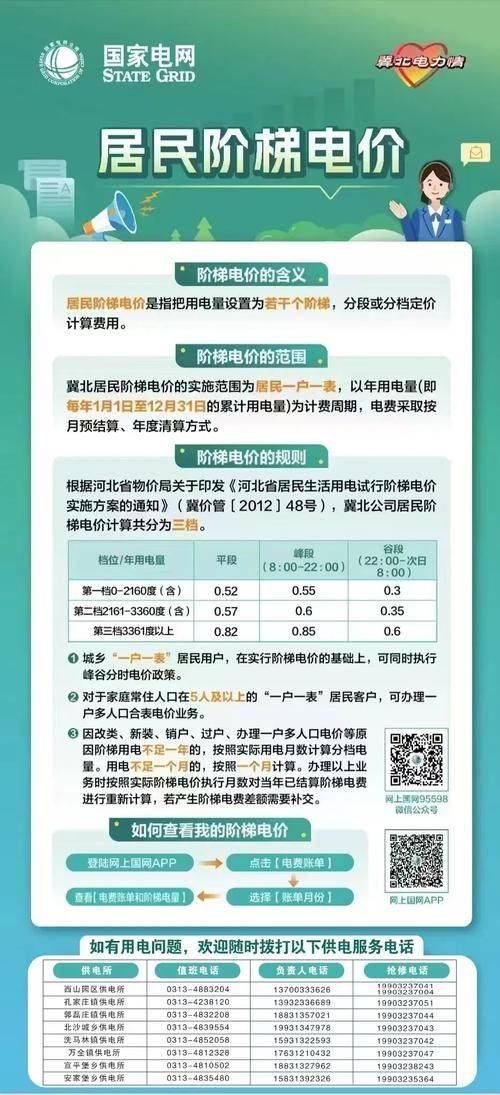
According to yuan jiahai, the so-called peak valley hour pricing refers to the division of 24 hours per day into time slots, depending on changes in the load of the grid, and the establishment of different price levels for electricity over time periods。
In short, the time period for which electricity is charged, and the time period during which the user uses it, is charged at the unit cost of the electricity for that period. Therefore, there is also a difference in the cost of electricity between users in the same area and in the same amount of electricity。
According to the national network client service, some provinces also provide peak valley hourly electricity services based on residential steps, generally divided into “peaks” and “vale” charges such as anhui, fujian, henan, jiangxi, ningxia and shanxi。
In jiangsu province, for example, users can apply for time limits on the national network app or to the office. Residents may voluntarily opt to open up or cancel the time-fixing “generally, once selected, it cannot be changed within a year”。
Under what circumstances would it be more cost-effective to open the "stairway + time"
According to the national network client service, when users use more electricity in the valley (generally from night to morning), it is more cost-effective to open a fraction, and when users use more electricity at peak hours during the day, the points are less expensive。
For example, according to the national network for the construction of electricity, the peak hourly electricity price for local residents ranged from 8 to 22:00 and from 22:00 to 8:00. In the case of the province, for example, the peak time period was three cents higher than the slotting price, while the valley time period was two cents lower than the slotting price. However, applying for peak valley electricity is not necessarily less expensive, and it is more economical to use a low valley more than 13. 1 per cent of total electricity per month and above, and users are advised to take a decision after considering the whole family's annual use habits。
03
Why is the electricity charge so high this summer
In the face of increased electricity costs, some netizens thought that the price of electricity had been increased. In response, journalists have been informed by the national electricity grid that in the 26 provinces (autonomous regions and municipalities directly under the national electricity grid) the cost of electricity has not been increased this year。
According to limbergh, the cost of electricity is generally rising throughout the country this year owing to the high temperatures and the resulting increase in the cost of electricity as living standards rise and air conditioning hours increase。
According to media reports, the national electricity load has been high four times since the summer and the national grid has been high five times. Among them, air-conditioning loads increased significantly in high-temperature areas such as chongqing, shaanxi and henan。
Yuan jiahai indicated that if during the peak months of electricity use some users could not stand the heat and had to operate air conditioning 24 hours a day, the cost of electricity would have increased dramatically. For summer air-conditioning temperature setting, the average energy saving is 6-8 per cent at 1°c, 18°c or 26°c, and electricity costs vary significantly from month to month。
In addition, high temperatures in and out of the house make electrical refrigeration more expensive. According to the national grid communication, the amount of electricity used in refrigeration appliances is not only related to the temperature set, but is also closely related to the outdoor temperature, which increases the internal and external temperature difference and makes refrigeration appliances more expensive。
For example, air conditioners are set at 26 °c, and the same air conditioner, at 35 °c high temperatures, is more power-consuming than during weather at 30 °c。
04
How do you save electricity in everyday life
1. Air conditioning
First, consumers, when choosing air conditioning, need to look at the number of air conditioners in addition to the energy efficiency markers. The larger the number of air conditioners, the larger the number of air conditioners. If the number of air conditioners selected is too small, additional air conditioners will be required to operate in order to achieve the desired cooling effect, which will increase electricity consumption。
Second, when using air conditioning, it is advisable to set air conditioners to high wind conditions on start-up in order to achieve rapid cooling; when temperature is appropriate, it is changed to medium and low wind to reduce energy consumption。
Third, the lower the temperature of the air conditioner, the higher the amount of electricity consumed, the lower the cooling temperature is set to save at least 10 per cent of the electricity per cent increase. At night, air conditioning is set as a sleep mode and can also be used to save electricity。
Finally, frequent switch air conditioners are not allowed, and if the air conditioner is not shut down within an hour, it will save electricity, which will also increase the useful life of the air conditioners. If you want to save more electricity, it is suggested that the temperature can be increased upwards to 28°c or 29°c when you go out, before gradually reducing the temperature when you return。
In addition, regular cleaning of the filters, keeping the wind vent open, can also improve cooling efficiency; it can also make full use of curtains to avoid direct solar activity and reduce air-conditioning loads; and, at the same time, the room should be kept well sealed to ensure that doors and windows are closed to prevent air-conditioning leaks and never open windows, which is not a normal power consumption。
2. Refrigerator
Refrigerators should be placed as far as possible in a cooler ventilator, preferably at a distance of more than 10 centimetres from the wall, thus facilitating heat dispersion. More watered foods, such as fruit and vegetables, are packed with fresh bags and placed in refrigerators in order to avoid evaporation and increase the use of frosting energy. At the same time, the food stock should not be too full and 70-80 per cent sufficient to allow adequate space for the cooling cycle。
In the middle of the summer season, the freezer room would be at 5°c and the freezer room at 14°c below zero would be the most appropriate; frequent turn-off of the refrigerator doors would be avoided and the opening time would be kept as low as 2-3 seconds as possible in order to prevent large-scale cooling; regular frost removal would increase electricity consumption。
Electronic equipment such as television and computers
Energy-saving models can be activated to reduce energy consumption, depending on usage, by appropriately reducing the brightness of screen displays, lowering the sound of televisions, etc., e. G., by maximizing the use of automatic brightness control, with general energy saving of 20-30 per cent and maximum energy saving of 40 per cent; or by completely shutting down the power supply if not used, thus avoiding on-call power consumption (which still consumes between 5 and 10 per cent)。
Lighting
Priority is given to led energy-saving lamps, which are 70-80 per cent more energy-efficient than traditional incandescent lamps, and to the full utilization of natural light, which reduces unnecessary lighting。
5. Water heaters
The temperature of the water heater can be set at 50-60°c to avoid repeated heating; regular clean-up of the gallows inside the water heater can increase heat transfer efficiency and reduce energy consumption。
At the same time, we can optimize our daily electricity habits
For example:
1. Mistop electricity
The use of large power appliances such as electric water heaters, dishwashers, or charging electric vehicles at night or at non-peak hours, which reduce the pressure of the grid, may also benefit from hourly pricing。
2. Reduction in the availability of electricity
Use plugs with switches, where the switch is shut down in a timely manner, to avoid “hidden” power consumption; e. G., unplugging plugs when they are run out of mobile chargers, microwave stoves, etc。
Energy savings are not only aimed at saving electricity costs, but also at reducing energy consumption and protecting the environment. If a person saves one degree of electricity per day, it will save 30 degrees per month and 365 degrees per year. If everyone saves one degree of electricity per day, we can save 1. 4 billion in one day and 51. 1 billion in one year。
What are your power-saving techniques