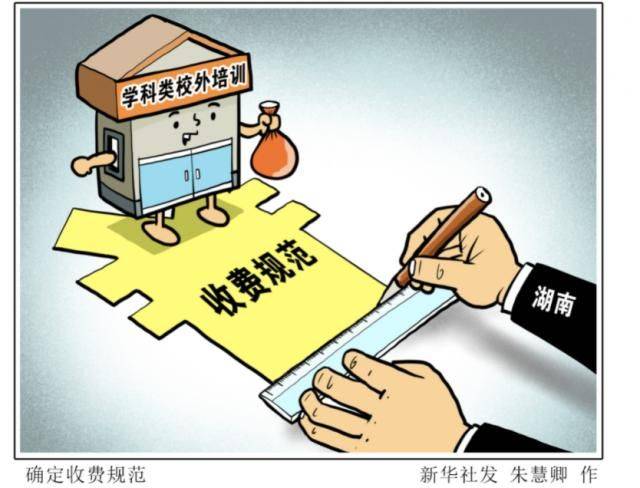
In some cases, the average drop was more than half, and in others the minimum was less than $10.... In recent days, fees for out-of-school training in various disciplines have been introduced, and “price limits” for out-of-school training institutions have been officially dropped。
According to the circular on strengthening the regulation of fees for out-of-school training in the subjects of compulsory education, issued jointly by the national development and reform commission and three other departments, the government policy on out-of-school fees is to be introduced by the end of 2021. What's the base price for the new class hours? How does the price limit affect geometry
1.
Places by region, class, less than $10
According to non-exhaustive statistics, out-of-school training in the sub-prefectures and municipalities currently has a maximum of $80 per student per day, with a minimum of $10, mostly concentrated in the range of $20 to $50; the fee is set at no more than 10 per cent and no more than 10 per cent. In contrast, the difference in the price of internet instruction is relatively small, with a total of $15 to $20 per student。
Fees are introduced at various locations, mostly by different administrative regions and classes. As stipulated in beijing and shanghai, classes of up to 10 persons below the line are 80 yuan per class, 10 to 35 persons are 60 yuan per class, 35 persons are working at a level of 40 yuan per class, and the three classes are unified at 20 yuan per class per class. In shanxi province, fees are set in accordance with the three administrative areas of taiwon city city, the other 10 municipalities, districts, etc., with fees ranging from $9 to $28 per person per class for compulsory education。
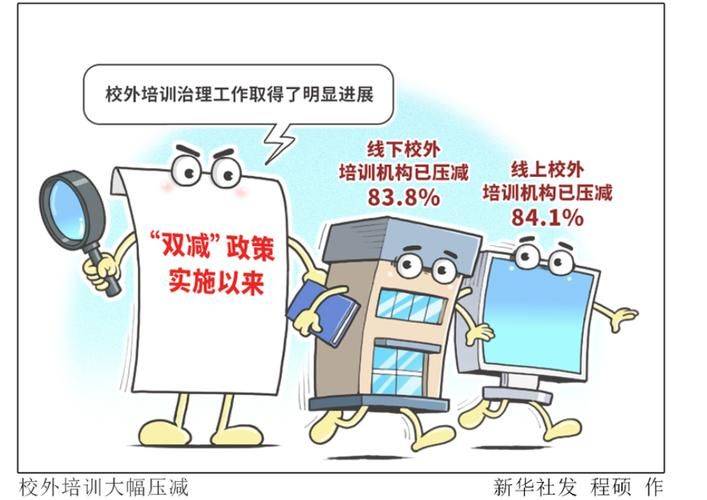
Journalists noted that there is a widespread demand for the administration of fees for out-of-school training for general secondary school students by reference to compulsory education. Hebei province proposes that lower secondary education courses run by non-profit, out-of-school training institutions be converted by a factor of 1. 3 times the fee rate for compulsory education. In shandong province, the 30-minute sub-curricular fee rate for out-of-school training in general high school subjects is 18 yuan per person, up from 16 yuan per person in compulsory education。
How are the rates set? Interviews with journalists revealed that the price limits for out-of-school training in various disciplines have been in place for several months, and that the overall guiding principle is to take into account the level of local economic development and the affordability of students ' families, taking into account the average cost of training, in a manner consistent with the pro bono nature of out-of-school training。
A number of provinces and municipalities consulted a wide range of sectors of society before introducing government-directed prices. After opening school in the autumn of 2021, the city of zhang jiabong, hunan province, conducted a fee standard cost survey of 31 training institutions and conducted a pricing programme validation meeting to determine the pilot price on the basis of which the pilot price was determined; and hainan province issued a draft opinion on matters related to the cost of extra-curricular training, after full consultation with the various sectors of society, adjusted the benchmark price for out-of-school training for different classes from $25, $7 and $5 per person per class, to $25, $10 and $7 respectively。
2.
School fees for out-of-school training have dropped dramatically and parents are happy to be worried
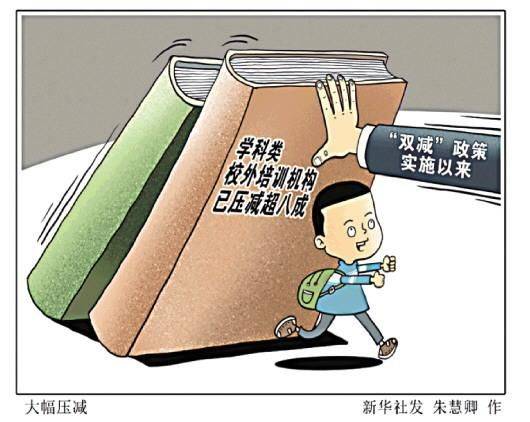
The cost of out-of-school training is more “family” than it was in the past when it came to $100. Statistics provided by the hunan province development reform commission show that, before the implementation of the “two-declination” policy, local out-of-school training fees had fallen by an average of approximately 31. 5 per cent; the shanxi provincial development reform commission estimated that the new out-of-school training fees had dropped by 40 to 65 per cent throughout the province as a result of the implementation of the new rates。
It is generally accepted that price-limit policies can help to curb excessive profit-seeking by out-of-school training institutions and facilitate the return of public goods. Ms. Tan, mother and father of the maustro region of chongqing city, said that, according to the price limits announced by the government, school fees for children could be saved by nearly half, and the method of charging fees had been changed from the previous school term fee to a monthly fee. “when the cost of school hours is limited, it saves $45,000 from a term.”
The “two-declining” combination of boxing, including price-limit policies, is reshaping the culture industry. During a visit to the main city of chongqing, journalists learned that, following the issuance of the “price limit”, the cost of school hours had been reduced from $1,200 to $40 in the previous class, which, together with the fact that weekends and summer holidays had not been possible since the “dual decrease”, the size of campus areas and the size of the trainees in a number of academic and training institutions had been reduced, and that some operators were openly considering withdrawing or converting to extra-curricular training such as art and sports。
Some continuing training institutions have charged fees in accordance with the price-limit policy. "we just finished camping last month, or do we want to continue?" lu li li, head of a training institute in the salt city of jiangsu province, told journalists that her own rate was lower than the government's rate of instruction, which averaged less than $20 in class hours, and that “there is still room for survival now that competition is lower than before, and that there is still room for survival”, she said。
A survey of journalists found that, following the implementation of the price-limit policy, a number of parents were concerned that children continued to attend remedial classes outside school. Ms. Paik, a citizen of taiwon, is concerned that training institutions are not able to afford to develop and update courses after a reduction in the cost of school hours and that the quality of teaching will decline as the cost of remedial courses decreases。
In addition, there are parents who fear that high-cost private education “blows up” after lower prices. According to industry sources, some out-of-school training institutions have apparently cancelled their qualifications after the drop-off, but have actually changed their meals, followed a high-end hosting route and carried out extra-curricular training in the name of out-of-school hosting. Interviews by journalists in taiwon have revealed that “one-on-one” tutors from out-of-school training institutions have conducted “one-on-one” tutorials and that the fees have risen from $200 in the past hour to $500 or more。
3.
Strengthening land landing tracking and “price limits” also require regulation
From the “breeding” of out-of-school training institutions in disciplines to the strengthening of pre-charge supervision, ranging from limiting the length of extra-curricular courses to the consolidation of pre-pre-penalities, out-of-school training “price limit” is an important part of the “diplomatic drop-off”. Local economic development, uneven educational resources, and differences in household income levels, consumption awareness, and educational emphasis place greater demands on the scientific nature of government-directed pricing。
Of the recently published benchmark prices for out-of-school training in compulsory education disciplines, 35 persons in hainan are at the level of 7 yuan per person and 35 in guangxi are at the level of 30 yuan per person. Internet users have questioned why the difference between the level of economic development and household income consumption in the two neighbouring provinces is not so great that the standard of school hours is several times different
Currently, local government guidance prices are on a trial basis and their impact on location and implementation remains to be seen. The experts suggested that the relevant departments should strengthen their monitoring of the market for training in disciplines and adjust their policies as needed and appropriate, once the market situation has stabilized. Journalists have found that some places have been “set aside” in policy formulation. In its draft opinion, the vuhan city development reform commission proposed that the policy be in force for three years, while the zhang city official gazette provided for a two-year trial period to provide a clear basis for subsequent policy adjustments。
“the price of government guidance needs to be kept within a reasonable range in order for the out-of-school training industry to develop in an orderly manner.” prof. Fan guo feng, department of education, university of the south-west, recommended that prior to the introduction of the policy, a comprehensive and in-depth study should be carried out to obtain a full picture of the number of local training institutions, their size, number of hours spent, number of teachers, operating income, costs, original rates of fees, number of trainees, etc., and to hear the views of the parties and set the appropriate rates。
Zhang wai sook, the chongqing city people's congress, among others, suggested that the authorities concerned should “regulate” while setting “restricted prices” by encouraging innovative approaches to fees, actively promoting “one-off” training fees for “training first” and, on the other hand, severely investigating violations beyond government-directed fees and beyond。
Xinhua news, beijing, 5 january