Topic
Construction of a standard system for the short-process steel process
Promoting industry norms
1 status of steel refining in our electric arc furnaces
1. 1 status
The double pressure of high waste steel and electricity prices and low production costs of transformer furnaces has been declining from 17. 6 per cent to about 6 per cent in the period 2003-2016, producing about 50 million tons of electric arc steel in 2016 and averaging over 50 per cent of iron water in 2016. In 2017, ground steel was banned and domestic waste steel resources released, facilitating the production of electric steel in furnaces, which rebounded, reaching about 100 million tons in 2018 and 2019, reducing the proportion of iron water to around 30 per cent. With the improvement of the industrial chain for the use of scrap steel, the selection of scrap steel and the rapid increase in the level of its formulations have opened up opportunities for the development of short-process steel from electric arc furnaces, where waste steel is the primary source。
1. 2 challenges to steel development in our electric arc furnaces
Compared to foreign arc furnaces, domestic arc furnaces have long been dominated by the production of special steels, but there has been an increase in the recent production of generic building materials. As the manufacturing industry improves its quality requirements for special steels, the existing arc furnace steel-making process and equipment conditions need to be improved
How to control harmful and residual elements and produce high-quality steel when using scrap steel is an urgent problem
To ensure the smelting requirements of high-quality steel, iron and water smelting by special steel enterprises will also continue in the short term, and there is a long way to go with direct reduction
The removal of p, s, n, h and residual elements is a challenge for high-quality steel smelting in electric arc furnaces, involving the entire process of steel refining in all waste steel arc furnaces
Reducing production costs, improving energy efficiency, achieving environmentally friendly and intelligent smelting will be the focus of research on the smelting of electric arc furnaces。
2 changes in the technical concept of steel process production in electric arc furnaces
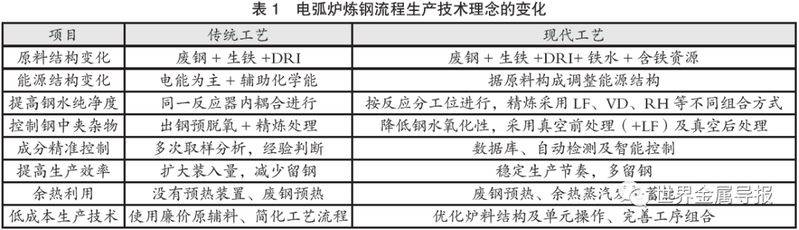
In recent years, there has also been a significant change in the technical concept of steel process production in electric arc furnaces in terms of feedstock structure, energy structure, and containment controls in steel, as detailed in table 1。
3 indicators of structural smelting of different raw materials
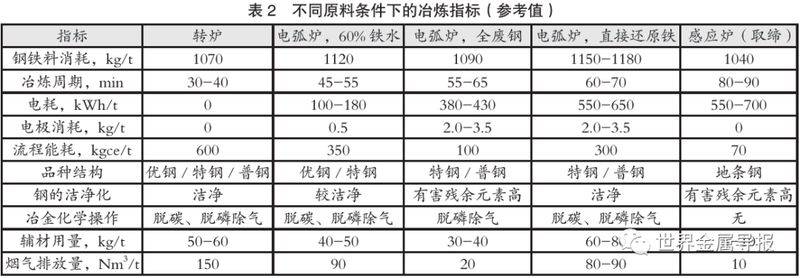
Under the new production technology philosophy, the material structure of the electric arc furnace is diverse, material balance and energy balance calculations remain the scientific basis, and technical indicators reflect their effects, as shown in table 2。
4 development of steel unit technology for electric arc furnaces
4. 1 enhanced energy supply
1. Rationalizing power supply
A rational electrical operation system is the most basic safeguard for electric arc furnace steel, not only necessary for smooth operation, but also for reducing electricity consumption, electrodes and fire-resistant material erosion, reducing the smelting cycle and achieving good energy-saving reductions. In recent years, the main technological developments in the country have included the development of large-scale ultra-high-power electric arc furnace transformers and their power model optimization, the short-grid supply of ultra-high-power arc furnaces and the development of smart electrodes regulation systems。
2) enhanced oxygen supply technologies
Efficient input of chemical energy (oxygen, fuel, etc.) into electric arc furnaces according to the production process directly affects the quality, energy consumption and production performance of steel, which is the key to steel production in electric arc furnaces. As a result, a variety of forms and functions of arc furnace chemical enhanced input techniques, such as oxygen technology for furnace doors, oxygen technology for furnace walls, oxygen technology for ebt and cluster oxygen technology, have been developed。
3) foam slag technology
During arc furnace smelting, while blowing oxygen, carbon or silicon carbon powder is sprayed into the smelting pool, generating a strong carbon oxygen reaction and creating large amounts of co gas foam in the slag. In general, foams increase the thickness of the slag to 2. 5-3. 0 times the length of the arc, completely shielding the arc, reduce the radiation of the arc to the top and to the walls of the furnace, extend the life of the furnace, and increase the heat transfer efficiency of the arc to the smelting pool from 30 to 60 per cent, reduce the smelting cycle by 10 to 14 per cent, reduce the smelting consumption by about 22 per cent, reduce electrodes consumption by about 2 kg/t, and increase the age of the arc furnace and reduce the consumption of the lining material. As a result, production costs were reduced, while productivity was increased, noise was reduced and noise pollution was controlled。
4. 2 cleanerization
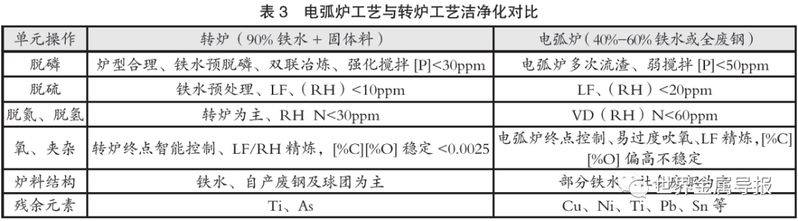
The arc process has developed a series of technologies for clean-up, represented by waste steel shredding, safe end-of-life blowing of steel from electric arc furnaces, composite steel blowing of electric arc furnaces, low-cost dephosphorus technology, efficient denitrogenization techniques, etc., as shown in table 3。
4. 3 greening and intelligentization
Greening is mainly represented by specific technologies such as waste steel preheat, residual heat recovery, and dioxin governance. The current maturity of smart technologies includes, inter alia, electrodes smart regulation techniques, smelting online detection techniques, multifunctional furnace robots, quality analysis monitoring and cost control systems。
5 comparison of major new electric arc furnaces at home and abroad
5. 1 main new national and international arc furnace characteristics
1) quantum arc furnace - eaf quantum
(a) the design of the ladder embroidery structure, a new technology for the buffer of scrap steel (finger-mitigation system)
(b) advanced rainbow-sorting systems to achieve slag-free steel
(a) declining through hydraulic cylinders and guidance devices, resulting in the silos falling into steel packs and rapid replacement of the silos
Mechanical thermostat sampling of stove roofs
Continuous electrical operation, saving time for smelting and electricity consumption。
Ecoarc eaf
Waste steel close to the waste gas generation area, preheated indoor scrap steel, capture of part of the dust, and flat preheating of all waste steel
(b) dismantling of pollutants using the produced co gas without active carbon
(a) a quasi-sealed structure to avoid air infiltration within the furnace and the preheating room
Melting pond operation, arc heating, and steel temperature up to 1570°c。
CoEaf
Waste steel preheating, continuous heating, smelting pond operation
(b) the introduction of electromagnetic mixing techniques to improve smelting efficiency and to improve the smelting pool balance and reduce the smelting cycle
The nextgen efsop flue gas monitoring system and the ieaf smart arc furnace steel refining technology, which is controlled by modularization processes, can improve smelting efficiency and reduce energy consumption。
4) arcess pile - sharc
The symmetrical shape of the sharc oven, with the dc current integration technology, allows the entire sharc furnace to be located above the two furnaces, facilitating the transmission of energy
(b) the longer stay of high-temperature waste gases in preheat furnaces and the more efficient heat transmission, which ensures the use of low-density scrap steel
There are virtually no cold areas in the furnace and the scrap steel melts evenly
The level of automation is high, mainly in light matter。
5) aigeaf electric arc furnace in metallurgy
(b) the continuous scrap steel feed in the ladder, with a good closure effect
(b) angular automatic discharge in cold zones, without upgrading of electrodes and continuous heating
(b) large-size steel flattling pond smelting to reduce flash change and harmonization and increase heat and power efficiency
Waste steel preheating at 300-500°c to reduce dioxin generation
The plant is not in high demand and is suitable for retrofitting old plant and equipment。
5. 2 major new national and international arcs the stove
Comparison of technical indicators (total steel)
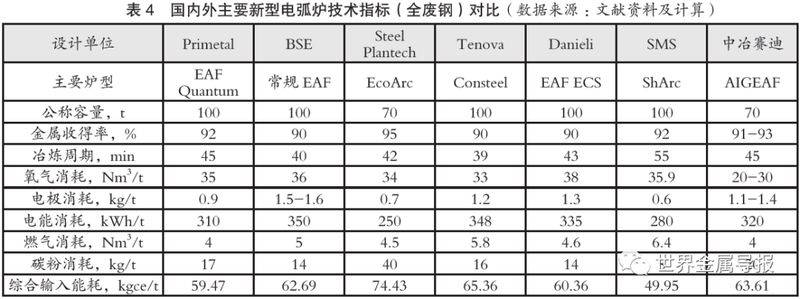
The main national and international technological indicators for electric arc furnaces (total waste steel) are shown in table 4。