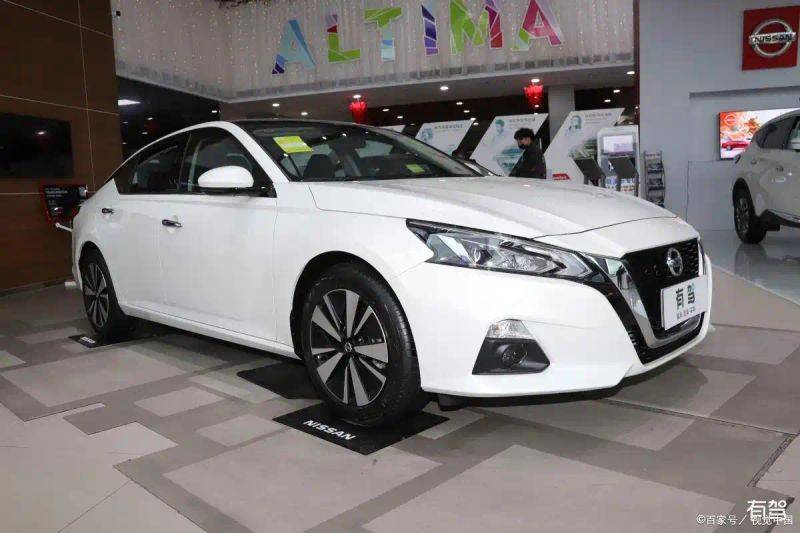
As a classic medium- and high-level car under the japanese flag, the sky 2. 0 series has long occupied an important position in the domestic car market, thanks to its comfortable driving experience and balanced performance. For many potential consumers, however, fuel consumption performance has always been one of the core considerations in car-purchase decisions. The present paper will provide an in-depth analysis of the fuel consumption of sky 2. 0, taking into account official data, third-party measurements and real feedback from the owner。
Discrepancies between official data and measurements: logic of oil consumption
According to official information on the day-to-day production of the east wind, the combined fuel consumption of the sky 2. 0l vehicle was 5. 9-6. 4 l/100 km, while the combined fuel consumption of the type 2. 0t vehicle was 6. 6-7. 1 l/100 km. These data are based on the nedc cycle test, which is based on urban and suburban road simulations, but has limitations such as idealization of the test environment and low speed fluctuations, leading to deviations from actual fuel consumption。
The measurements of third-party institutions are closer to the real scene. For example, a car media test of the 2024 days 2. 0l model showed that city congestion fuel was 8. 2 l/100 km, high-speed cruise fuel was 5. 8 l/100 km and composite road fuel was 7. 1 l/100 km. The vehicle type 2. 0t under the same test conditions consumes 9. 5 l/100 km of municipal oil, 6. 8 l/100 km of high-speed oil and 8. 3 l/100 km of combined oil。
Real feedback from drivers: diversity of fuel consumption performance
Feedback from the host communities has further revealed the diversity of the daily consumption of 2. 0 oil. In the statistics of a vehicle forum, the owners of the 2. 0 l car reported a combined fuel consumption range of 6. 8-9. 2 l/100 km, of which:
High-speed commuting: fuel consumption concentrated in 6. 5-7. 5 l/100 km
Mixed road conditions: fuel consumption ranges of 7. 5-8. 5 l/100 km
Congested cities: oil consumption may rise to 8. 5-9. 5 l/100 km。
The owner of the 2. 0t vehicle reported a combined fuel consumption range of 7. 8-10. 5 l/100 km, which could be as low as 7l/100 km during high-speed cruises, but could exceed 11l/100 km in case of heavy driving or full load。
Technical resolution: design logic behind fuel consumption
A combination of the mr20 motors on sky 2. 0l and cvt transformers achieves a balance between power and fuel consumption by optimizing combustion efficiency and transmission ratios. The 2. 0t model uses vc-turbo supervariant beryllium (vc-turbo) technology, which provides robust power while taking into account fuel economy through variable compression ratio design. However, the slowness of the turbine booster engine and the high demand for oil also partly affected its actual fuel consumption。
In addition, considerations of fuel consumption are reflected in the heavenly body design. Its low wind resistance factor (0. 26cd) and light quantification of car body structure help to reduce energy consumption at high speed. The introduction of the eco driving model and the smart-starter system, on the other hand, has further increased the consumption of fuel in urban areas。
Recommendations for fuel optimization: from driving habits to vehicle maintenance
For sky 2. 0 owners, fuel consumption can be significantly reduced by optimizing driving habits and vehicle maintenance. For example:
Steady driving: avoid rapid acceleration and brakes and keep the engine between the economic turnover (1,500-3000rpm)
(a) rational planning of routes: use of navigational software to avoid congestion and to reduce the speed of failure
Periodic maintenance: replacement of engine oil, air filters and spark plugs on time to ensure optimal engine state
Tyre management: maintain reasonable tire pressure (recommendations 2. 3-2. 5 bar) and reduce rolling resistance。
Market positioning and user selection
The daily consumption of 2. 0 is closely related to its market positioning. As a medium- and high-level car for comfort and domestic use, the level of fuel consumption is in reasonable range in the same car type. The 2. 0l model is a more balanced option for users who pursue a highly fuel-efficient economy, while the 2. 0t model provides greater driving pleasure for power-oriented users。
The daily consumption of 2. 0 is a combination of technology, design and user needs. Through the multi-dimensional resolution of official data, third-party measurements and owner feedback, we can see that the actual fuel consumption is higher than the nominal value, but within a reasonable range. For potential consumers, identifying their own needs and optimizing driving habits are key to reducing vehicle costs. The comfort and quality that sky 2. 0 provides makes it a worthy option for consideration in the middle and upper sedan markets。