"i heard that the price was down, and i just asked the nurse at the counseling station, saying that now there's more than 10,000, which was about 20,000." a patient at the waiting room of the beijing university oral hospital told the shell financialist that he had come to beijing on the day of the drop in costs of planting teeth。
A couple of elderly people at beijing oral hospital who were consulting on registered services told reporters, “i heard it's cheap to grow teeth
On 20 april, on the first day of the drop-down in revenue for the cultivation of teeth in beijing, shell finance journalists visited two public hospitals, beijing oral hospital and beijing university oral hospital, and found that, despite working days, there were still a large number of patients waiting for treatment, at around 3 p. M., and that waiting rooms in the cultivation section of beijing oral hospital were full of patients。
The self-service system of the hospitals consulted and the counselling staff found that the public hospitals had started to introduce a reduction in the price of teeth growing in 20 years, with the resulting change in the brand name of the grower, and that both hospitals had increased the number of plants entering the pool. Of these, the beijing oral hospital added plants such as israel's miyish medical company ltd., beijing grand qing sig ltd. And beijing leiden biological materials ltd. At a price of $1020, $599 and $798 respectively。
The general manager of heinan borgh medical technology ltd., deng toung, said to the journalists that the management of the cost of planting teeth was conducive to regulating market order, improving price transparency, promoting the quality of dental care, safeguarding consumer rights, guiding the balanced distribution of medical resources in the market and promoting the normative and high-quality development of the industry。
There's a lot of patients in public hospitals with a tooth in the next 10 grand
“according to the regulatory objectives, dental facilities are divided into four classes: beijing university oral hospital, the beijing city public health service at the 3rd level in the 6th district, other districts public health services at the 3rd level and public health institutions at the 2nd level and below, respectively, of $5450, $5,000, $4,500 and $4,300.” on 20 april, " a letter to people with extensive oral cultivation " was placed at the clinic of the north grand dental hospital, as soon as the patient entered the door。
In accordance with the previous policy of beijing city, a combination of charges for dental care services, the purchase of a centralized belt for the plant, and the “triple” management of the dental crown limit network began on 20 april. In accordance with this policy, public and private health-care facilities in the city of beijing may determine their specific regulatory objectives in the light of the above-mentioned policy and are open to society。
On the first day, journalists visited the beijing oral hospital and two public three-academic hospitals of the north dental hospital, where a number of patients were interviewed about the situation。
On 20 october, the two hospital plantation sections had multiple patients in waiting areas on working days. “last year they heard about the reduction in the cost of planting teeth, and recently about the fall, they came to consult about the planting of teeth.” this was said to the journalist by a patient at the great north oral hospital。
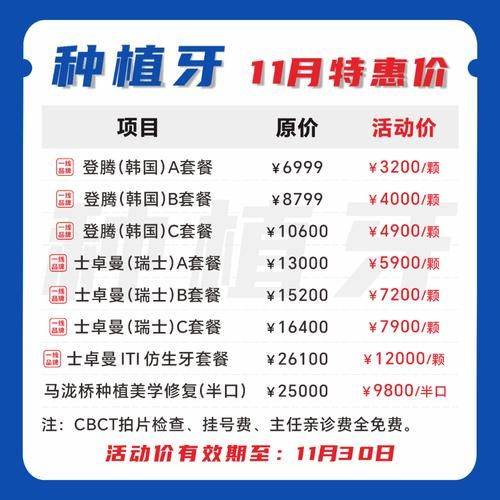
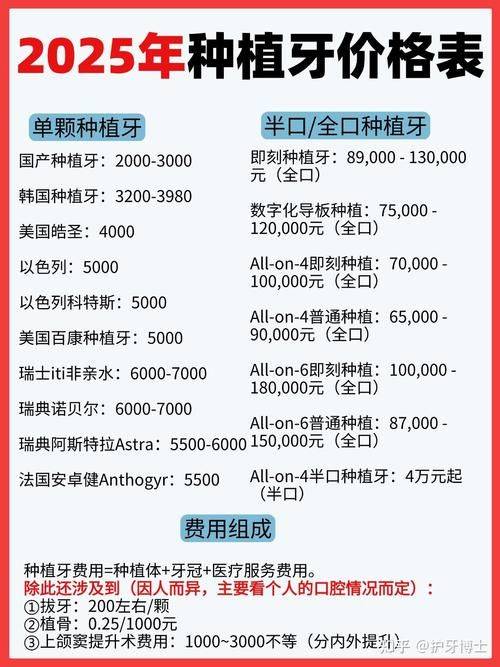
Another staff member told journalists that the cost of planting a tooth at a reduced price was around $10,000, which included the cost of treatment, planting bodies and crowns。
“the current prices for the planting of teeth are $7,000, $8,000 or $11,000, which is the price after today's price drop, which is about $20,000 before the drop.” nurses from the plant division of beijing oral hospital introduced journalists to the more favourable prices that patients receive in public hospitals as a result of the overall reduction in the cost of planting teeth。
The city of beijing is known to have more than 1,300 health-care facilities at all levels, including 150 public and 1140 private health-care facilities. The city of beijing requires all health-care institutions operating oral farming services throughout the city to record the objectives and overall cost of price control for single-denture-growing medical services. Among these, public health-care institutions file with the municipal health-care offices; non-public health-care institutions file with the district health-care offices in which they operate, in accordance with the principle of territorial management。
Previous visits by journalists have revealed that the full-process cost of private health-care institutions to grow one tooth has been reduced first in public hospitals, that the price of publicity is as low as $3,000, and that the more commonly used combinations of imported plant and imported tooth crowns on the market have resulted in a packing price of less than $10,000。
The brand of the public hospital grower has been updated, and the trend towards national substitution of the planter has been demonstrated
Currently, the city of beijing has implemented the results of the collection of dental-related materials, which are sold at the required “zero differential”. On 15 april and 19 april, respectively, the beijing medical insurance department published a list of the results of the oral cropping system and the price limit list for single-tooth cultivation using a full-collar crown product. Of these, 2155 tooth crown products from 29 domestic feedstock manufacturers in germany entered the catalogue at a price of between 160 and 656 yuan。
Cultivators are the core consumption for dental surgery. In contrast, journalists found that both hospitals had increased the number of plants entering the harvest。
On 13 april, journalists asked on a self-service machine at the beijing oral hospital to find that the main planting bodies used in the compound were the united states of america, jami, and dentos in korea. A further inquiry by journalists on 20 april revealed the addition to the compound of plants such as miyish medical israel ltd., beijing grand qing sig ltd. And beijing leiden biological materials ltd. At a price of $1020, $599 and $798 respectively。
Nurses at the grow office of the institute stated to journalists that the main use of the plant in the compound was in israel and in the country, while the tooth crown remained homemade. In response to the fact that the encyclopedia, which had previously been used in the compound, was still available in the machine and that the price of the inquiry had not changed significantly, staff indicated that it was mainly due to the fact that the united states plants of both types had not been collected。
Self-service machines at the north grand oral hospital show that the plants currently in the compound include brands such as ogtai, oko, germany, and sic switzerland. However, the hospital nurse did not respond directly to the main planting brand currently in use, but stated that “the doctor will decide which type of (plant brand) to use, depending on the patient's circumstances, is different for everyone”。
Prior to harvesting, the market pattern of growers was dominated by foreign brands, with the head concentrated in the european and american brands and a lower share of national production markets. According to pacific securities statistics, over 90 per cent of the domestic grower market is occupied by foreign brands (including those of europe and the united states and south korea) with a market share of less than 10 per cent for national production。
The share of the national product market lags behind, mainly because of the late start. In its research, china-thai securities indicated that, in recent years, domestic growers have matured in surface processing processes and product processing sophistication, but that there is a lack of support for clinical data and academic support, so that the domestic growers market remains dominated by foreign brands。
According to statistics, the 2. 87 million plant-growing systems reported by growers are mainly grade 4 pure titanium products, with reference to the first year of procurement demand, accounting for 63. 5 per cent of total titanium-growing systems in the brands of otte, denté, schroman and nobel. At the same time, the “simulation rate” of national product plates in crop collection is not low, and it is expected that the domestic market will be used more widely。
In deng's view, domestic plantations have cost and price advantages, and health-care clustering will also have a larger scale effect, further reducing production costs, increasing product sales and increasing brand recognition and market recognition. The future market capacity of domestic growers will continue to rise under the new deal, with domestic production replacing or becoming an important trend。
I'm a reporter for the new kyoto newspaper