"we also took part in the gathering, and the price of planting teeth fell..." in a private dental hospital in beijing, the advertisement was placed on the glass of the gate. Beijing youth reporter learned that, with the recent fall of the beijing area for the planting of tooth collection and for the cost of medical services, the planting of teeth was a departure from the era of “a tooth worth a bmw”. As prices fell, so did the need to grow teeth in the beijing region, and private dental hospitals used the momentum to wage price wars。
Collected land
Three ace hospital's relevant office number is sharp
According to media reports, on the first day of kyoto's landing, the price of the plant was not yet available in the morning, and the waiting room for the seventh floor of the beijing oral hospital for oral cultivation was filled with patients waiting for treatment, compared to a few patients at the usual time。
This heat continues to this day. North qing newspaper journalists consulted several local sanctuary hospitals, where the number of rooms for dental restoration, oral cultivation, etc. Was stunned. There are well-known m. A. Hospitals, which are known to be chief of oral science, “suffying” for many days. “these types of clinics are self-funded and have been relatively small compared to other types of dental clinics.” according to staff at the registered office of a san a hospital。
"there were bad teeth before, it's been more than six months, because i've been waiting for them because i heard they were going down." one patient indicated that her choice for dental care had previously been for $12,000 and now only for 7,000. Like this patient, there are a lot of people who have been waiting for their teeth to fall。
Market winds
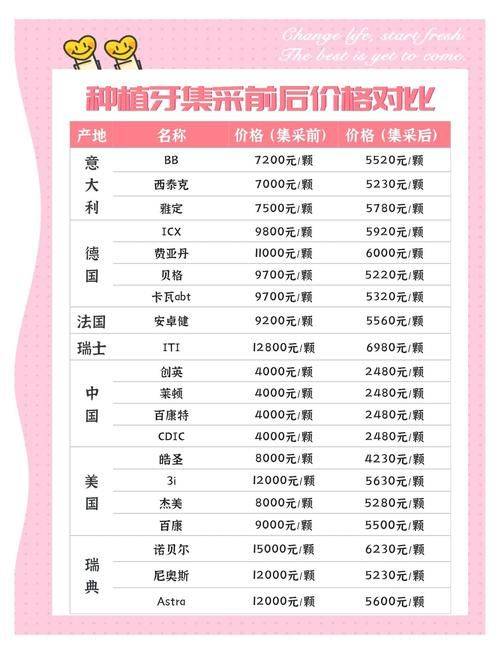
The private sector has launched a new round of price wars
There are more private dental hospitals in beijing than in the public hospitals, and they are reluctant to give up this “dividend” of the demand for tooth growing. North qing newspaper journalists have learned that materials such as growers and tooth crowns can be used as a grouping project in which private dental hospitals can participate or enter into agreements with suppliers at a collectivity price. There are private institutions that fear that consumers will not know, that the flow of passengers will be “snapped” by public hospitals and that their own windows will be marked with the words “approved to participate in planting” and “the whole institution will grow its teeth for a total price” to prove that their materials are “cheap”. This is clearly also effective, as a dental hospital in the mansai district indicated that a large number of customers came to ask for prices before and after beijing landed, and that more than twice as many patients had been treated for tooth growing in the first week of the landing。
The release of demand also triggered a new round of price wars in private oral treatment institutions. North qing newspaper journalists found that while the price of a single tooth was stable at $7,000 in the market price of some private dental hospitals, on a third-party platform, many private dental hospitals in the beijing region had already jumped significantly. Among them, the price of the whole oral plant at the regular oral hospital fell from nearly 160,000 to 70,000; a private dental hospital near the four-five reduced the price of a korean brand of a single tooth growing unit from its original level of 11,000 to around $3,000; some chained private dental hospitals used the general price of all districts with 3,000 multiples/s; and agencies in advertising claimed that they could grow a tooth without less than $2,000。
“supplied materials so dramatically that if we don't join, we'll have to face market phase-out.” according to a private dental practitioner。
Core issues
How cheap is it to grow a tooth
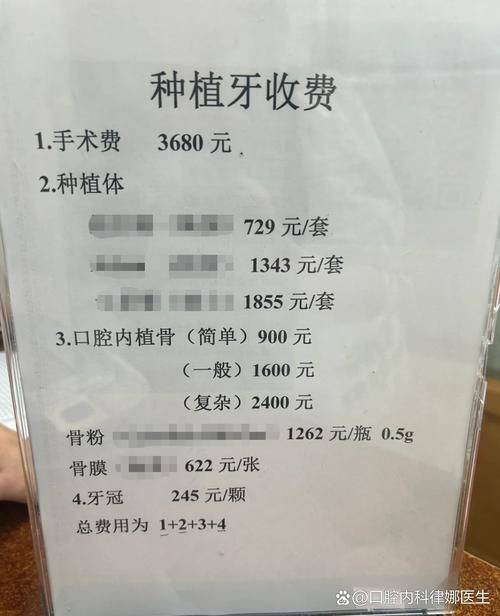
So, how much did you lose in beijing? The north qing newspaper journalists learned that the total cost of planting teeth consists mainly of three components: the cost of planting medical services, the cost of planting materials and the cost of crowning materials。
The beijing city health insurance board has recently issued a circular on the results of the implementation of the centralized belt purchase and price-limit netting of consumables associated with oral cultivation (hereinafter referred to as the circular). In beijing, there is a parallel implementation of charges for dental care services, the procurement of a centralized belt for cultivation, the integrated management of a “triple” network of price limits for dental crowns, and a significant reduction in the prices of dental care projects, growers and crowns。
In the area of planters and tooth crowns, the centralized procurement of the plant system at sichuan, which opened the tender on 11 january of this year, is another initiative to decipher the “teeth price”. This gathering, known as the “most difficult in history”, was finally flattened, with the average winning price falling to over $900, an average reduction of 55 per cent. In march this year, the competition for tooth crowns was opened in sichuan, and 110 enterprises participated in the offer. Of these, 107 were eligible for the round-up, with a product count rate of 88 per cent and an average price of $327 for the product, with a minimum of $100。
With regard to the cost of medical services, 15 projects related to oral cultivation were consolidated in beijing, with prices falling by an average of 72 per cent compared to those before adjustment. Among these is the commonly used “past crown restoration fee (single)” project, which reduced the price of public health institutions from $4,500 before adjustment to a minimum of $1103; and the technically complex project “archive implantation fee (full tooth bow)” which reduced the price of public health institutions from $41,000 before adjustment to $9559。
In addition to reducing project prices, the cultivation of teeth includes examination, filming, implantation, restoration, modelling and the cost of anesthesia and medication during treatment. As a result, the beijing municipal health and insurance board also regulates the total cost of the “single traditional tooth-growing” medical services, which include the above-mentioned components: $4,300 for public health facilities throughout beijing, $4,500 for public health facilities in non-city six districts, $5,000 for public health facilities in six districts, and $5450 for the national dental centre (beijing university oral hospital)。
In addition, according to the beijing medical insurance board, not only must medical institutions sign prior informed consent letters with patients to inform them of the objectives of price regulation for the cultivation of teeth and to clarify the rights and obligations of both parties, but they must also file and publish the price of medical services for oral cultivation。
Industry reminder
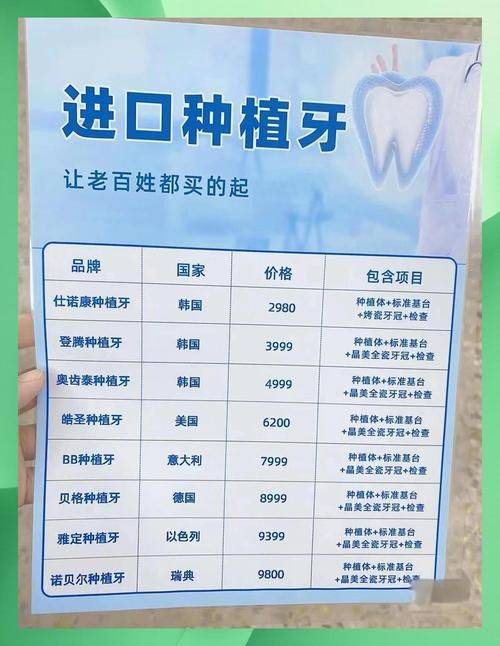
You have to be careful with the low price of your teeth
Although the prices for the planting of teeth have been “bringed down”, there are also expressions from industry that care is still to be taken with regard to under-priced medical institutions。
“at the average price of collection, the cost of a tooth-growing material has exceeded $1,200 without profit, which is not yet a product of the therapeutic chain, such as examination, film production and anesthesia. The technical requirements for doctors to grow teeth are also high, and the doctors “sell” the craftsmanship, which cannot be done in vain, and the medical institutions will not make the profits.” according to the industry, too low a price may simply be the bait for patients to be treated here, some of the fees that would have been paid for the necessary treatment to be followed up by the institution or other hidden consumption. It is also possible that the doctors responsible for treatment are not sufficiently skilled。
It was suggested that patients should not blindly believe in advertisements and low prices on some third-party platforms, or make more visits to comparisons, especially to see if the store had announced the charges related to the planting of teeth, and that the prices for the growing of the chain were now published and consumers were free to compare. In the case of institutional offers, consumers should confirm in advance, before treatment, which items are included in the offers, which items are likely to be subject to additional charges and what the costs are. Doctors in charge of treatment should also be informed of their qualifications, years of service and reputations, so that they can be counted。
According to information from the beijing city health insurance board, there are currently more than 1,300 health-care facilities at all levels that can provide oral cultivation services in beijing, including more than 150 public and 1140 private. The beijing city health insurance board has published basic information on the names, addresses, etc. Of the various oral medical institutions, as well as information on the cost of planting, such as the target for price regulation of medical services, and the rate of increase in the price of planting materials。