Shaw, 23 years old, always had a secret
Ever since he was born, every time he was holding his pee
The belly button will see through the fluid
It's yellow. It's fragrance
That's the secret
Xiao's had it for 23 years
It's not gonna work
He's at the second people's hospital in guangdong
General surgery help. Down
Finally
This weird thing that's been bothering me for years

Xiao xiao is 23 years old and has been carrying an unknown “secret” since birth — liquid seepage in the belly umbilical eye whenever he is holding urine。
Liquid colours are yellow and smelly with stingy noses, and wet clothing during severe times leaves embarrassing traces. This embarrassment, like an invisible shackle, accompanied him throughout childhood and adolescence。
In order to cure this “genocious disease”, he visited medical institutions on several occasions and received treatments such as anti-infection, local disinfection, etc., but the symptoms were always repeated and symptoms were treated as symptoms. Every time there is a brief improvement in treatment, it will be repeated shortly。
At one chance, xiaoxio learned that the general surgery of the second people's hospital in guangdong province (tung xuan city hospital) had successfully treated similar cases. In hope, he came to the hospital for general surgery and named dr. Zhao fai。
Dr. Zhuhui listened patiently to xiao xiao's problems and immediately arranged his ct examination in the light of his medical history。
The results of the examination suggest that xiao xiao's condition is related to an infection of the umbilical tube + which is the cause of his belly umbilical “sip”。
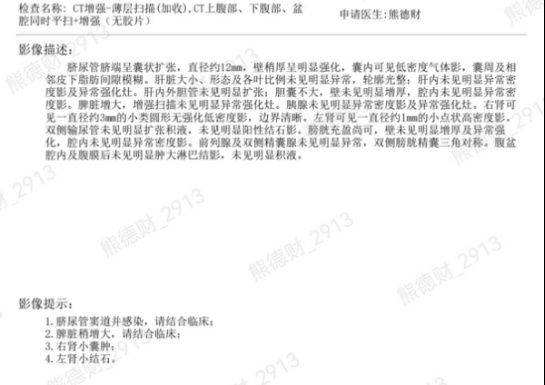
(ct hints urinary cavity and infected)
Deputy director dr. Zhuhui told xiao xiao: “the repeated infections of cystal fistula are easily carcinogenic. In order to prevent its recurrence and cancer, it was suggested that anti-infection treatment should be available, and that diarrhea should be stabilized before an abdominal hysteria. This micro-surgery is less traumatic and quick to recover and can also maximize abdominal beauty.”
Xiao xiao agreed to the treatment. Upon admission, the medical team developed a personalized anti-infection treatment plan for him, with careful care, which quickly contained inflammation。
On the same day of the operation, dr. Zhuhui, the deputy director, led the operation team and, with extensive clinical experience and excellent micro-technologies, opened only three 0. 5 cm “keyholes” in xiaoxi's abdomen. The operation was successfully carried out in just one hour, with a precise separation of the abdominal mirrors, the removal of the entire fistula and part of the bladder wall, and with a fine line of absorption to close the bladder crack。
After the surgery, the pathological results indicate no malignment. Xiao xiao was surprised to find out that his 23-year-old belly button “sitting” had completely disappeared。
The three small abdomen are also hidden, and there are virtually no traces of their abdominal beauty after healing。
Xiao xiao recovered quickly after careful care of the medical staff and was discharged from hospital three days after the operation。
Dr. Zhuhui told us
Like shaw
People afflicted by diseases related to the umbilical tube
Not many
Many people are blind because they don't know about this disease
Not just to delay treatment
I've suffered unnecessary pain
Let's get down to this weird thing
01
What's an ecstasy
Utility fistula is a rare congenital malformation, with a prevalence of about 0. 3 per 100,000, with a relatively high male ratio of approximately 2 :1。
During the development of the foetus, the umbilical tube is an important conduit connecting the bladder to the belly cord (collage), the main function of which is to deliver the foetus's urine. Under normal circumstances, after the birth of the foetus, the pipe is gradually closed and degraded, resulting in the formation of a fibre cord (acute umbilical cord)。
But if the pipe is not completely closed, an open “channel” between the belly button and the bladder will be left open, and urine will spill over from the navel along this channel to form an umbilical fistula, which is a manifestation of which mr. Shaw is suffering from and is infected with an umbilical trachea。
02
What are the typical symptoms of hysteria
Symptoms of umbilical fistula are mainly related to the size of the fistula, whether it is co-infection or not, and the core symptoms are trinkets, as shown below:
01
The umbilical leak
This is the most important symptom, with larger fistulas with higher and intermittent urine leaks; when fistulas are smaller, they occur only in the dampness of the umbilical cord, especially when the abdominal pressure increases, such as suffocation, coughing, crying and severe defecation, which is more pronounced, as is the case with mr. Shaw, where the symptoms are most pronounced。
02
Fashion and skin problems
The leaking urine can smell stingy, long-term impregnation of the umbilical cord and the surrounding skin, resulting in red skin, itching and even changes in the wet rash sample, which can cause skin infections and swelling in serious cases。
03
Symptoms associated with infection
In addition to the above-mentioned symptoms, co-infections can be accompanied by radon, pain, impermeability and, in some cases, symptoms of urinary infections such as urinary frequency, acuteness and urinary pain, which may be associated with whole-body symptoms such as fever and irritation。
It is important to note that some patients suffer from smaller fistulas and unusual symptoms that can be mistaken for common umbilical inflammation, thus delaying treatment. If the umbilical umbilical cord is damp, leachate is in excess of 1-2 weeks, or is accompanied by odor, red and red, timely medical screening is required。
03
How do you treat hysteria
The core of treatment for cystal fistula is the complete removal of abnormal fistulas and the avoidance of repeated infections, which are now largely surgically treated, and conservative treatment can only alleviate symptoms and cannot be cured。
01
Prepare for surgery
If a patient is infected with a combination of the infection, he must be admitted to hospital for treatment against the infection, until the disease is fully controlled, before the operation is carried out, which reduces the risk of surgery and increases the success rate of the operation, a principle that mr. Shaw's treatment programme is guided by。
02
Surgery
At present, intraperitoneal hysterectomy is the preferred treatment for cytone fistula and has a clear advantage over traditional open surgery. The operation is carried out through 2-3 microcuts of 0. 5-1 cm, with the precision separation of a caesarean mirror device, the removal of the entire fistula and part of the bladder wall and the suture of the bladder with the absorption line, for short periods (normally around an hour), small traumas, low haemorrhage levels (average about 15 ml), quick recovery (with discharge from hospital three to five days after the operation), and scars are hidden and do not affect abdominal beauty。
Special reminders:
Oxygen fistula if it is chronically untreated
There's a possibility of cancer in the residual entropy tissue
So once diagnosed, we recommend early surgery
Avoid delay