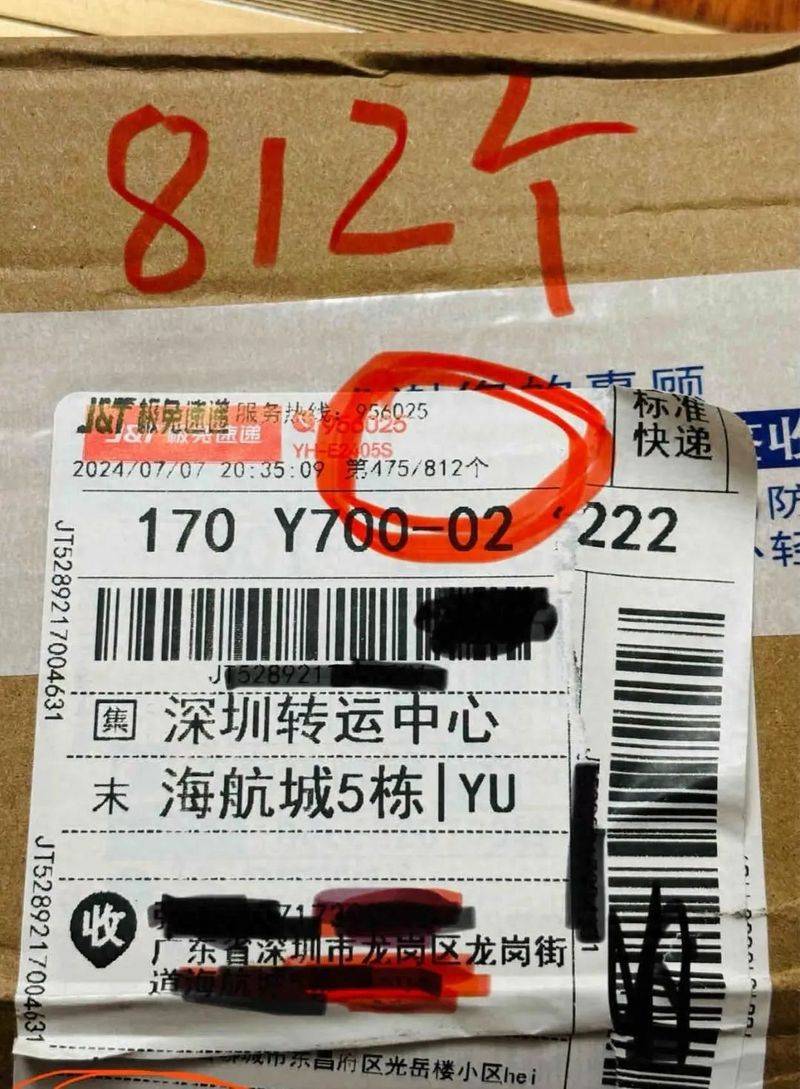
“since i received this return, i will never open it again”. An electrician sent a photo of the courier in the social media, drawing highlights in red circles: 475/812 — one of the more than 800 return orders he received in one instance。
The alarming figure is that there is a problem behind the internet: it is a person who encounters a special freight risk。
There are many reasons for choosing to close freight insurance. “i stopped when the freight cost reached $1. 50”。
"i've done 3. 5." "my five dollars." "my most expensive store is now out of six."
The figures stated by these vendors are freight insurance premiums and changes in commercial freight insurance premiums are directly related to the rate of return. Typically, insurance companies calculate premiums based on the vendor's return rate for the previous three months, which is higher。
It is now evident that a growing number of businesses have shut down freight insurance services, especially garments. Some large, international brands can still hold, and well-sold brands are kept, but many small and medium-sized businesses can no longer afford them. These phenomena cover mainstream electric power platforms such as treasure-hunting, multiplication and tremors。
It's like a sword on top of a merchant. To some extent, it is a microcosm of conflicting consumer, commercial and platform conflicts in the current electrician ecology. If the electric platform is a board, the market and the consumer are the same, it must be one-size-fits-all, and one-size-fits-all platform has been looking for balance points。
The wool party party
A policy intended to optimize the business environment and enhance user experience has been targeted at “ash production” as an impeccable industrial chain。
There's a courier station owner who advertises in his friends' circles:
Recruitment “offline” to “swipe the returned goods for freight insurance, two to three dollars a day, 10 to 20 minutes a day, 500 to 600 dollars a month at home”
The electrician reports from the media that, in order to increase the success rate of wool, some “ash-producing” operators also find patterns: commodities are selected for within $10 and have to be mailed on their own。
Selecting a commodity within $10 would reduce costs, and a single-digit product would mostly be a small commodity with a first weight of not more than 1 kg and would be able to choose a cheap delivery; selecting a “self-mail” would be a delivery station that would make a profit of $0. 3-0. 5 and a return delivery station would make two payments。
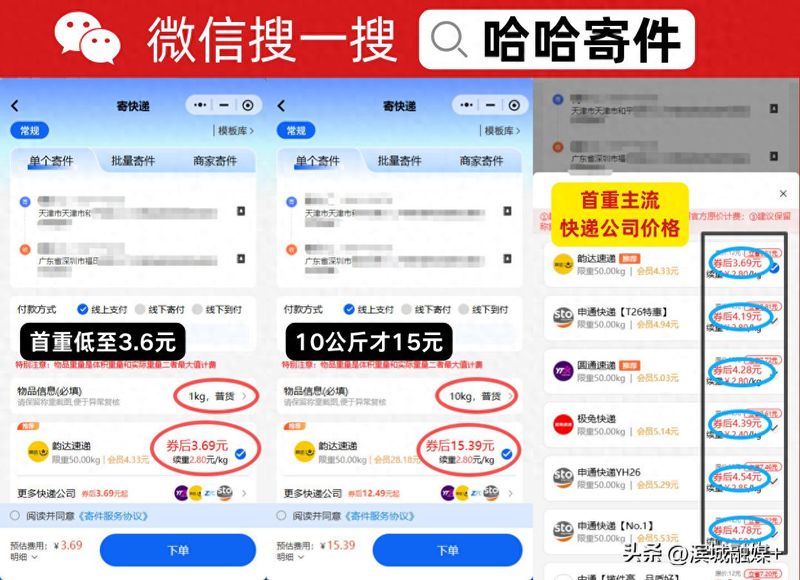
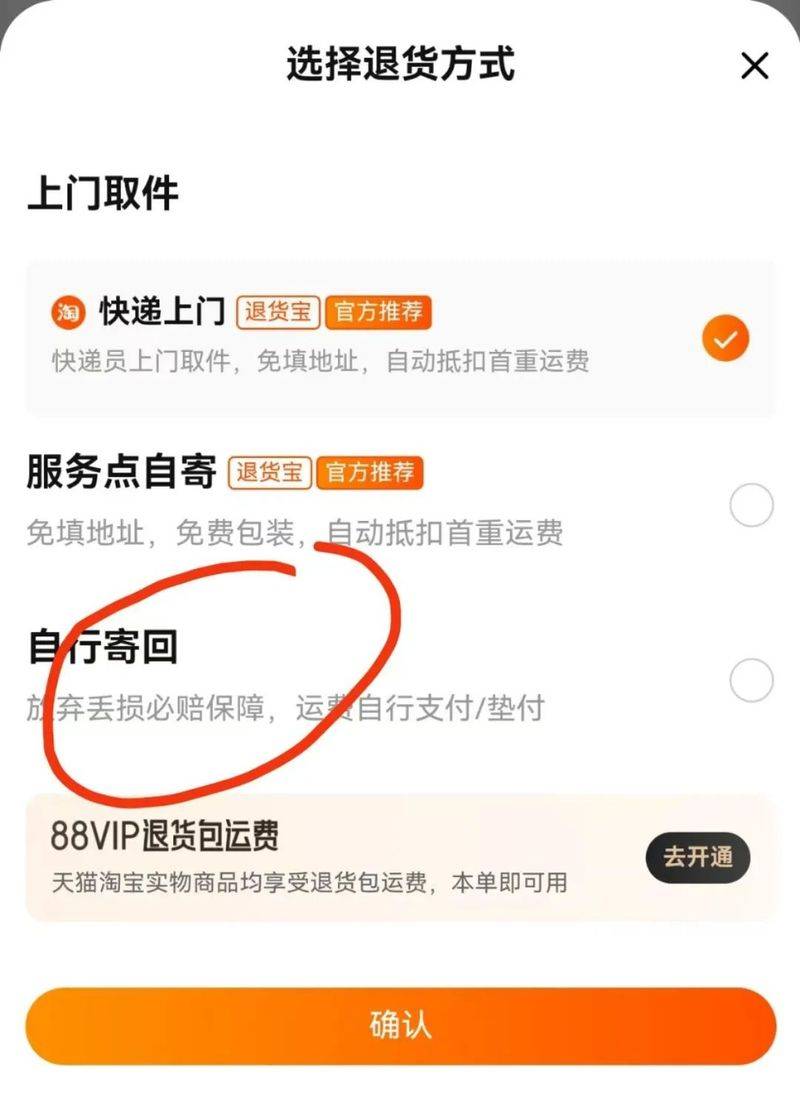
The story of the delivery station freight insurance that came to light in the media was actually just the tip of the iceberg. This is profitable, and the “business model” behind it is simple to earn the difference between low-cost freight and freight insurance. Typically, freight subsidies of $10-13 are available for the return of goods with freight risk. Consumers are normally more likely to pick up delivery and freight is directly exempt online. However, there is also the "self-remittance" option, which gives space for people to drill, and the wool party uses this option to find cheaper delivery channels by means of bulk mail, etc., which can be reduced to $3-4 per refund, resulting in a difference。
It is a business that depends on far-reaching resources. Three hundred and four hundred dollars a day。
It was previously reported in media that a large amount of information on wool can be found in the search for keywords such as “freight insurance” on platforms such as idle fish, “freight insurance, simple hand-in-hand, 200+ for the preceding day, which could stabilize up to 1,000+”. However, such keywords have been blocked in recent days. The platform must have dealt with a number of related ash-producing links starting with keywords. But there is always a way to calculate the amount of space, and similar information can still be found in a keyword, “tb return freight” “freight wool” etc。
The whole industry forms an invisible industrial chain. Sometimes delivery is not cheap? Searching for a “deposit” on a secondhand trading platform can send one out for about three dollars. If you want to make more money, then you'll have to go further. Beijing pays $6 for shipping costs, but beijing pays $15 for shipping costs in xinjiang。
In cases detected by the public security organs this year, there were even professional wool parties who had spent eight months deceiving millions of freight charges。
It's been a long time
The ill-intentioned market disruptions by the wool party have in essence exacerbated the plight of electric operators。
The electricity industry is becoming increasingly proficient, and media reports have also shown that the business community is suffering. Business is ultimately pursued at lower cost in return for higher returns, but “freight risk” is clouded by the continuing reality of the operation, which adds to the burden on the business。
The most important thing for businesses is manageable costs. Costs are often associated throughout the business chain。
As early as june this year, the founder of the guangzhou fashion group, the inman parent company, wrote an appeal to businessmen to resist freight insurance. In his paper, he pointed out that there would be a large number of invalid orders, a return order for clothing, at a cost of about $15 in the absence of proceeds, and expenses for advertising, packaging and courier fees, “if the return was conservatively calculated at 40 per cent on the basis of sales of $10 million, $200 per customer, the cost of the loss would be more than $300,000 and the associated costs would be in excess of millions per month”。
And the merchants are more detailed. In an interview, women vendors described the average freight risk of their shops as $4. 8, which, on the basis of a 60 per cent return rate, would allow three deliveries to be made. The cost of the three courier bags is $3; the manual inspection and processing costs are $6; the cost of the three freight insurance premiums is $15; and the cost of the delivery is $12 per national average three times. The normal shipment cost of a suit is $7, which is now $30 to settle。
The transaction cost of a product nearly tripled。
The problem is that this calculation is not static and will increase as the return is increasing。
There were over a decade-old shopkeepers who had offered freight insurance premiums of only $0. 3 per unit to their shop when they offered freight insurance services directly to consumers, with little pressure on businesses to increase sales. However, as a result of a sharp increase in the rate of refunds, the premiums went up directly to $2 per unit. In an interview with the new kyoto newspaper, the businessman said: “if 100 sheets are issued a day, the light insurance premium will be 5,100 dollars.”
From his description, it can be seen that the individual size of the merchant is not large, but that the cost of thousands of dollars per day is very important for small and medium-sized businesses. Larger brands are more affected, with larger single volumes, probably higher return orders and higher premium prices. It's a vicious snowball effect。
It was reported that due to the increase in the return of goods, the premium increased from $1. 5 to $3 per unit, almost close to the cost of couriers, a single business did not earn a cent, and a double delivery fee was applied, resulting in an increase in production in the first half of 2024 compared with 2023, but without a reversal of income。
This phenomenon is getting worse and worse. A big push is the time point for brands to work, and the normal rate of refunds is higher than the day-sale point, and the merchants start freight insurance services in order to make a big deal. While profit-for-profit swaps are common at short notice, gmvs have previously been able to put the withheld profits in investment, advertising, and at least the money spent on them can be heard and thrown into freight risk。
The third-party insurance company was also damaged. According to the insurers, “i understand that this kind of risk is largely non-profit. There are two reasons, first, the high frequency of the return of goods, i. E. The high frequency of the insurance company's payments. Secondly, there is a risk of moral fraud, such as wool from insurance companies.”
Moreover, wool comes out of the sheep, and freight insurance places an additional burden on the merchants, which will eventually be passed on to consumers. In his article, fang jianhua stated that when the return rate reaches 50 per cent, one customer who makes a sale will have to bear the cost of returning another user; when the return rate reaches 70 per cent, one customer who makes a sale will have to bear the cost of returning the goods to two users, which has long led to a vicious cycle of bad currency expulsions, making it increasingly difficult for consumers to buy good products。
In-depth analysis of this matter, in addition to the malice of the illegal “shells”, it may be useful to consider further why the return rate of electricians, especially in the garments sector, has been a long-standing, but always difficult issue
When the rate of return is more than 50 per cent, or even close to 80 per cent, even the removal of illegal transactions leads to a return order of about 25 per cent, which cannot be taken seriously by businesses。
This has led to an increasing number of vendors closing freight insurance services。
The platform strikes a balance between consumers and businesses
It's the "bad fruit" that's planted in the industry. In order to rob consumers, some good intentions end up being rendered meaningless by deformation. After all, consumption is an ecology that requires interaction between merchants, platforms and consumers, and it is difficult for systems to function effectively when one side is in trouble。
Theoretically, the consumer chooses to return the goods, except that it is clearly the cause of the merchant, that the returning party should bear the freight. But things are going unprosecutable because of the inside, but there is a platform in front of it, but there is a merchant who has had enough orders in the run-up because of freight risk。
Some are reluctant to compromise. In response to the recent opening of a small-procedure shopping channel by fat tung, the head of the exclusive enterprise chose “non-package mail” at the expense of consumers. But we can't make recommendations to all electric operators in the same way as the fat ones. After all, fat east is too special, and their current position in the consumer market, in the consumer mind, and their near-unique business position in xuchang local can support such decisions. Even the loss of online channels and the collection of more than tens of billions of dollars a year will not result in greater losses for fat east。
Therefore, improving the electrician ecology may require the platform to come out and strike a balance, or at some cost to gradually solve the problem。
At this time, a number of platforms have adjusted their freight insurance policies。
On 12 september, the treasure scavenger platform announced the launch of a return service for all businesses. According to the platform's official statement, this is intended to reduce the business “by ordering the return of goods, it is expected that the cost of freight will be reduced by at least 10 per cent and up to 30 per cent, with an estimated savings of $2 billion for the year”
There are also movements in which, according to the official information published by the voice, the seller who meets the requirements sells a single one and is exempt from 100 shipping charges within 30 days, and some of the new merchants also have the opportunity to give an experiential score of “freight insurance premium discounts” of up to 1000 units per day, up to 0. 01 yuan。
Most of the policy changes have been made to address business interests. In august of this year, a series of intensive initiatives were launched, including down-to-back service payments, store guarantees, and the introduction of basic technology service fees, extension fees and repatriation entitlements, which are aimed at reducing the operating costs of businesses by providing them with an automatic and full return of the fees charged for basic technology services and so on, without the need for a return or refund. It is true that there is support for a vendor to file a complaint against an unusual order, which, if successful, will be compensated by the platform。
In interviews, businesses indicated that thousands of cash parcels could now be returned from multiple platforms each month. At least we can return the blood。
Behind these policies is the need for a platform to provide some support to businesses. In the face of the great resentment of the merchants, the platform ended the price war once and for all at the beginning of the year, and then continued the calm of the “pay” buyers。
However, the rule of all things in the world is that one good thing is one bad thing. Following a series of adjustments to the platform, some vendors indicated that there were significantly fewer unopened returns, but more used. Following the closure of the freight risk, which avoided wool, it became apparent that the cost of the return was increasing and that, in cases where there was a genuine need to return the goods for exchange, the merchant could only bear the cost of the shipment itself。
At least now, however, we have seen changes in the platform and business responses, and the problem will not be solved once and for all, but, like a gopher, it is up to you to take a hit, and it is up to you that things move in a dynamic direction。