Hu li piao
“the clothes purchased were not shipped, not because they had not been produced, but because the last buyer had not returned them.” this is a response from netizens to the high rate of refunds of online women's clothes. In fact, the rate of refunds has been rising in recent years, not just for women. Research institutions have found that the average return rate for electrical platforms was between 10 and 15 per cent in 2020, and by 2024 that figure had risen to between 40 and 60 per cent。
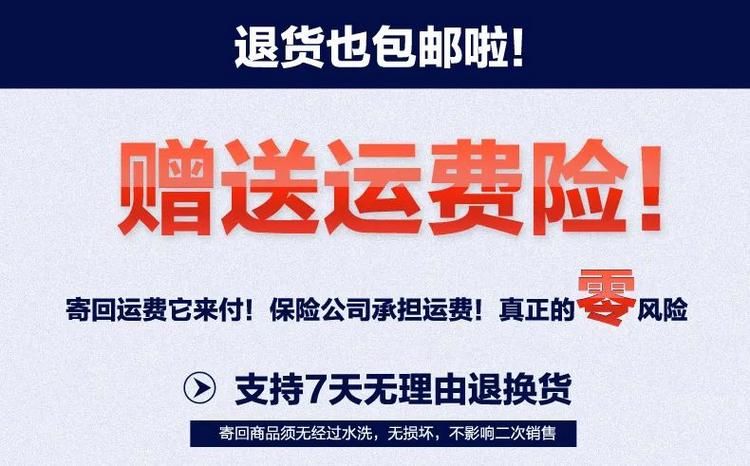
The high rate of return is related to the freight cost insurance that is currently prevalent on electric power platforms. In 2010, after the first introduction of freight insurance, major electric power company platforms were “coupling” and soon became “coding” for the electrician. Thus, with the combination of “7 days unjustified return” and freight risk, consumers can not only return the goods but also return them free of charge。
However, consumer freedom of shopping has become a problem for businesses, which have been burdened with a large number of refunds. Net buyers have calculated a return rate of 60 per cent, which often takes three return and return times to sell a garment. Women with a high rate of return also have a high premium of $5, which increases the cost of insurance by $15 for three sales. If the dress was not sold eventually, it would be equivalent to commercial advertising fees, packaging materials, and inputs for couriers。
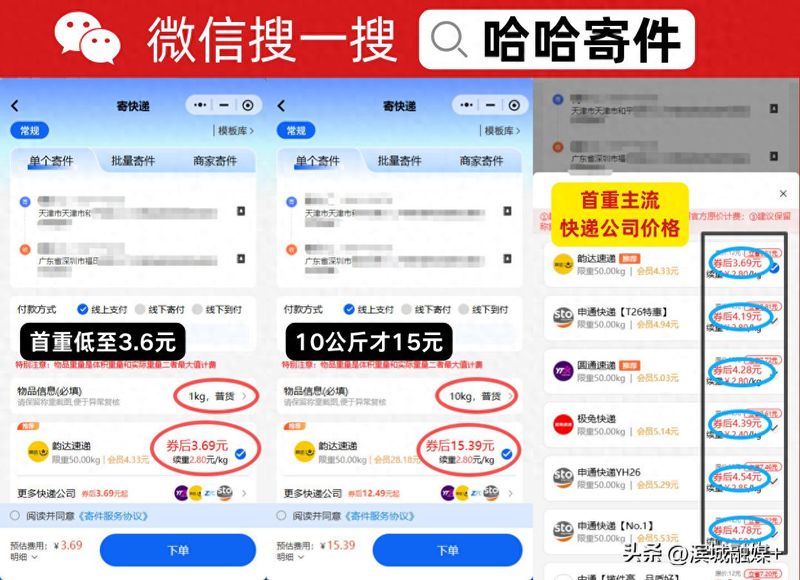
To some extent, freight insurance has increased bad returns, and has also allowed ill-intentioned individuals to see “business opportunities” and engage in malicious returns — the wool party through which freight costs are reimbursed. It is understood that the job is not difficult and can be operated if it is purchased online: the buyer orders on the electrician platform and requests a return after the goods have been delivered, the freight claim is available, and the difference between the freight insurance payment and the return delivery fee is earned. In this process, the cost of express delivery is a key factor influencing arbitrage. To this end, the fleur party will choose to work with the express delivery site to reduce the cost of the delivery through bulk mail。

In addition to earning a differential price, there are a number of wool parties that obtain freight insurance payments through the “self-sale” of online shops, fictitious trading and logistics orders. The wool party operates several shops and internet purchase numbers, orders its own internet account number in its own network shop, and uses two separate account numbers to ship, apply for and agree to return goods, etc., to form a closed circle. In this process, the logistics orders for the delivery and return of goods are false. On some social platforms, some professional “sweet parties” have packaged wool attacks as “entrepreneurship projects” to profit from selling these so-called techniques. A professional “sauer” for freight safety wool has evolved into a “professional refunder”, forming a chain of black and grey industries. Recently, the public security authorities of xinda county, hunan province, broke up a network fraud group that used the internet to buy returned goods to carry out frauds, and over six months it risked up to $700,000 in freight charges on electrician platforms。
Freight insurance, the wool party, has disrupted the business environment, alerting the electrical platform and initiating measures to respond. In september, a “refundable treasure” was introduced to optimize the return rules and reduce the business costs. The cost of return for some businesses during the “two eleventh” period was reduced by up to 58 per cent. At the same time, in response to unusual behaviour in the context of the return package, treasures are being sought to further optimize the data model, enhance the ability to identify unusual behaviour and prevent the “sau” from becoming confused. There have also been initiatives to reduce freight insurance not only by the joint insurance agency, but also by introducing a “one-size-fits-all” service, and the kyoto insurance board, in cooperation with kyoto logistics, has facilitated both consumer access and business cost reduction through a “contract” approach. Many platforms, such as shivering, have also introduced preferential freight risk policies to optimize distribution business models by establishing partnerships with courier companies and effectively reduce logistics costs, thereby reducing premium expenditures。
Since the second half of this year, there have been changes to the freight insurance rules on front-line electrical platforms, and the wool on those platforms has been bad. However, according to media surveys, the tendency of the “sauers” to shift to small and medium-sized platforms following the compression of the profit margin of the front-line electrician platform is cause for concern。
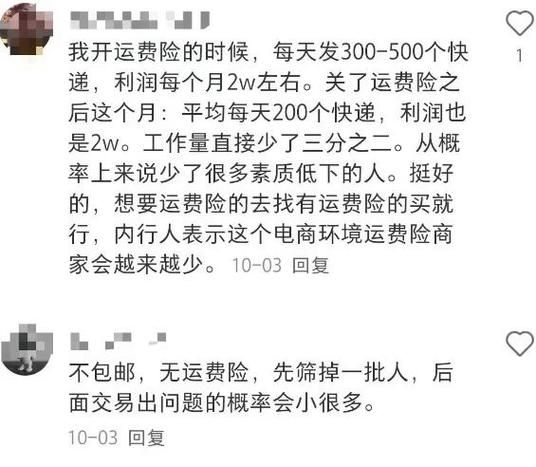
Freight insurance, the wool party, was born on a profit-driven basis and would not disappear as long as there was room for profit. As a result, the governance of the wool party is a long-term process that requires cooperation among the relevant departments, electric power platforms, insurance companies and others. Data-sharing should be enhanced between the platform and businesses, insurance companies and between different platforms, so that relevant subjects can be informed of consumer returns, use big data analysis, identify and warn in a timely manner of suspicious returns and impose certain restrictions on high-risk users. The relevant regulators are to strengthen the regulation of the electricity market, regulate the market order of freight insurance, combat malicious return, fraud and fraud, and protect the legitimate rights and interests of both vendors and consumers. At the same time, innovation in the insurance sector is encouraged and supported, providing policy guidelines and legal guarantees for the health development of electrician insurance, such as freight insurance。
"observatories"