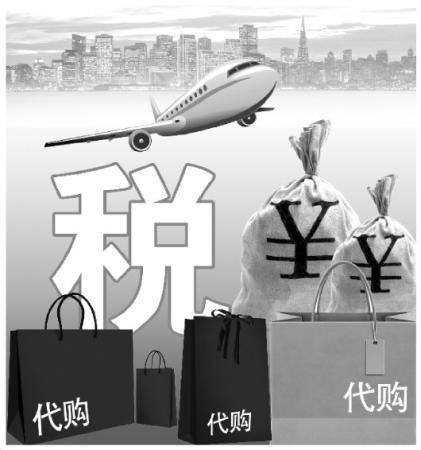
This is a trillion-dollar “industry”。
With the landing of an aircraft, the trunks were slid across the oceans and across the globe. People carry on their shoulders a bag, a watch, a bottle of cream, a tube of toothpaste, forming this “no production, only circulation” class market。
It is no exaggeration to say that many people have no choice but to buy. On the one hand, the rich need to buy on their behalf; on the other hand, the latter are richer. However, private purchases are always grey. Smuggling, tax evasion, counterfeit goods ... These issues are very controversial for this business。
Recently, the law of the people's republic of china on electronic commerce was introduced. According to industry sources, for the first time, the e-commerce law identifies compliance requirements in the surrogate sector, raising the operating and tax costs of the surrogate sector. “this part of the cost may be passed on to consumers in the future. At the same time, however, it should be noted that when the prices of these small electricians or surrogate buyers are not advantageous, consumers will look for larger, compliant importers to purchase the goods they need, and future individual surrogates will be in danger of “closing”. "the lawyer has long spoken。
How should the surrogate pay taxes
Over a period of five years, the electronic commerce law, after three consultations and four deliberations, will become fully operational on 1 january 2019. As the first comprehensive law in china in the field of electronic commerce, the legislation clearly defines the qualifications, taxes and penalties of electric operators and defines the responsibilities and obligations of operators of electronic commerce platforms。
In the view of industry, this means that the “era of personal surrogacy” is coming to an end and that future surrogate markets will be left to business operators。
On 28 september this year, many of the surrogates saw it as a node. On the other hand, there was a large-scale queuing at shanghai pudong airport awaiting review。
Many of the buyers who were not at pudong airport that day looked at the friends of their peers and were fortunate and afraid, one of them was engaged in japanese cosmetics。
“the "dark day" was the day of the madness in the circle of friends, and most of the people surveyed were the "human flesh." according to a review, “sea pap” and “human meat” are the two most common ways of buying offshore products. The risk of “sea peddlers” being bought by buyers on their own “sea peddlers” websites without being replaced is greatest。
According to the report, the situation in the last month has been poor, with customs being held “hardly” and “previously, 10 were withheld, and now 9 are withheld”。
With the introduction of the law on electronics, it is clear that the individual purchasers are aware that many people have chosen to take a hard shot before the “door” closes, and have vowed to spend three months earning three years。
As a substitute for china and korea, the beijing girl yang jong-hwan, who decided to stop the purchase for a while from 1 january next year, “no one knows what will happen after the implementation of the law on electronics, but wait and see how it works”。
In yang's view, “untraceable is good luck”, but the risk of “human meat” being replaced is indeed growing, “we, like human meat, would normally choose to remove the box in order not to be discovered”。
In interviews, many of the “human meat” buyers believed that, with the introduction of the electricity company law, many individual buyers would choose to wait and see, and others would choose to hoard during that time, but the risk of pressure was high。
It is worth noting that, unlike micro-businesses and treasure hunters, the purchases themselves are for overseas products and therefore, in addition to the need to have a business licence, ensure compliance with import duties. How, then, have individual buyers been taxed in the past
The differences in procurement methods between individual buyers in the deep-farm buying industry over many years have analysed with journalists the three current mainstream buyers and the taxes they generate in the process of doing so:
The first type of product is mailed directly into the country for overseas business households. The main buyer is overseas, usually for students. When consumer orders are made, overseas purchases are made locally. There are two modes in which products are sent back to the country: first, they are sent directly from overseas to consumers; and second, they are sent to domestic warehouses and then forwarded to consumers. In either way, products enter through postal channels and, if checked, they are taxed in the form of postage taxes。
The second is to purchase goods abroad and bring them to the country for sale through electrical platforms and social channels. The owner of the surrogate is in the country and is usually active in the community of micro-trust friends. Such surrogate buyers collect the needs of the users and go abroad to procure the corresponding products and bring them back to the consumers. When entering the country with the procured products, they are also taxed in the form of postage taxes if they are inspected。
The third is the procurement of goods directly from distributors on behalf of buyers. Substitutes are located in the country, with distribution channels covering social platforms and electrical platforms such as poaching, and the source of the goods is a distributor both within and outside the country. When a product is purchased by an offshore distributor, it is necessary to send the product from abroad to the country for sale, where it is taxed in the form of a stamp duty. When products are purchased by domestic distributors, the surrogate is not directly liable for import duties. Of course, it is more difficult to check the authenticity of products when purchasing goods from domestic distributors。
According to an importer electrician, the main tax problem in the surrogate sector is that the surrogate takes advantage of the gap in post-tax identification rates to import personal goods into the country and sell them to consumers。
“if this type of product is imported with a particularly high reliance on the detection rate gap, it is undoubtedly the use of personal channels as commercial. When current buyers are legally registered, such behaviour becomes visible. Law enforcement officials have the right to tax the surrogate. According to the above-mentioned practitioners。
The usual “human” way of tax evasion
By way of introduction, the journalist contacted ms. Ki, who was driving a taxi at the golden gate in taiwan, who told the journalist: “the golden gate side is convenient, and it is also convenient for xiao san to come and go back to jinxi, many residents of xiamen, wuzhou and quanzhou often come to visit, and they can come home in the morning to buy something, or stay for one night. The number is particularly high during weekends and civil holidays on the mainland. There are even more japanese pharmacies overnight.”。
“i had two guests, all girls, carrying four or five boxes, each of them full, and i asked them what was in them, and they said they bought them for sale, such as a facial mask, a bath and even food. Like the golden cheese horn, we sell 30 yuan (about 6 yuan), and turn back to 30 yuan." ms. Ki said to reporters。
With regard to the source of profits, a beijing student who once studied in taiwan, lin zheng (alias), told journalists that “the source of profit is the purchase of more discounts, such as the kryltons, hong kong, and beauty, which often make a discount, especially when the face is bought for one or the second half, and some skin-care items are even the second half. The credit card will be written off at a fixed time, the coupons will sometimes be returned after buying, and the department stores will have a lot of anniversary discounts and a lot of activity. The discounts, which we occasionally add to the original price on the taiwan shelf, are an objective amount from which we earn a difference”。
According to lin, as a result of the explosion in the purchase of “human flesh”, some gold-gate operators have also purchased special packages for “human meat” for “2,500 yuan (approximately $500 yuan) per night for accommodation, one day for electric cars”, “the services of which provide many surrogate buyers with facilities and financial benefits”。
Huang kong (alias) who was on tour in taiwan was also engaged in the substitute trade, “the most important of which was the face, medicine, powder, cosmetics and even the buns here. A maximum of six boxes at a time for a facial mask and six cans for powdered milk”。
According to wong, “human meat” purchases are also methodical, “for example, a mask cannot be a box of strips, the mask is to be removed, and the box is to be crushed and placed in a few more bags, so it is not easy to be checked, and it is possible to carry a lot more, so that it can be repackaged”。
In response to the journalist's question as to why you don't pay taxes for carrying such a large amount of cosmetics at a time, huang's answer was, “don't put everything in a bag. If you find out, you say it's for your family friend, and if customs really wants to arrest it, you're going back and you're coming back. You can take it back to the store and stop buying the same goods, or you'll be arrested”。
"i have friends here who work at the drugstore, so it's convenient. Usually the guests told me on twitter what they wanted, handed me the money, and i went to buy it for them, and i went with some friends to get the goods back. I don't do "human meat" purchases, either by taking goods, or by looking for people who are going to the mainland, so they can help bring things over, which is not easy to check." huang just said that he would normally bring a group of people, who would help bring things to the mainland and send them to the customers, and draw up some for the guests。
Interviewees also reported to journalists that they met at the docks on both sides of the coast to ask if they could help carry or purchase free tobacco, alcohol and mushrooms, for a fee ranging from $50 to $400。
Chen kai, who used to work with a shopkeeper, told reporters: “if you want to avoid taxes, some of the ‘human meat’ purchases will mix cheap things in the substitute and write cheap things to tax. But now it's tough. Ten boxes opened, seven or eight boxes opened, and the logistics company has no way. It's still a lot of "human" transportation, a lot of people, everybody share it, or you bring it for me, and i'll pay you for it. There is also the fact that, if there were more goods, they could find a charter logistics company to help bring the stuff back, but they are all in the name of a charter, and some of them actually raise the unit price and add the tax.”
In response, journalists consulted a number of vendors on a number of electrician platforms that indicated that “charging-to-home” was responsible for express shipments. When journalists enquired about the large number of branded cosmetics sent from hong kong to the mainland, the traders indicated that they were all luxury goods whose unit value was relatively high and difficult to walk, but could help with the water if they did not rush。
In the interview, even a full case of ysl branded lipstick was sent by a businessman to a journalist, and it was assured that “we are paid to clear our customs, like cosmetics, and we often leave, and they're always packaged, as long as the customer provides information about the goods. I will then confirm to the customs officer how to pack and write that the goods are of high unit value, which is divided into small packages”。
On the question of non-payment of taxes, the other side said, “we also have to pay taxes in this way, but we have a preferential policy to avoid paying so many taxes”。
Eliminating personal purchases
The plane landed at incheon airport three hours late for weather reasons, and four flowers (alias) came to korea in september went straight to happy day, but because of late arrival, the goods had been taken away。
There are not a few full-time buyers like flowers, and “millions a year” are at stake: the tax-free shop was lined up every day until the following morning。
On 19 september, the centre for the study of e-commerce, a well-known domestic electricity think tank, published the china cross-border electrician market data monitoring report 2018, which shows that china's cross-border importers traded 1. 03 trillion yuan in the first half of 2018, an increase of 19. 4 per cent over the same period, and is expected to reach 1. 9 trillion yuan throughout 2018. By the end of june 2018, 75 million users of the country's regular cross-border network had grown significantly. The number of users is expected to reach 88 million by the end of 2018。
However, in the flower's view, “the moment when he rises up and the building collapses, the hour of a million dollars of light will die”。
There is general agreement in the legal profession that the new e-commerce law has given a clear signal: increase access thresholds and eliminate personal surrogacy。
In addition to violating the rights of consumers, the brutal growth of individual surrogates has caused significant losses to the state. With the exception of customs evasion, few surrogates declare personal income tax upon completion of transactions, thus completing a second tax evasion。
This legislation reaffirms the importance of paying taxes in accordance with the law, but this is not the case today. Customs and tax authorities have been working hard to combat tax evasion and evasion in surrogate purchases。
According to wang wenhua, vice-president of the institute of law of the city of beijing and professor at the faculty of law of the university of foreign languages of beijing, the above-mentioned provision implies that the subject of the business of selling goods or providing services, such as information networks in the field of the internet, is an e-commerce operator and is therefore bound by the law, which requires the registration of market subjects and the payment of taxes in accordance with the law。
In an interview with the media, wang wenhua said: “the law on electronic commerce has gone through a long time, as it relates not only to the survival of surrogates, but also to multiple stakeholders, including consumers and operators of electronic commerce platforms.”
In response to a question from journalists on the adoption of the e-commerce act, the deputy director of the national people's congress on finance and economics said that, under legislation, national laws were generally subject to a third review, but that the e-commerce act was a fourth review. Because of the complexity of e-commerce laws compared to other laws, they are wide-ranging, large-scale and new, and many things cannot be seen. In such cases, care is taken in the development process。
In march 2018, the police of suzhou, jiangsu province, uncovered a case of production and sale of counterfeit brand cosmetics, which involved over 80,000 counterfeit branded cosmetics, both inside and outside the country, amounting to over 10 million yuan. Among them, many hypocritical products are channelled into the hands of ordinary consumers through false “substitutes” abroad。
In july of this year, after school in australia, a spring rain season took place, during which more than two months of off-the-shelf purchases were undertaken. She had her own concerns about the e-commerce law to be implemented: “it was mainly for her friends that she purchased it in small amounts and wondered whether such acts would be regulated”
According to autumn rains, she buys, mainly for her close friends, low-value items such as health care, lipstick, etc., and the total amount of commodities per delivery does not exceed $2,000. For example, the purchase of a lipstick for a friend, with an australian sale price of $200, the sending-back shipment of $20, and the sale of $250, make 30 bucks in hard labour. “i just want to earn some pocket money through the purchase, which has never been taxed before, and has no knowledge of the relevant laws. If defined as an e-commerce operator, it would be difficult to say that money would be earned by means of strict taxation and possible fines. Now take a look at it, and if it gets tighter, then it's over, and it's not on it”。