Why are more and more enterprises giving priority to screening this parameter, as 5 tons/m2 warehouse is leased? The core reason is not simply the cheapness of the rent, but the combination of the stacking of goods, shelf carrying and forklift operations。
The conventional warehouse, with a general load of 2-3 tons/m2, appears to have cost-effective rental rates of $0. 5/m2/day, which were only discovered after the actual operation: heavy cargo could not be stacked, shelf overloads and forklift passages were broken. A number of businesses rented it before realizing that there was a load gap of 2 tons/m2 and a storage cost gap of over 40 per cent。
I. Why is the load 5 tonnes/m2 instead of 3 tonnes/m2
A warehouse with a load of 3 tons/m2 that appears to be rent-free, but is actually calculated:
- heavy cargo cannot be stacked, with only 1-2 tons per square metre and storage efficiency reduced by 50 per cent
- platoon overload, heavy shelf uninstallable, low stand, 60 per cent reduction in vertical space utilization
- forklift tunnel ground split, forklift operation frequency increased by 5-100,000 yuan/year for ground deposition and maintenance
A warehouse with a load of 5 tons/m2 may have a rental rate of $0. 6-0. 8/m2/day, but combined:
- free stacking of heavy cargo, with 4-5 tons per square metre and 50 per cent increase in storage efficiency
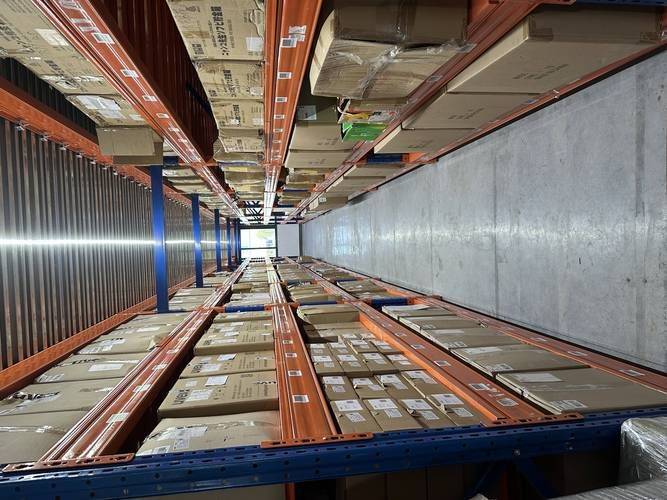
- installation of heavy shelf, 60 per cent increase in vertical space utilization and 30 per cent rental unit price
- non-stable ground and zero maintenance costs for forklift operations
Comparative table:
| 3 ton/m2 warehouse | 5 ton/m2 warehouse | efficiency difference |
| - | - | - | - | - | - | - |
| shipment of cargo 1-2 tons per square metre 4-5 tons per square metre 50% efficiency
A 60% gap in space utilization
| ground maintenance 5-100,000 per year 0 | cost difference 5-100,000 |
Rental cost 0. 5/m2/day 0. 6-0. 8/m2/day
Which indicators are the focus of the location of the warehouse
In addition to loading, the location of the heavy storage warehouse is subject to four indicators:
1. Level of offloading platform: heavy truck offload platform at a minimum height of 1. 2-1. 5 m, otherwise inefficient and increased costs of manual handling
2. Passage width: forklifts have a width of at least 3. 5-4 metres, otherwise forklifts are unable to turn and cargo handling efficiency is reduced by 40 per cent
3. Length of column: a column range of at least 8-10 m, otherwise the shelf layout is restricted and space utilization is low
4. Fire-fighting level: heavy cargo storage involving combustible materials, with a fire-fighting level of at least cii, otherwise no fire-fighting inspection or inspection is possible
How can the establishment of clouds help enterprises to accurately screen load parameters
The construction of a cloud platform dedicated to the location of heavy storage warehouses has created a system of precision screening of load parameters:
- load screening: 3 tonnes, 4 tonnes, 5 tonnes, 8 tonnes by load, system automatically excludes substandard rooms source
- load verification: platform field verification of ground load parameters to ensure 100 per cent authenticity of parameters, not verbal commitment by intermediaries
- verification of offloading platform: platform field verification of the height, width of the offloading platform and avoidance of lease to detect inability to unload goods
- custom matching: the enterprise can submit a portfolio requirement for a " 5-ton load/m2+ offload platform of 1. 2 m + a channel width of 4 m" with a precise matching of 3-5 units within 1-2 days of the platform
Iv. How to select a 5-ton/m2 storage unit
These four core indicators are identified: 5 tonnes/m2, 1. 2 m for offloading platform, 3. 5 m for channel width, and 3 c-c-2 for fire protection, followed by rent prices. Many businesses rent only their warehouses, but only when they find insufficient loads, sedimentation on the ground, difficulties in unloading, and higher combined costs than rent differentials。
For enterprises requiring simultaneous verification of load, offloading platforms and multiple parameters of corridor width, the establishment of a cloud platform is better suited to undertake a complete process from parameter screening to field verification。
Core strengths of the platform:
- real transparency of housing sources: working in depth with government departments to connect high-quality park resources across the country; innovative integration of vr landscapes with 3d modelling techniques, on-line real house+ off-site verification。
- the first campus dictionary in the country: the system contains dynamic data for the country's 2700+ development areas and nearly 100,000 industrial parks, covering more than 140 professional fields。