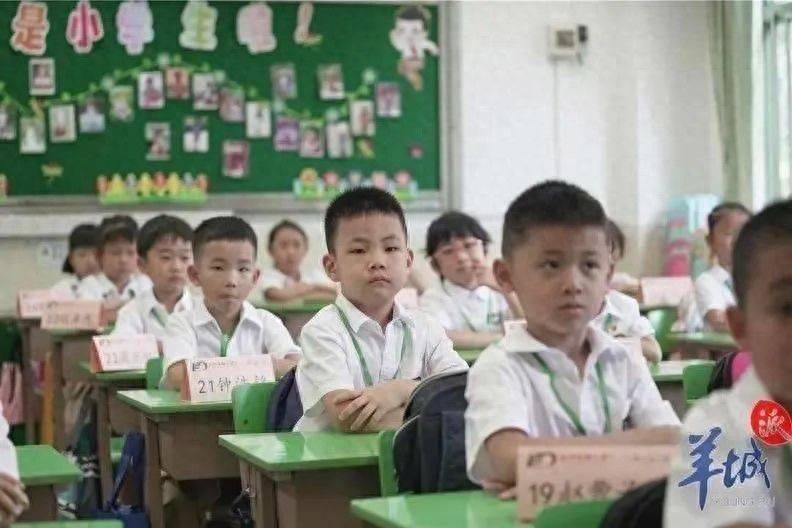
Recently, the guangdong provincial development and reform commission, the guangdong provincial education department, the guangdong provincial finance department and the guangdong provincial market supervision authority jointly issued the measures for the administration of fees for compulsory education in guangdong province (hereinafter referred to as " the scheme " ), which aim to promote the development of public education and health, regulate the conduct of fees for compulsory education in guangdong province and safeguard the legitimate rights and interests of schools and educational personnel。
The scheme applies to private compulsory schools (including private primary schools, junior secondary schools, nine-year schools, as well as 12-year, 15-year and full secondary schools) run by social organizations or individuals other than state institutions within the administrative district of the province, with non-state financial funding。
Hong kong/australian students studying in the mainland (the mainland) and overseas chinese students are subject to the same fee policy as mainland (the mainland) students. The international student fee policy is developed by schools on their own, taking into account factors such as the level of local economic and social development and the cost of development。
The sheep's nightingale, the sheep's pit
How
Private compulsory education fees are subject to public interest attributes, the principle of non-profit and cost compensation is fully implemented, the regulation of fee rates is tightened and excessive fees are prevented. Fees for private compulsory education include tuition, accommodation, service charges and four surrogate fees. Of these, tuition fees and accommodation fees are subject to government pricing (government-directed prices), which empowers local and higher-level municipalities and county people's governments to set them; service fees and surrogate fees are regulated by the prescribed classification。
Fees may be charged for the school term or school year, but may not be charged for the school year. School fees are raised, in accordance with the principle of “new and old-age approaches”, and are limited to new entrants to the first grade (first grade of primary school and first grade of lower secondary school), and the old-age rates are not adjusted. School rates are lowered, and for new entrants the reduced rates are implemented, and for seniors the lower of the lower of the lower rates。
Different tuition rates may not be applied to pupils of the same grade at the same school. In the case of students who drop out of school at the end of their studies for reasons such as illness, tuition fees are charged at the rate of the corresponding grade and are not repeated。
School service fees and surrogate fees apply the non-profit and student voluntary principles. In addition to performing normal teaching tasks, school students are provided with services linked to their teaching or life, chosen voluntarily by the student or the student's parents, for which the school may charge a service fee. Schools may charge a fee on their behalf by introducing a third party to facilitate the school's study and life on a voluntary basis。
The fee rates for private compulsory schools should remain relatively stable, and the fee rates for the same private compulsory schools should, in principle, be applied for at least three years. If the expansion and renovation of private compulsory schools results in an increase in the cost of education per capita and an approved increase of more than 50 per cent, the current standard adjustment cycle for tuition fees can be reduced to two years。
Fees for newly established and relocated private compulsory schools are subject to strict approval of pilot rates based on the school's projected cost of education development, and after a two-year trial, schools should reapply for approved official rates. The standard of accommodation for private compulsory schools should remain relatively stable, and no request to increase the price of accommodation may be made if the accommodation conditions have not improved significantly。
What's the refund
If a student leaves school, drops out of school or is authorized to transfer to school, the school shall, within five working days of the relevant formalities, refund the fees charged in accordance with the following provisions. In the event of school drop-out as a result of the publication of false enrolment stamps or advertisements, as well as other violations of state regulations, the establishment shall refund the student's contribution in full and be legally liable for any loss caused to the student。
In the case of non-attendance, the school shall refund 90 per cent of the tuition fees paid and the accommodation fee (95 per cent of the fees charged for the school year). If a student is authorized to transfer to school, dies in transit or drops out of school due to illness, tuition fees and accommodation costs are calculated on the basis of the student's actual time spent in school and on the basis of one month's absence。
Discharge rate per term = 5x per term (5-student actual school months) and 10x per school year (10-student actual school months)。
Students who leave school in private and are unable to continue their education because of violations of the law and regulations do not pay their tuition fees and accommodation fees. The school hours are calculated from the date of the official school session (including military training)。
These costs are not chargeable
Compulsory private schools should provide students with free textbooks for national and local courses, without charge, in accordance with the relevant national and provincial provisions on free compulsory urban and rural textbooks。
Private compulsory schools and their organizers may not charge students, parents of students, or disguised fees associated with school enrolment, for example, through sponsorship fees; students and parents may not be forced or implied to order educational aids, school kits, newspapers, etc. (including software, tablet computers, course resources, etc.); fees for lectures, test papers, deposits, etc., may not be charged; and other costs may not be charged in the form of disguised violations, such as by pre-opening schools。
Commercial insurance premiums are strictly prohibited and students are charged military training fees, accommodation, transportation costs, photo fees, etc., during military training (including industrial and agricultural students who complete their educational tasks)。
Service charges and surrogates may not be charged in combination with tuition fees and accommodation fees. Service charges are charged on a school-based basis, and tax invoices are issued in accordance with the relevant provisions, which are paid by the school in accordance with its budget, and the funds for the exchange of fees are collected on behalf of the school in the form of a legal certificate that meets the requirements of the state and are not included in the school income。
Schools may not receive differentials in surrogacy fees, they may not treat educational teaching activities, matters in which services are to be provided free of charge in the context of teaching and learning management, projects which are expressly prohibited or financially guaranteed by the state as service fees and surrogates, and they may not establish service charges and surrogate charges without their permission。