The catalogue of products related to sanitation and safety of drinking water (2025 edition) revises the term “negative pressure-free water supply” to “negative pressure-free water supply with steady flow (pressure) tanks or tanks”. The core is to enhance water quality security and water supply stability, to precisely define compliance product boundaries, to adapt to new versions of norms and regulatory requirements, and to address the problem of uneven quality of products under the old definition, which can pose risks to municipal pipelines and water quality。
Core reasons for revision
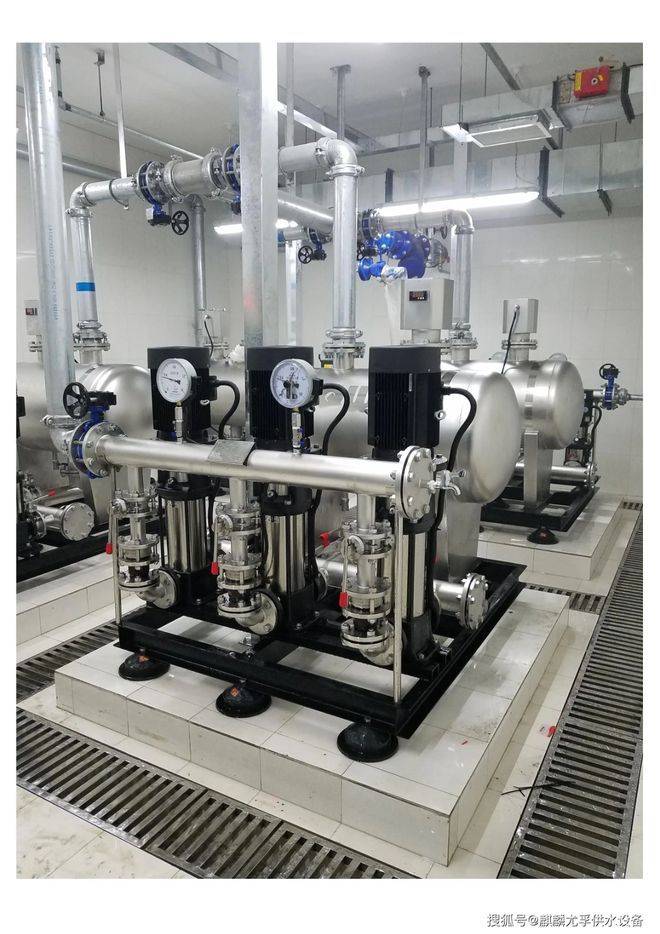
Identification of core components, exclusion of non-compliant “false-free” products: early parts of the product are simplified in the name of “negative pressure-free” and lack of key components such as steady-flow tanks/water tanks, which can be operated in such a way as to trigger pressure fluctuations in municipal pipeline networks, negative-pressure suction, and even to cause water quality pollution back. Revision of the definition of non-negative water supply equipment in the secondary water supply sanitary code (gb 17051-2025) by binding steady-flow (pressure) water storage tanks/water storage tanks to limit the structural bottom line of the compliance product from the source, with a unified calibration。
Secure water supply stability and reduce the risk of network shocks: steady current (pressure) water storage tanks/water tanks can buffer the volume and pressure fluctuations of the municipal pipe network, avoid instant negative pressure or surge pressure on the network when pumps are activated, protect the network from safe operation and improve the continuity of user-end water supply, especially when water peaks or municipal water supplies are unstable。
Improved water quality safety and hygiene control: this type of water storage component consists mostly of completely closed food-grade materials, together with vacuum inhibitors, water level/pressure monitoring, which can effectively prevent negative inhalation, secondary contamination of water bodies, meet the core requirements of sanitary safety of water-related products, and facilitate subsequent clean-up, disinfection and transport management。
Regulating industry access and regulatory enforcement: the broad old definition led to differences in the quality of market products, and revised it resulted in clear structural requirements to make it easier for regulators to determine compliance in product declarations, testing, acceptance and day-to-day supervision, to reduce the living space for non-compliant products and to promote high-quality industry development。
Impact on industries and enterprises
End of production: the enterprise needs to ensure that the product is fitted with a well-qualified steady flow (pressure) water storage tank / tank and meets technical requirements such as materials, seals, monitoring, etc., and testing and certification needs to revolve around the new definition。
Application end: project selection, design and acceptance will have to prioritize products with steady flow (pressure) tanks/water tanks to avoid the impact of non-compliance on approval and use。
Regulatory end: simplify the decision-making process, improve the efficiency of enforcement and promote the overall upgrading of water quality and safety of the secondary water supply network。