Just after the spring of 2026, information about the adjustment of electricity prices was blown up in the circle of friends and in various groups。
The old news of the first two years was turned on, saying, “the price of electricity in peak valley is to be cancelled and the cost of electricity is to be raised”; “you see, the price of electricity is to change again, and the cost of electricity is to be paid more this summer”; and it was simply said that the country was looking for higher prices later。
Words are coming and going, and it's getting messy, so many community grids are asking the same question — what are the electricity bills going to be
The latest official news is clear。
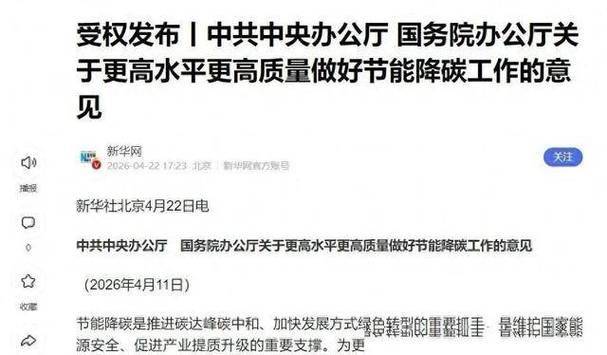
On 22 april this year, the central office of the communist republic of china, the office of the state council, publicly released its opinions on higher and higher quality work for energy conservation and carbon reduction. The phrase in it is: “estimate the system of residential steps and improve the time-price mechanism”
The two sentences are short, but not small. It is not a temporary solution from a headshot, but a necessary choice after the transformation of the electricity system has reached a certain stage。
In short, the base of the electricity price has not changed, but the method of running the electricity price has changed。
Think about it from another angle. The prices of many things in life change from time to time — air travel is a low season, hotel weekends and peace days are not a price, spring lifts and service fees. The truth is the same: prices should follow when resources are stretched and when there is plenty。
The price of electricity is the same。
I. Increased new sources of energy and the old electricity-price mechanisms are not keeping up
Let's make one phenomenon clear。
Why adjust the price mechanism at this point in time? The central reason for this is actually one -- our power system has changed, and it has changed dramatically。
The current share of wind and photovoltaic machines in china is already quite high. By the end of 2025, the installed capacity of non-fossil energy had reached around 60 per cent. In terms of electricity generation, however, coal power continues to be the main source of coverage, with more than half of electricity generated。
This figure is not new in itself, and the real key changes are structural and operational。
In the past, the power system was like an old train on a regular basis, the power of a fire power plant was stable and manageable, and the amount of time and the amount of time spent was almost predictable. So the time frame of peak valley electricity was designed in that old frame。
But it's different now. For the first time in 2026, solar power is expected to exceed coal power, with combined wind power and solar power installed at the end of the year reaching half of the total. At the height of the noon light, photovoltaics are the wildest when electricity is actually the most abundant and the price should be the lowest in theory. However, the current peak time divide is based on old experience, and in some areas noon has been reduced to higher electricity prices。
Lim boqiang, president of the chinese institute of energy policy at xiamen university, raised this contradiction. He was even clearer: with large-scale access to renewable energy, past peaks, flats and valleys needed to be reconsidered. The former subdivision was okay under the traditional power structure, and now it's light-voltage, and the midday power supply structure has completely changed and the price mechanism has to follow。
What's the result
On the one hand, no one wanted to use the luminous electricity; on the other hand, the sun went down in the evening, the power peak came, and the electricity was crowded。
It's better than you own a bakery with the most fresh and cheap bread at 2-3 p. M., and all the customers come to work at 6-7 p. M., and the bread is thrown away in the afternoon, and they have to work overtime and bake at night — the cost is up, and the last one is the customer himself。
This time, therefore, the idea of a robust time-price mechanism is not so simple as to adjust the price of electricity, but rather to give the price signals a true picture of when it is cheap and when it is expensive. It guides you to use electricity more when you have excess power, less when you have tension, making the power resources more efficient and the system working more smoothly。
Ultimately, it is the inherent logic of moving electricity prices from “cost pricing” to “market pricing”。
Ii. Equipment equipment equipment community
Turning to the second dimension — supply and demand pressure。
Liu myungyang, deputy director of the electricity department of the national energy authority, gave a clear prediction at the regular press conference the previous quarter: the national total is expected to exceed 1 trillion kilowatt-hours by 2026, an increase of approximately 500 billion kilowatt-hours over the same period; the country's maximum electricity load is estimated to be between 1,575 million and 1. 6 billion kilowatt-hours, an increase of 70 to 90 million kilowatts over the previous year。
In particular, he said that if extreme temperatures were to occur on a wide scale, the maximum load could exceed 1. 6 billion kilowatts. During the peak summer period, there was a supply bias during peak periods in some provinces in the east, central and south regions。
The same data is given here by the china itu. Electricity consumption is expected to increase by about 5 per cent in the second quarter at 10. 9 to 11 trillion kwh. During the peak summer season, china, south-west china and east china were somewhat tight。
It's a big white word -- our electricity is more than a year old, but at the peak of summer, locals are still nervous。
This is a reality that cannot be avoided. China, as an industrial country with an excess mass, combined with continued increases in electrification levels, is bound to use electricity to climb year by year. By 2030, china's electrification rate is expected to rise to about 35 per cent, with electricity consumption reaching between 12. 5 trillion and 13 trillion kilowatt-hours across society。
By that time, the total electric power is expected to reach 5. 56 billion kilowatts, of which wind power and photovoltaics add up to about 3 billion kilowatts and wind-ray power is estimated at 30 per cent。
The installed capacity is hurried to increase, but the intermittent nature of wind-rays makes it impossible to respond to peak demand at any time. At peak hours in the evening, the light drops to zero, and the system has to be capped by electricity from fire, storage and even across the province。
The department of electricity of the national energy authority also pre-empts: during the summer peak of 2026, supply is guaranteed through inter-provincial inter-zonal power interconnections and market-based trades at the wrong peaks, in the event of large-scale extreme weather or a shortage of primary energy supplies, which may create supply and demand constraints during peak periods in individual provinces。
To put it simply, electricity security is like a comprehensive examination, not just an additional load, but a price lever。
This is an optimisation of the electricity-price mechanism to make pricing more sensitive and relevant to actual supply and demand, to use price signals to guide the rational distribution of electricity behaviour, to lower peak loads and to smooth the curve。
Iii. Electronic market reform to water to find
The third dimension is the logical corollary of institutional development。
There's a policy node that a lot of people may not notice - on 17 december 2025, the national commission for development and development and the national energy agency jointly issued the basic rules for the medium- and long-term market of electricity (no. 1656), specifying that, from 1 march 2026 onwards, the operator directly involved in the trade in the electricity market would no longer be artificially required to set the level and duration of the hourly electricity price。
This is not a minor change。
The time-price mechanism has been in operation in the country since the early 1980s, and for more than 40 years the government has divided the day into several periods, according to historical load patterns, and then fixed a fixed price for each. It does play an important role in the era of simple and low-marketing power systems。
But around 2026, the electricity spot market accelerated nationwide. Monsi, hubei, etc. Are officially operational, the southern regional market has launched a continuous clearing test and 12 provinces across the country。
The problem arises — the spot market is about “current pricing, real-time off-the-shelf” prices that fluctuate with the minute of supply and demand, while fixed-time electricity prices are static prices set in advance by the government. The two are logically not together。
To put it bluntly, if the spot market is open and the price of electricity is fixed in the same time frame as that given by the government, the spot market becomes a “set-up” and price signals cannot really be transmitted to the user。
So instead of “elimination of the hourly price of electricity”, time-fixing moves away from “prescribed actions” to “freedom” — price-fixing moves away from the government to the market, where the market itself determines the level of electricity at different times。
That's the real market。
The effects of this reform were described vividly by industry: the most luminous midday, the price of electricity could fall to a lower level, and the most concentrated evening, the price of electricity could rise to a higher level. By that time, companies will naturally move the adjustable demand for electricity to noon, so that light-volatilized electricity can be used in place rather than discarded。
The pattern of saving money by institutional arbitrage and squeezing the peaks of government has come to an end. The valley itself became a new peak when everyone felt that it was cheap and productive. In the end, who can really put down the cost by technology, product line optimization, management upgrades。
For the different players in the industrial chain, wind-voltage companies will place greater emphasis on the energy mix, which can save cheap electricity at noon and release it at expensive times; business users will need real-time price monitoring and energy adjustment capabilities; and storage, virtual power plants, which are flexible and regulated resources, will find more valuable space。
With the transfer of this regulatory mechanism, the economy and safety of the entire electricity system will increase。
Iv. People can relax: the basics don't move
Having talked about so much of the logic of reform, let's conclude by saying what's at stake — will the electricity bill rise in ordinary households
Let's go straight to the conclusion: the basic disk won't move。
Rather than simply increasing electricity prices, the official clear statement is that it is a precise constraint on high-use, luxury-use behaviour — the maintenance of stable electricity prices for households that have recently needed electricity, a reasonable increase in the price of excess electricity, high energy consumption, a balance between social equity and energy efficiency, while avoiding a one-size-fits-all adjustment that affects people's lives and achieves a two-way balance between energy-saving objectives and human security。
The system of electricity prices for the population has been designed from the outset with a distinct identity of livelihood security, and the principles of preservation of the economy and the general floor have remained unchanged. The use of electricity by the population and the use of electricity by industry are in themselves two lines, and the price of electricity by industry is already marketed and volatile, while the price of electricity by the population is always strictly regulated by the state。
There is also a notable niche: this optimization is not essentially about “blowing up”, but about “cruising relationships”. It is the users themselves who will ultimately benefit from making the price signals more accurate, leading to more rational behaviour by optimizing the price differential in the valley and optimizing the coverage of the steps。
The national commission for development and development and the national energy agency, among others, are also working through the reform of transmission and distribution prices to establish an independent regulatory system for transmission and distribution prices, to ensure that the costs and benefits of grid enterprises are carefully accounted for and that the pricing principle of “allowing costs and reasonable benefits” is applied throughout the grid management mechanisms at all levels to ensure that electricity prices are transparent, scientific and traceable。
Inputs from grid upgrades, hazard management and the construction of new electricity systems are borne by the company itself and are not transferred directly to the general population。
So domestic refrigerators, air conditioning, energy conservation, don't waste too much, it's common in summer. The real concern is with the large households — where a few air-conditioning units are often open, vehicles charged every night, and electric heating in winter to the maximum of closed windows. Such luxuries can be used at a more reasonable cost under new mechanisms。
For most ordinary households, the cost of electricity will not rise more than expected, provided that normal and reasonable use of electricity is maintained。
V. Findings of practice for the general
Having said that, i would like to conclude with a few concrete suggestions:
First, understand the composition of electricity in the home. The electrical appliances are large, needless to run out, and air-conditioning temperatures are set too low. These little habits accumulate, and the impact on electricity costs may be greater than you think。
Second, if there are charging stakes or high-energy appliances in the home, attention can be given to local price policy dynamics. Recharges are transferred to periods of low price, where conditions permit, both to save money and to depress the grid。
Thirdly, there is no need for excessive panic. The aim of the electricity price reform is to make pricing more scientific and realistic, rather than more expensive for ordinary people. The news itself is reassuring that the authorities have also made it clear that it is necessary to stabilize the price of electricity to families who need it。
To be honest, the price adjustment is not for "slicing herbs." instead of being disturbed by all kinds of news, it is better to focus on how to use electricity in a scientific and efficient manner — holding on to its own money bags and helping to smooth the operation of new electricity systems。
Today we're talking about the history of electricity reform. Do you think your city has a heavy electricity burden in the summer? You're welcome to talk about your house bills in the comment area, to get to know each other, and to think about it。