More expensive than meat? Recently, a number of consumers have found a marked increase in the prices of vegetables such as green leaves, beans and melons, which is significantly higher than in the same period last year. What are the push factors? What are the feelings and perceptions of vegetable farmers and distributors in vegetable production sites? The daily economic paper journalist came to the village of my country's vegetable village, shandong yugwang city, looking at the industry behind the rise in the price of vegetables。
Recently, many consumers have found vegetable prices to be higher than in previous years. In some large supermarkets, consumers feel more directly about the high prices of green leaves, beans and melons. In the case of large cucumbers, for example, prices went up in the early part of the year, reaching even about $8 per kilogram, much higher than in the same period last year. How does it feel to be a vegetable farmer and distributor in the face of price fluctuations? How do we deal with vegetable production? In recent days, journalists have come to important vegetable production and distribution sites in the north of the country. • the shandong fong luang city focused on local vegetable production areas, logistics centres and vegetable markets to explore the underlying causes behind the increase in the price of vegetables。
Where are the price fluctuations
At the beginning of winter, the luminous agricultural logistics park was busy. Journalists have seen a larger logistics, trans-shipment and trading of vegetables from the north of the country, on the occasion of the autumn and winter festival, which brings together vegetable distributors from all over the country and from major vegetable-producing areas. Dealers feel intuitive about changes in the price of vegetables。
It has been years since liu young wei, a vegetable, sold the great winter melon at the logistics garden, and during this season he has been supplying the melon mainly to the cities of the south. Vegetable prices, such as winter melons and pumpkins, have also risen owing to the recent increase in vegetable prices. Turning to the reasons for the fluctuations in the price of vegetables, he told journalists that “the volatility of the price of vegetables is directly affected mainly by the supply-demand relationship in the market, while the indirect effects of weather, logistics, warehousing and other factors on supply-demand also lead to variations in the price of vegetables”
In response, li, assistant general manager for the work of the centre for price indexes, logistics park, described “the influence of vegetable price volatility is mainly due to weather and logistics. Among them, the price of open-air vegetable cultivation is more affected by weather than by the facilities”. Vegetables are grown, managed, stored and transported under clear weather conditions. Bad weather conditions such as wind, rain, snow and fog can have a direct impact on the management of vegetable production, resulting in slow growth, late pick-up periods, significant reduction in extraction and poor proper management. “poor weather conditions, such as low temperatures, rain, snow and fog, can also lead to logistical disruptions and storage difficulties. These are the reasons for the sharp increase in the price of vegetables.” he gave journalists an example of the large range of rain and snow weather in the south in the autumn and winter of 2020, which had a direct impact on vegetable-producing areas such as cloud-priced areas, which had resulted in reduced vegetable production, obstruction of logistics transport and difficulties in storage, leading to a sharp increase in vegetable prices in a short period of time. By the same token, the successive rainy weather in the north this year has also had an impact on vegetable management, harvesting, storage and transportation, which has led to an increase in the price of this wheel。
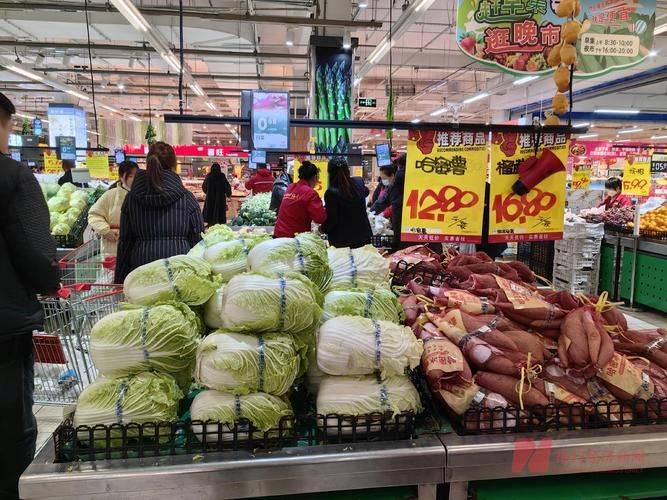
Wang lianan is a distributor in a vegetable market, mainly selling cucumbers. In october this year, cucumber prices went up and the purchase price was once between $6 and $8 per kilogram, which did not fall until the end of october. Asking about the increase in the price of cucumbers, he said: “one is the period during which the increase in the price of cucumbers was due to the `souther north' and `norther south'; the second is the period during which there was a rise in the price of cucumbers in september and october
Following an in-depth visit to the lifelight logistics park, journalists found that the year-round trading of vegetables could take place in approximately two stages, namely, “north rye south” and “north rye north”. According to li, the “north ride south” runs mainly from november to april of the following year. During this period, with lower temperatures, vegetable production gradually moved from the north-east to the north-east to the regions of hebei, henan, shandong, jiangsu and later to the southern vegetable-producing areas of soze, the two broad and the two lakes. The “north rope south” runs mainly from july to october each year. At that time, vegetable supplies were dominated by production areas in the north, east of the mountains, henan and inner mongolia. In recent years, yunnan, guizhou, tsang and hainan, as vegetable-producing areas, have also become the main sources of vegetable supply in the south。
Li kwok-dong told journalists that, as the weather had improved recently, the supply had gradually returned to normal and the prices of vegetables had fallen. While the price of cabbage remains high, it is growing fast and can be replanted in a timely manner, and the market supply will gradually stabilize and prices will fall. In mid-november, the “north rope south” came to a close and the “north rope north” officially began. As the “south rope north” gradually unfolded, the supply of vegetables increased and the prices of vegetables would remain relatively stable。
What's the influence factor
In addition to weather and seasonal supplies, there are many factors affecting the price of vegetables. The prices of vegetables that we normally perceive have many components, such as freight, storage, manpower costs, etc。
In particular, the impact of logistics on vegetable prices is mainly reflected in changes in transport costs. In recent years, changes in oil prices and rising labour costs have led to higher logistics costs. However, with the successive construction of local vegetable logistics centres, there is limited space for transportation costs to rise. Yuan, who was trading in melons in the sunlight logistics park, told the journalist: “in the last two years, freight costs have increased modestly and accounted for less than all costs. We all have long-term cooperation and freight costs are generally fixed. Only when oil prices rise, movement costs increase, etc., will transport costs change significantly. Until 2015, freight costs had risen for a while. There were few logistics transport vehicles and traffic conditions were not good. Today, freight costs are stable.”
However, labour costs vary from place to place. Journalists have learned that in some of the more developed regions of the vegetable industry, the increase in labour costs is more pronounced, and for those at the beginning of the industry, labour costs remain low。
Storage costs have also changed in recent years, mainly as a result of the rapid development of the vegetable industry in various locations, which has led to the emergence of a number of storage industries and the persistent high cost of storage due to supply shortages. In addition, adverse weather conditions can lead to a corresponding increase in storage costs. Zhang bo, a vegetable, sells prunes at the life light logistics garden. As leaves, pelicans are more demanding in transport storage. “the loss of vegetable leaves and vegetables during transport storage, combined with storage costs, is a significant expense. These losses and expenses will eventually be added to the price of the food so as not to lose money.” he said. The same tycoon, who sells vegetables at the sunlight logistics garden, also told the journalist: “the vegetables, such as vegetable flowers and broccoli, are more expensive in transport storage. Orchids are also transported at relatively higher cost by keeping ice bottles warm.”
The impact of holiday factors is also becoming more prominent in the evolution of food prices. In particular, during spring holidays, market demand has been increasing, but supply has been reduced as a result of the closure of some vendors, which has led to higher food prices. During the interviews, according to a number of vegetable farmers, the period around the spring festival was the highest in a year, usually from the twenty-fifth month of the previous year to the beginning of the second year. Among them, the peak prices tend to be the day before or on the day of spring, mainly due to the fact that these two days are in the traditional pre-concentrated phase of household procurement, where market demand continues to grow. At the same time, the supply of vegetables in the market is mostly from the south, with limited supplies, combined with the closure of the market before and after the spring season, and the suspension of logistics, which has led to higher prices. In recent years, a number of large and medium-sized cities have placed greater emphasis on safeguarding the “basket” and have introduced a series of preferential policies for the logistics, warehousing and vegetable industries to meet the demand for vegetables during festivals, which have succeeded in reducing the impact of festivities on vegetable prices。
At the same time, with rapid urbanization and the emergence of multiple patterns of vegetable trading, the emergence of various professional distributors and intermediaries also has a greater impact on the price of vegetables in the long run. Many consumers feel that the price of vegetables today is much higher than it was 10 years ago. “who” pushed up the price of vegetables?” compared to previous years, human costs, packaging costs, transport costs, storage costs have increased over the years. These costs are spread over the food price, which naturally increases. Added to this is the growing quality of vegetables and higher procurement prices than in previous years. When we move vegetables to other cities, the distributors there will also charge the price of vegetables.” tung jae-il runs a market for vegetable purchase and sale in the town of rice paddy at the city of suuen. For more than a decade, he had clearly felt the changes in the market for vegetables。
What to do with risk
As the country's winter facilities ' main vegetable production areas and vegetable logistics centres, lifelights have also been working for many years to cope with fluctuations in vegetable prices. The agricultural rural department of suu xin city, which promotes yongmei, has been sending agricultural technical experts to the vegetable production areas to provide technical guidance to vegetable farmers and to address practical problems in vegetable production. “during the past two years, we have conducted several `standard agricultural production trainings' to promote the standardization of agricultural production processes and improve the quality of vegetables and market competitiveness; to address the concerns of plant vegetable growers and increase the risk awareness of vegetable farmers through the promotion of agricultural insurance; and to build logistics trading centres to encourage the development of cold-chain logistics industries and open channels for the trade of vegetables.” wang yong-mei said that this year they also established the first national consortium of vegetable cooperatives, which brings together vegetable professional cooperatives to move the “lifelight model” from a higher level to high-quality development。
Journalists have learned that the vegetable professional cooperative mentioned by wang yongmei has been widely distributed. This form of organization adapts to rural production needs and facilitates the participation of farmers. In particular, there are still a number of “surveillances” waiting to be excavated in order to respond effectively to fluctuations in vegetable prices。
The local vegetable farmers' long-gargars are transported here for shipment and sale in a single package at the professional cooperative for qimong village, kyoutai city. “... After 2000, the vegetable industry in the village grew faster, and related industries such as logistics, storage and marketing emerged. In order to facilitate the sale of vegetables by vegetable farmers in order to prevent them from being poorly sold, which would lead to large fluctuations in the prices of vegetables, i led some of them to form cooperatives in the form of shares. Since then, cooperatives have expanded to become a cooperative organization that combines production and cultivation, refrigeration, processing, marketing, electrical platform operation and logistics distribution.” the head of the cooperative, meng hoon xin, led journalists to the vegetable packaging area, the shipping area and the trading area, while presenting the future plans of the cooperative, “we want to create a large platform that combines the resources of the surrounding vegetable farmers, cooks, electricians, etc., and opens up a wider market for vegetable trading.”
The west cai camp village, located on the street of shou guang city, is a traditional specialty village for beryllow growing, and production is low due to the low profits from cultivation. With a view to boosting the industry and bringing wealth to the villagers, the village councils, through the formation of professional cooperatives, have further regulated the production of beryllet, and have developed a potted beryllet product to find a new path for the beryllery industry in the village。
At the time of the interview, journalists met the head of the cooperative, the secretary of the village party branch, who was visiting the park locally. “this is the new land of the cooperative, which is ready to expand the production of cabbage.” in his presentation, jong-ming said, “we have improved traditional cultivation, management patterns, achieved a high cost and provided direct access to the bay of hong kong”
Journalists have learned that, in recent years, lifelights have steadily strengthened cooperative management, increased information-sharing and better bridges and links to markets for agricultural products, stimulating vegetable farmers to grow and helping to stabilize prices。
At the same time, modern agricultural parks have grown rapidly in recent years, becoming a powerful force for market competition. Journalists at the modern agricultural innovation entrepreneurship model in willow town, su-yung city, have observed that some of the vegetable farmers are contracting four or five modern sheds where vegetables are grown for sale through the park and are no longer troubled by the difficulty of selling them and the volatility of their prices。
Chen yu is in his mid-50s and is a vegetable farmer in chen ma village, a nearby village of willow town. He rented a modern shed at the park, which was responsible for the uniform sale of vegetables. “the planting of vegetables in the park has saved a lot of heart. The park is well managed, professional, and our vegetable breeds are of high quality, taste and market prospects.” he told reporters that “the park has been working hard to open up a market for vegetables, using a variety of modes of sale to allow our quality vegetables to enter the country”
“in recent years, we have tried to open up a wide range of marketing channels, exploring marketing models such as high-end direct supply, order production, network sales, and the direct sale of special cabinets.” the manager of the park's operations, han young-kyu, told the journalists that they were also working with kim dong-sheng, ma-sheng, hua yun-man's family, and all-fung hong-hwan, among others, to sign an order purchase agreement with the hua yun-wan family and lu xie-sheng to ensure that the park's fruits and vegetables were sold without fear. In addition, they have succeeded in opening up markets in russia, japan and korea to make good-quality vegetables overseas. The journalist of the economy, wang jinhu, correspondent of wang king